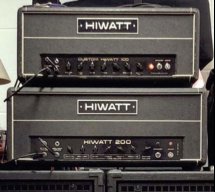
It's a whole different argument, but a lot of people subscribe to the theory that you should look to have amplifiers that are more powerful than the ratings for the speakers. This might sound odd, but the theory is that if you use your ears, you're less likely to kill a speaker by overpowering it than you are underpowering it and clipping your amps.
Gigged the Terror last night. Weird shaped room and very echoey, but it sounded SUPERB, thick, warm and punchy. Easily enough power!
I love this thing!
So we have woofers being mechanically damaged and burnt out by too little power do we, so using a fuzz box with the bass to obtain a rough square wave, to ape the effects of transistor power stages being clipped, How far do we have to lower the wattage to damage the loudspeaker in your expert estimation, is this a progressive thing
like the less watts you have the more damage you do. Ergo! leaving the loudspeaker in a dry garage without anything connected causes the
voice coil to suddenly blister and burn?
Or the loudspeaker starts to throw its self backwards and forwards
as if driven by a poltergeist out of X max and beyond X lim until the root of the cone fractures or you rip the pig tails clean out?.
What physical laws are involved in this please?
You see I used to get paid to blow drivers up at Celestion we used to use more powerful amplifiers than the loudspeakers rating rather than less because after rigorous destructive testing, we found smaller ones however overdriven and clipped never, I repeat never! caused any damage to a low frequency loudspeaker.
There is however an effect where excessive output stage clipping presented to a passive dividing network sends a disproportional amount of signal to the high frequency unit.
This is due to the crossover mistaking a squared wave as a series of higher frequency peaks and feeding these to your tweeter.
So we constructed smitt trigger circuits to allow us to ape this behavior in amplifiers that where not driven into clipping, This was to obtain control of levels, so that we could progressively increase power until the tweeter failed. Thus we had a better idea of what the real physical limitations might actually be.