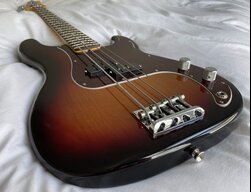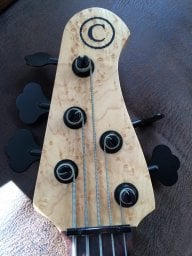
It's usually a pretty severe compromise on a passive.
As I always say, "The P/J never really works as well as Cheech & Chong thought it would when they invented it."
If you use a real Precision set and a real Jazz bridge pickup and switch them in/out rather than try to mix them in a V/V/T circuit and resign yourself to their output differential, that's the best you can do -- but that's a relatively rare situation.
The fatal flaw with the concept is the substantial electronic differences between P and J pickups and the various engineering problems this presents when you try to use them together. Makers try to paint the dirt to match the floor and change the pickups from their original properties in order to have them work better together. They aren't like the real P and J pickups (nor do they sound like them) and they still usually have control problems, notably the "V/V/T Syndrome," to a greater or lesser degree, in which the volume pots don't work properly.
Players will disagree with me on this, but they're wrong. This is an acknowledged engineering problem of long standing.
Active circuitry can clean this up to a substantial degree, but doesn't always.
This is largely, but not always, true. I have a P/J setup using a Nordstrand P and a version of the Nordstrand J that is humcanceling, but designed to sound like a vintage J. I have them passive, VVT, and the volume differential is less than on others I've played over the years. BTW, this bass has the J in a 70's position, close to the bridge, and its has snarl and burp for days!
I'm a big fan of P/J. My main bass is a Sadowsky 5-24 P/J, with Sadwosky/Nordstrand pickups, strung with Sadowsky flats. There is very, very little that this bass cannot do, although if I were getting a custom axe, I'd explore 70's placement for the J.
 hardwired to 100% tone, its just the way I bought her.