• TalkBass has been independent since 1998. Add your voice.
    Create a free account to reply to discussions, view embedded media, and browse with fewer display ads.
    Join freeLog in
    Want zero display ads or expanded classifieds tools? Compare plans.

Pondering Some New Ideas, Need Some Input

Mr. agedhorse. Before I retired, I worked in R&D at two different companies. We designed and manufactued very high-tech commercial robotic, and machine vision capable equipment. The marketing guys would do market research and present ideas to us and ask if we could design equipment that they thought the market would buy. We had to estimate what the R&D cost was, how long development would take, and what the actual market cost would be as well.

It seems to me that you are performing market research in addition to your other duties. I respect that.

My question for you is how much do you think this new product going to cost? :woot:

I bought a D800/115 to dip my toe into the Subway line. Now, I wish that I had bought the WD instead.

I hope that whatever new product you come up with, a current WD owner will get G.A.S. and sell their WD to me at a price that I can justify so they can fund purchasing the latest amp.:)

If that happens, I will quit browsing TB, and all the retailers websites, reverb, and eBay, and spend the rest of my days practicing instead of GASing for more amps. :D

(I promise).:roflmao:

I have always insisted that I need to be involved at the very beginning, the better I understand the player’s perspective, the better I can address them with new products.

I would expect an amp like this to cost less than the TT, maybe a little more than the WD. Just a back of the napkin guess.
 
After winding down some long, tedious and mind numbing regulatory projects I'm looking back at some ideas that we have discussed here in the past (specifically regarding the WD-800 and TT-800) and dusted off some old potential concept sheets.

While working specifically on the TT-800, I got asked quite a few times about revisiting the Bass 400/400+ concept except in a lighter weight package. Of course, the TT used some elements of the Bass 400 but included elements that were not as in your face as the Bass 400 because it had to make sense to work well with the Subway channel in a useful channel switching amp.

How interested would folks be with a Bass 400 dedicated version (no channel switching) along the lines of the WD representing the Walkabout?

Then the question becomes what features are important/essential, what new features might be interesting to explore, what features should be avoided (other than the obvious size/weight), etc. The goal would be to see what could be done to take it beyond what it is given the changes we have seen in the music and the needs of today's player. For those would would want an exact copy, they can be bought in decent condition for less than it costs us to build one today. A new one would be in the $5k range, which is awfully expensive (to me anyway) I think.

I'm just looking for some inspiration, and what you players might want to see (and also not see). I have no idea where this might go, what it might evolve to, but I owe it to the Bass 400 to at least explore the concept.

Remake the Big Block 750 that is more efficient...! ;)
 
Remake the Big Block 750 that is more efficient...! ;)

I know that the BB750 and Titan V-12 didn't sell all that well, but making a SMPS, class-D amp which models their tone/behavior might do quite well. Of course, one might argue that the WD-800 is actually fairly close to that mark, already...
 
After winding down some long, tedious and mind numbing regulatory projects I'm looking back at some ideas that we have discussed here in the past (specifically regarding the WD-800 and TT-800) and dusted off some old potential concept sheets.

While working specifically on the TT-800, I got asked quite a few times about revisiting the Bass 400/400+ concept except in a lighter weight package. Of course, the TT used some elements of the Bass 400 but included elements that were not as in your face as the Bass 400 because it had to make sense to work well with the Subway channel in a useful channel switching amp.

How interested would folks be with a Bass 400 dedicated version (no channel switching) along the lines of the WD representing the Walkabout?

Then the question becomes what features are important/essential, what new features might be interesting to explore, what features should be avoided (other than the obvious size/weight), etc. The goal would be to see what could be done to take it beyond what it is given the changes we have seen in the music and the needs of today's player. For those would would want an exact copy, they can be bought in decent condition for less than it costs us to build one today. A new one would be in the $5k range, which is awfully expensive (to me anyway) I think.

I'm just looking for some inspiration, and what you players might want to see (and also not see). I have no idea where this might go, what it might evolve to, but I owe it to the Bass 400 to at least explore the concept.
A silent operation, <3 kg., WD-800 with the TT-800 DI out section and form factor, a D-800+ channel, and D-350 bright and voice, using a combo 1/4 XLR in with phase and blend on the effects loop and input.

In other words, a best of Subway, dare I say "limited edition", enhanced head. "Best" of course being subjective.

If I'd ever played a real 400/400+, my wish might be entirely different.
 
A silent operation, <3 kg., WD-800 with the TT-800 DI out section and form factor, a D-800+ channel, and D-350 bright and voice, using a combo 1/4 XLR in with phase and blend on the effects loop and input.

In other words, a best of Subway, dare I say "limited edition", enhanced head. "Best" of course being subjective.

If I'd ever played a real 400/400+, my wish might be entirely different.
The more I read the harder it gets ;)
 
It could be the edgy WD-800...!

True... One of the things I love about my Titan V-12 is that with some fiddling, it can most definitely cop a WalkAbout tone/vibe, but with more power on tap. That being said, it also does it's own things... The WD-800 can do - or at least approximate - many of those things, but perhaps not quite all. Still, I feel like if Mesa wanted to do a class-D version of the Titan V-12 or BB750, I would certainly start with the WD-800 design.
 
I forgot to add my biggest question, as a Peavey VB-3 owner, why haven't any other manufacturers used the SMPS power section in their tube bass amps. The most repeated complaint about tube amps is the weight. A 300 watt SVT head is about 90 lbs. My VB-3 is also 300 watts but weighs only 37 lbs. thanks to not needing a very heavy power transformer. I'm hoping that agedhorse might expound on this.
 
  • Like
Reactions: MCF
I forgot to add my biggest question, as a Peavey VB-3 owner, why haven't any other manufacturers used the SMPS power section in their tube bass amps. The most repeated complaint about tube amps is the weight. A 300 watt SVT head is about 90 lbs. My VB-3 is also 300 watts but weighs only 37 lbs. thanks to not needing a very heavy power transformer. I'm hoping that agedhorse might expound on this.

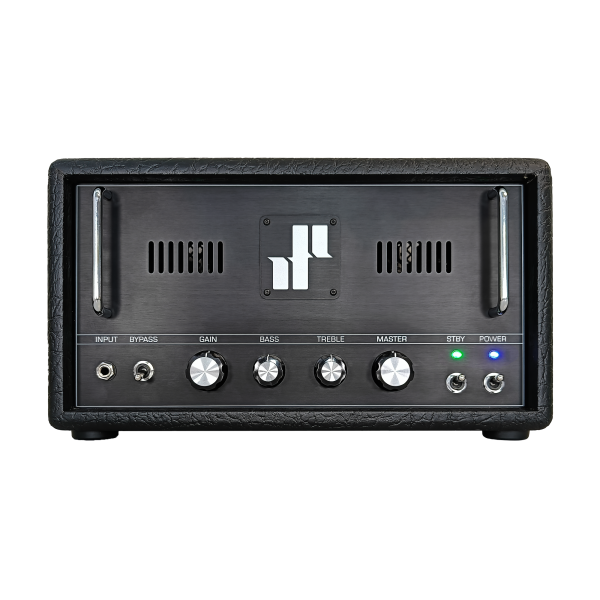
Jad Freer Volta uses SMPS power supply - 200w 13 kg

Untitled-1-600x600.png
 
An input jack in the front and back. Some test equipment offers this feature.

If two channel, James EQ with mid in an uncluttered signal path.

Optional rack wings.

A separate pre-amp that can drive one or more self powered speaker cabinets with fast acting local feedback that can protect the speakers. Getting this pony to fly would prove difficult.
 
  • Like
Reactions: /\/\3phist0
I'm just a lowly weekend gig player but what I want is top quality equipment built to stay trouble-free for decades as I keep my gear that long. (Still gig my Genz Benz Contour 500).

I'd like the ability to dial in whatever sound I want, from clean to Ampeg B18 to Fender Bassman. And whatever baked-in sound the designers dig.

I'd like usable EQ, just lows, mid, mid and treble are fine. EFx inputs, xlr/DI,.

Yes, all of that is available currently. Please add all the cool things you can think of, but don't forget the basics.

I'm still saving money for my new set up (if the cars don't die, again), be it Genzler or Mesa or Bergantino. It's worth the cash outlay.
 
I thought Yamaha would lead the way on this but Mesa certainly could.
800 watt, Class D, dedicated bass amp with standard controls to include volume, bass, treble, 2 bands of mid with selectable frequencies, and

--- Pre loaded tone samples of all the great bass amps ---!

Kind of like the M6 voice control but not just EQ based. Maybe it comes with 6 voices.
More modeling voices available from Mesa as a download in the future at a reasonable price allowing a continuing revenue stream after the sale.
Imagine a M9, Walkabout, 400+, Subway, SVT, B-15, Acoustic 360, the new Italian stuff, etc. all reasonably close to the original amp tones at a knob click away.
(understood that the cabinet also makes a difference but this is about amps)
 
  • Like
Reactions: Old Blastard
I thought Yamaha would lead the way on this but Mesa certainly could.
800 watt, Class D, dedicated bass amp with standard controls to include volume, bass, treble, 2 bands of mid with selectable frequencies, and

--- Pre loaded tone samples of all the great bass amps ---!

Kind of like the M6 voice control but not just EQ based. Maybe it comes with 6 voices.
More modeling voices available from Mesa as a download in the future at a reasonable price allowing a continuing revenue stream after the sale.
Imagine a M9, Walkabout, 400+, Subway, SVT, B-15, Acoustic 360, the new Italian stuff, etc. all reasonably close to the original amp tones at a knob click away.
(understood that the cabinet also makes a difference but this is about amps)

Hello! And welcome to Line 6, we will be right with you. Really though, just one really really good 400+ design would be great
 
Last edited:
I'd love to see a modular system with preamp modules you can dock in a power amp module.
Each preamp could be used alone, and the power amp could be coupled with different preamps according to taste.

Mesa could develop preamp modules for the 400+ and different other legacy models. And if we start dreaming, why not imagine that other manufacturers could adopt the same standard and develop their own preamps… (SVT, BD751, you name it)

@agedhorse would it be feasible (in theory) but too expensive / not profitable because of the size of the market compared to costs of R&D + certification etc? Or would it be simple impossible to do, technically?

modular-amp.jpg


Of course, on the back of the power amp module, we find the speakon connector, and on the back of each preamp module we find the insert loops, DI outs etc.
 
  • Like
Reactions: Wasnex
I'd love to see a modular system with preamp modules you can dock in a power amp module.
Each preamp could be used alone, and the power amp could be coupled with different preamps according to taste.

Mesa could develop preamp modules for the 400+ and different other legacy models. And if we start dreaming, why not imagine that other manufacturers could adopt the same standard and develop their own preamps… (SVT, BD751, you name it)

@agedhorse would it be feasible (in theory) but too expensive / not profitable because of the size of the market compared to costs of R&D + certification etc? Or would it be simple impossible to do, technically?

View attachment 5418653

Of course, on the back of the power amp module, we find the speakon connector, and on the back of each preamp module we find the insert loops, DI outs etc.


In practical terms, this already exists thanks to F/X loops, and preamp pedals.