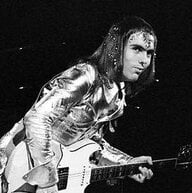
Where this discussion gets REALLY interesting is when people start debating the merits of one strain of Punk vs. another.

TalkBass has been independent since 1998. Add your voice.
Create a free account to reply to discussions, view embedded media, and browse with fewer display ads.
Join free Log in
Want zero display ads or expanded classifieds tools? Compare plans.


Karen's skills on drums were a lot better than "rudimentary." She just didn't get a chance to show it on their music because it was singer music, not drum music.Never mind the bollocks sold 1.3 million copies. U2 has sold a billion records. Karen Carpenter made platinum albums. 2 bass players, and a drummer with really rudimentary skills who were successful. Sid sold more albums than Victor Wooten. Adam Clayton sold more records than all the top 'good' bass players combined. Karen Carpenter sold more records than Billy Cobham. Clearly, good enough was good enough.
You think American punk started with X and Black Flag? Not even close!Not really clear on your dates. X’s first album was released in 1980, Black Flag’s in 1981, and the Minutemen’s first EP was released in 1981 and LP in 1983.

Not really clear on your dates. X’s first album was released in 1980, Black Flag’s in 1981, and the Minutemen’s first EP was released in 1981 and LP in 1983.

I don't think it started there, but it didn't end in 1980 either. Humbled was limiting the time frame of American Punk to 1975-1980.You think American punk started with X and Black Flag? Not even close!

Not really clear on your dates. X’s first album was released in 1980, Black Flag’s in 1981, and the Minutemen’s first EP was released in 1981 and LP in 1983.
There are still people playing New Orleans jazz!I don't think any genre ever really "ends".
I'm gonna split the difference between you and @Humbled and call the "center mass" of the punk movement as 1977.
This was the year the Ramones released second album "Leave Home," (January 19, 1977). I was already aware of the band, but as a suburban L.A. kid I took note of the fact that my local Licorice Pizza Records L.A. devoted a whole middle display rack to the album. This was a bold move, like moving the Corn Flakes down a shelf to highlight Bran Flakes. Both the US labels and (more importantly) the retailers were betting on punk. January 1977.
The record companies got a pitiful fistful back, of course, as the general consumer rejected punk as a gambit. But the major labels recouped handsomely when punk became "New Wave" early 80s, Boy George/George Michael/Frankie Says Relax/Madonna/Duran Duran.... For a good long spell it rained greenbacks on places such as Burbank, California, once the home of mighty Warner Brothers Records, who released "Never Mind The Bollocks" and also released the second PiL album before falling out with Lydon when he characterized them in the press as straight up legit mobsters.
That is true. It's still going on. As long as there are pissed off kids, it'll continue. Some of them have dubious reasons for being pissed off, but whateverI don't think it started there, but it didn't end in 1980 either. Humbled was limiting the time frame of American Punk to 1975-1980.

English punk was quite different from the US import version, IIRC.

I find interesting that so many comments here are about Sid's lack of musicianship...
No one, including the OP said anything about him as a, or being a musician..
OP simply stated the yes, at one point, obviously before he became a raging junkie... that he actually played.. very little mind you, because like all of us at one point, he was just learning when he was pulled into the band... and was only so because he looked more the part over Glenn Matlock
I find that The Clash had limited success with ska, but were pretty good at incorporating all sorts of influences into their music. Their best efforts are always a blend of something and them, as opposed to being true to a style. Plus Complete Control might be the greatest punk song/song ever. The Sex Pistols might have been a force of nature influencing later generations, but The Clash were musically gifted in a way that went well beyond anything the Pistols ever did.
Indeed. But for a few tasty lyrics I never thought of them as a punk band.
You think American punk started with X and Black Flag? Not even close!
Steve Jones and Paul Cook would have probably liked it to go longer, as they tried to make it happen again after Johnny and Sid left. In a very weird way by getting Great Train Robbery exile Ronald Biggs to sing a song, yes, but hey...I get the impression that the people in The Sex Pistols had little interest in it as anything long term, which might explain some of it. I look at it as an art project in and of itself like an installation. And there's nothing particularly wrong with that, but it's quite an art school view of things. There are many other bands that came up before then that were much more concerned about a form of career.
Arguably, with MC5.
I'd argue Chuck Berry.Arguably, with MC5.


