Re: crying when playing with amps again - I’ll be doing that when I can finally jam with people at volume again. This whole “having a kid thing” has cramped my style, especially since I’m the one who has space in the house to practice!

TalkBass has been independent since 1998. Add your voice.
Create a free account to reply to discussions, view embedded media, and browse with fewer display ads.
Join free Log in
Want zero display ads or expanded classifieds tools? Compare plans.
Re: crying when playing with amps again - I’ll be doing that when I can finally jam with people at volume again. This whole “having a kid thing” has cramped my style, especially since I’m the one who has space in the house to practice!
Re: crying when playing with amps again - I’ll be doing that when I can finally jam with people at volume again. This whole “having a kid thing” has cramped my style, especially since I’m the one who has space in the house to practice!


 How comes I haven't been able to get a decent sound from that?

I don't have kids but I have neighbors... I played ampless the whole time of the quarantine, so frustrating!
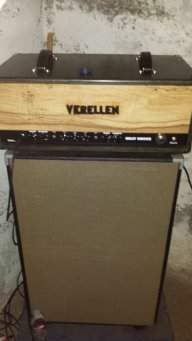
It was incredibile to use my amps again, I almost forgot how awesome the physical impact is.
Feeling euphoric and in total power trip, with evil laugh etc
View attachment 3839161
BTW, finally I have been able to go back to learn to use the recording gear I bought before the COVID.
I'm far from having "control" over things, but drums and bass have at least usable sounds (not "ok" but acceptable).
But I'm really struggling with the guitar amp (with TONS OF GAIN). This is the most frustrating part. A few things I tried:
- I have had a better result with condenser mics than with dynamic mics. Condenser mics placed away from the amp. They sound clear, but I would like a much more compressed sound.
- Dynamic mics seem to like the power amp distortion better that the preamp one. On the recording, it doesn't sound bad at all, but it's not the sound I use in the normal practice… I really love the power amp distortion, it's f.ing definite and clangy! Such a shame it doesn't work on our songs at all.
Any tip about recording super harsh and fizzy guitars would be very much appreciated!!
- And this other thing is making me mad: no setting/positioning seems to work with the Sennheiser E609. And I bought this mic because it's specifically designed for guitar amps
Better with the Shure SM57 (now I understand why is it so commonly used… works decently on pretty much everything, for a beginner)
Now I'm annoyed about that mic.
I don't have kids but I have neighbors... I played ampless the whole time of the quarantine, so frustrating!
It was incredibile to use my amps again, I almost forgot how awesome the physical impact is.
Feeling euphoric and in total power trip, with evil laugh etc
View attachment 3839161
BTW, finally I have been able to go back to learn to use the recording gear I bought before the COVID.
I'm far from having "control" over things, but drums and bass have at least usable sounds (not "ok" but acceptable).
But I'm really struggling with the guitar amp (with TONS OF GAIN). This is the most frustrating part. A few things I tried:
- I have had a better result with condenser mics than with dynamic mics. Condenser mics placed away from the amp. They sound clear, but I would like a much more compressed sound.
- Dynamic mics seem to like the power amp distortion better that the preamp one. On the recording, it doesn't sound bad at all, but it's not the sound I use in the normal practice… I really love the power amp distortion, it's f.ing definite and clangy! Such a shame it doesn't work on our songs at all.
Any tip about recording super harsh and fizzy guitars would be very much appreciated!!
- And this other thing is making me mad: no setting/positioning seems to work with the Sennheiser E609. And I bought this mic because it's specifically designed for guitar amps
Better with the Shure SM57 (now I understand why is it so commonly used… works decently on pretty much everything, for a beginner)
Now I'm annoyed about that mic.

you can "encourage" ants to nest in the floor.So doomers. You all are creative and dark when necessary, and I'd like to get your ideas for a 'going away' present. I've resisted the urge to go find her and strangle her. We were prepared to move on with our lives and not look back, but fyck these clowns.
Already planning to send a gift of some sort from dicksbymail.com.

Basically yeah, it's a compression/tightness problem (and volume).Are you having trouble getting them to sound tight and/pr are you struggling with the heavy distortion/gain causing a bit of the 'bees in a can' sound in the upper end of the treble?
I see from the condenser mic part that you got 'clear' sounds but not compressed. It's just not very clear what part of the recorded sound is off or not to your liking - aside from the compression/tightness...
I am aware the E609 has only ONE working sideOn the e609 make sure you are using the business end of the microphone. Ive seen lots of people have the mic turned the wrong way without realizing it. Its also a super cardioid mic so it has a very narrow pickup pattern so to get it to be high and grinding it might need to be a little closer to the cone center than I would normally place an sm57. My experience with them is that they sound alot like the 57, but with a bit more upper mid presence. I usually would want to pair it with another ribbon or condensor mic to fatten it up a little.
Another thing to keep in mind when comparing a close mic to what youd hear in the room is the room sound. Ive found that i very rarely like the sound of a close mic alone as it tends to miss alot of frequencies that the rooms echo brings out, it just sounds kind of dead to me.
When i was learning to mic bass i found that i much prefered to have the mic a foot or 2 feet away rather than right on the speaker to capture a more broad sound than what you get dead on the speaker cabinet. It sounds more like what i hear in the room with a bit of distancd from the speaker.
Obviously it all varies on your application. But id make sure youre using the business end of the sennheiser then id just try moving the mic around and experimenting. The mic placement has a huge impact on the sound you get. Some mics like certain placements better than others.

 ), but I can pair it with the SM57 or the condenser AKGs, just to try the effect I can obtain. Thanks a lot for the suggestions
Basically yeah, it's a compression/tightness problem (and volume).
I have tree parameters I can play with, the amp volume, the gain on the recorder and the mic position. I have tried many combinations but as soon as I get rid of the "bees", the sound is less "in-your-face". There must be some "common practice" in these cases! For example would you have a lot of volume of the amp, and low gain on the recorder? Or vice versa?
Would you place the mic really close and adjust the gain accordingly? Or move away the mic until the "bees" go away instead?
Just trying randomly "everything" without a direction is very being ineffective... and frustrating
Anybody around here still use the Pharaoh fuzz? I love my Supreme, and the regular one is up there among my favorites. Maybe the Supercollider ‘71 is better - been a while since I’ve had a standard Pharaoh and the Supercollider is on guitar duty...
Anyway, I just found out that Mark from BAT does random other Pharaoh builds, like Civil War and Russian and Kompromat (whatever that is) variants. I’m intrigued. The Russian variant on bass mostly, as I loved the Russian Pickle (but have never had an actual Russian Muff). So anybody have inputs on those? I’ll likely try the Supercollider ‘71 on bass again, just because, but man, I am tempted by that Russian Pharaoh.
Side note - what ever happened to the Supercollider ‘71 model? I bought mine used a few years ago since it was supposedly “smoother” or “creamier” or something which is what I wanted since the original was a tad too grainy for me, but I swear I haven’t seen one since. The standard one is listed on EA’s page, though recently got downsized.
Must I? No. Do I want to... YES! In reality, I have no need for another fuzz after the Pharaoh Supreme. I can’t imagine it not being able to cover a fuzz tone I ever wanted or needed. But the eternal quest for pedals is, well, eternal.I've got a Son of Pharaoh I really like - he made a modded Russian run of these a while back, but I didn't pick one up. I wish I could just buy one of everything from BAT, because I love the company and design more generally. Of the few I've tried, some have worked well with bass and others haven't. Very impressed with the Pharaoh pedals though.
If you want to go down the muff variant rabbit hole, I just picked up a Civil Unrest from Stomp Underfoot and it is killer. Civil War based muff with a mids knob. The mids knob feels like bonus, since it retains plenty of lows/fundamental without it. I just love the texture of the fuzz and how this thing is voiced.
you can "encourage" ants to nest in the floor.
I have them and be sure of that, you won't get rid on them unless you burn the house
Basically yeah, it's a compression/tightness problem (and volume).
I have tree parameters I can play with, the amp volume, the gain on the recorder and the mic position. I have tried many combinations but as soon as I get rid of the "bees", the sound is less "in-your-face". There must be some "common practice" in these cases! For example would you have a lot of volume of the amp, and low gain on the recorder? Or vice versa?
Would you place the mic really close and adjust the gain accordingly? Or move away the mic until the "bees" go away instead?
Just trying randomly "everything" without a direction is very being ineffective... and frustrating
I am aware the E609 has only ONE working side
I started putting it in contact with the grid, they suggest this kind of usage, but this way it distorted a lot and to get rid of distortion I had to either lower everything (amp and recorder gain, or both) so much that in the end it sounded wimpy!! Or move the mic away from the amp...
The hard part is to have the sound really compressed and at a decent volume.
In this moment I can't really buy other mics (I can'r really buy ANYTHING
Some of you doomers here might remember my landlord trying to move us out right before cornfamer Jr. was born. Covid came to town, stupidity along with it, and Jr. was unleashed from the womb. We hustled hard all the while to get our own place and signed the papers last week.
After riding the stress carousel since February, we're about to get off it finally.
Today....I send the landlord our 30 day notice, and what is her response? 'Oh my grandson doesn't want to move in after all, you can decide what you want to do. Hoping you'll stay, you've been such wonderful tenants.'
So doomers. You all are creative and dark when necessary, and I'd like to get your ideas for a 'going away' present. I've resisted the urge to go find her and strangle her. We were prepared to move on with our lives and not look back, but fyck these clowns.
Already planning to send a gift of some sort from dicksbymail.com.

If you’re using a digital recording interface and software, a low pass filter in the recording software should solve this. Most of the software has one built in i believe - just need to find it.
If you are using an analog recorder, you can look at a simple low pass filter pedal/device. It sucks to need a piece of gear you may not already have in the second scenario, but low pass filtering is how they clean up the bees and harsh artifacts in most/all recording with distorted guitars.
The issue is that a cabinet will gradually roll off starting around 5 kHz (generally - it varies by cab obviously), but it will still reproduce frequencies above that. The bees and fizz tend to live in that 7-10 kHz range. So even as a starting point, pretty aggressively rolling stuff off above 9-10 kHz with a LPF should help a lot to eliminate that stuff without killing the crispness, crunch, and definition of the guitar tones. A 'treble' cut won't work the same, because it covers a broader range of frequencies. Wherever a treble knob is centered in terms of the frequencies it controls, it's still going to raise or lower frequencies around that point. So you'll kill off some wanted frequencies and qualities of the guitar if you try to do this just with treble controls.
For overall tightness in recordings, a low and high pass filter is almost always used. It also helps with getting instruments to sit/mesh better in a mix. That said, you can get away with just low passing since you said you're getting good punch and 'in-your-face' sounds with some mic placements, but it's just got the 'bees' with it. You could really go down the rabbit hole and look into notch-filters, but the LPF will help.
Sorry if I'm explaining a bunch of stuff you've already dabbled with or know, by the way. And I know filters (particularly HPFs) have become a divisive issue for some people on here. Still, they have a very specific function in recording. I use a LPF on my board for jamming and recording, because I hate the 'bees' on bass as well. For distortion and fuzz, I find it super helpful to keep things hard hitting and crunchy without the fizz. It's definitely a useful tool...
I tend to run lower gain on the recorder side and run full gig volume on the amps. But i have enough room and live in a place with no close neighbors so i can get away with it. Then run lower gain on the audio interface. In my mind this is the best way to get the best signal to noise ratio and i like the power amp/speaker compression you get from higher amp volumes. I usually close mic with the capsule probably 2 inches off the speaker cloth or grill, with the mic over the place where the cone meets the woofer on the speaker. If its too bright or buzzy i move the mic further towards the woofer. If its too dull i move it towards the cone. Another thing to think about is not all speakers on a cabinet are equal. In both of my usual marshal cabinets all 4 speakers sound very different so trying them all and picking the ones that sound the best is also a process worth investing time in.
 )! The only problem is dealing with feedback...
Thank you SO MUCH guys!! Pure gold!
All of these infos are new to me, I'm learning from scratch
I'm using a digital interface, the Zoom R16
I looked in the manual and it has a "Low cut" which is not the same as a HPF, it seems...
And I can't find any LPF either.
But I'll do the mixing on Reaper and It has both for sure!
I'd like to limit manipulation of the raw recording as much as possible but I'll try with this method anyways!
THANK YOU!
I can use an "almost gig volume" too (another reason why I was so reluctant to leave this reharsal space
Today I had reharsal with my drummer and I didn't work at the recording stuff, but I tomorrow I'll be alone and will try this! THANK YOU SO MUCH!!
Thanks a lot !Reaper has an adjustable HPF and LPF plug-in - I use the same software. Just search for it and you can apply it to tracks individually and adjust the frequency of the roll off. Remember - LPF for the bees, HPF to clean up muddy lows. Have fun!
The world is a surprisingly small place. Leave on good terms.
Any of you running Matamps? I was thinking of ordering one. I have some pretty high wattage clean sounding heads so I was thinking about maybe a 100w Matamp head that could break up and get dirty. Is a lower wattage Matamp a silly idea? Should I go with 150w on up? I thought if I did that I wouldn't be sitting much different than I am now tone-wise.
What say ye all?