• TalkBass has been independent since 1998. Add your voice.
    Create a free account to reply to discussions, view embedded media, and browse with fewer display ads.
    Join freeLog in
    Want zero display ads or expanded classifieds tools? Compare plans.

Stoner/Doom Bassists Thread Part Ten - What is this thread about again?

star-wars-vs-star-trek.jpg
 
Haha. Fair enough, but how about this?

Invalid Link Removed

Must be a good one. It's even blocked at work. :smug:

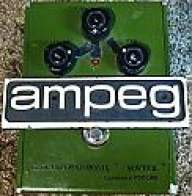
Has anyone else noticed the hate for Bass Big Muff? I just saw someone post about how it's garbage. I disengaged my DI, and it does sound pretty raspy and not big and bassy at all. Does my DI shape my tone that much? Now I am thinking about starting to replace the "budget gear" stuff, the Behringer is on the short list. Why would a DI make my BBM sound so much better? And would all DI's accomplish this? Anyone else notice this or am I crazy. Eventually I want a sturdier DI and a custom Fuzz of some sort. Thinking of the MXR M80.
 
Keep in mind that $96k in sales will have to cover materials and other types of overhead. He may have taken home a 1/4 of that. Which is a nice chunk of change but it's not something easy to do as a side business.

Of course thats true. But Wade was a self-professed one man operation, no?

You guys are (maybe?) older and more life-experienced than me, so I pose this hypothetical, since any mention of the economics here are as a "side business."

Why do you not think it could be a full-time venture? Is the demand not there? I was assuming that Wade / Dr. Bass / etc. did this full-time, 40 hours per week, and had the demand and orders coming in to actually fill 40 hours per week. Were they doing this part-time, as secondary income? Or was the slow-down just due to inefficiency of taking on custom builds?

I'm truly curious, is there enough demand to run a full-time boutique business?

(definition of "boutique business" being high quality / high price / low volume)
 
Of course thats true. But Wade was a self-professed one man operation, no?

You guys are (maybe?) older and more life-experienced than me, so I pose this hypothetical, since any mention of the economics here are as a "side business."

Why do you not think it could be a full-time venture? Is the demand not there? I was assuming that Wade / Dr. Bass / etc. did this full-time, 40 hours per week, and had the demand and orders coming in to actually fill 40 hours per week. Were they doing this part-time, as secondary income? Or was the slow-down just due to inefficiency of taking on custom builds?

I'm truly curious, is there enough demand to run a full-time boutique business?

(definition of "boutique business" being high quality / high price / low volume)


I think the problem would be while it may start out as a side business the internet hype gets around and then before you know it your swamped with orders you can't fill or don't have the funds to start. Did he really take on that many custom builds? Building a custom cab compared to what was offered shouldn't take that much extra time. There is a market for boutique business. I feel it's geared more towards guitar players (for amps) and more towards instruments (for bassists) It all comes down to price points and time frames. If you can handle the work load and make a profit than it should work. If you start to get stuck money or time wise things will start to get hairy. This will be multiplied by the internet. It only takes a couple of unsatisfied people to tarnish a business.
 
The other issue is paying in full for something off the bat. I can totally agree with asking for a deposit to start a project (to cover material cost and if the person backs out) but the full payment up front and the undefined wait is what bothers me. As a contractor I'll ask for a deposit (usually 1/3 of the contract) to cover materials and some expenses. Then only once I'm completed with the job do I invoice for the balance. Things happen in life and work and sometimes deadlines aren't met, but people usually feel better if they owe YOU money as opposed to you owing THEM a product they already paid for. This is just my opinion with this.
 
I think the problem would be while it may start out as a side business the internet hype gets around and then before you know it your swamped with orders you can't fill or don't have the funds to start.

But if you find yourself at this point, why wouldn't you quit your dayjob and run with it? Outside variables like vested retirement/pension? Even in that state, it'd be more profitable and successful to hire and train a skilled employee to work when you can't. I just can't fathom how any of these guys can let a successful and lucrative business fail so royally. That's what makes me want to get into the business, I feel like the hard part is just getting started, and maintaining or expanding would be the natural progression. Thats kinda how Schechter started right? Producing high-quality Fender parts?