I thought most of us did that!Interesting they put the compressor first in the chain.

Enjoy the benefits of a premium membership!
Upgrade Account
-
TalkBass has been independent since 1998. Add your voice.
Create a free account to reply to discussions, view embedded media, and browse with fewer display ads.
Join free Log in
Want zero display ads or expanded classifieds tools? Compare plans.
You are using an out of date browser. It may not display this or other websites correctly.
You should upgrade or use an alternative browser.
You should upgrade or use an alternative browser.
More options
Who Replied?
Just had a quick read through the manual. Seems very nice and logical.
Two things I didn't understand:
Two things I didn't understand:
- Is the amp-sim in effect only for the XLR-out or also for the 1/4-inch unbalanced out?
- The text refers to a clip indicator, but I didn't find it...
Thanks for posting the manual! Pretty thorough explanation. Very cool. Seems like there would be an infinite # of settings. I have two questions:
What does "bite" exactly do? It is not mentioned in the manual.
Also I'm new to octave filter stuff. Would there be a setting for an auto-wah sounding sort of effect?
Im so excited about this pedal. Seems like forever since I heard of it being released. I was very close to buying a VT deluxe and still might, but I wanted to wait and try this first.
What does "bite" exactly do? It is not mentioned in the manual.
Also I'm new to octave filter stuff. Would there be a setting for an auto-wah sounding sort of effect?
Im so excited about this pedal. Seems like forever since I heard of it being released. I was very close to buying a VT deluxe and still might, but I wanted to wait and try this first.
Also I'm new to octave filter stuff. Would there be a setting for an auto-wah sounding sort of effect?
Yeah, it's an octaver, envelope filter and fuzz in one footswitch. Turn off the fuzz and octave buttons, and turn up the mix and Q to get the autowah going. To use the octave and/or fuzz without autowah-ing, just turn the Q to zero.



I see 5/9, 5/25 at GC, 6/15 at Sam Ash. I'll put this on the back-burner until they're in stock and ready.
Still looking forward to checking one out.
Delays like this are frequently due to the retailers, not the manufacturer.
My guess is that Tech21 could have shipped in April and had an order from a large retailer who subsequently pushed back the order date.

I have mine at the end of the chain. It makes for a better signal going into the envelope filter and it's mostly for taming the peaks.I thought most of us did that!
Oh I understand that; I've just seen way more at the front than at the back. All good!I have mine at the end of the chain. It makes for a better signal going into the envelope filter and it's mostly for taming the peaks.
Oh I understand that; I've just seen way more at the front than at the back. All good!
 Just can't wait to get it it's gonna replace my whole pedalboard.
Delays like this are frequently due to the retailers, not the manufacturer.
My guess is that Tech21 could have shipped in April and had an order from a large retailer who subsequently pushed back the order date.
I'm not blaming T21.
It's the delay game regardless, for which ever reasons. It happens.
I've just got to a point where I've had money I could use tied up in pre-orders, so I just leave it be until I see them stocked.
Gives me something to put on my X-mas list this year.

I have mine at the end of the chain. It makes for a better signal going into the envelope filter and it's mostly for taming the peaks.
I've always found at the end it squashed the dynamics of my pedals. Prefer it at the front to feed them a constant signal and then let them do their thing

I'd prefer an option to put compression last, or elsewhere in the signal path too. I prefer it after drive, as it retains the dynamics of the drive.

Couldn't wait any longer. Borrowed an RK5 from my violinist buddy this weekend.
Checked it out into my audio interface and JBL 8" recording monitors first, just to get a feel for it. The band passing from the speaker sim smooths out fret noise, and gives a little more rounded tone. The EQ points were fine for bass, at least for finger style. I didn't have a Para DI on hand to compare, but it seemed very similar to that.
My Dingwall ABZ-5 is strung with nickel rounds. It has a very clear, bright tone normally, but the Fly Rig smoothed it out a little, making the neck pickup sound closer to a P-bass. It was great for finger style, but double-stops sounded just a little blurred with the Sansamp section engaged, even at low drive settings.
I found that an accessible trade off for the extra note heft, especially on the top two strings. Not sure that this would work well for slap, but that's not my thing anyway. Got a nice, clanky pick tone going with a bit of treble boost.
On Saturday, I used it as a front end into my G-K MB Fusion head. AudioKinesis extended-range cab with a horn. 4-piece band w/drums, keys, acoustic guitar, lead and BGV's. Wide dynamic range. With the G-K EQ set to it's true flat setting, all I needed on the RK5 was a little mid and treble roll off. Great finger-style tone at low drive settings. FOH was happy with the DI feed, using a passive Radial DI. The boost was useful for a slight volume increase on up-tempo tunes.
I used the RK5 again on Sunday, straight into the same Radial DI. No backline amp, same bass. More energetic, rocking band. Silent stage with electric drums, first and second keys, acoustic guitar and 4 vocalists. Monitoring via IEM's. Only difference in settings was a slight bass boost, and a touch more drive for character (not enough for noticeable breakup). Rolled off the passive tone control on the Dingwall slightly, to reduce fret noise. I hate to say it, but it sounded better than using the MB Fusion with the DI in post-mode, which is my normal rig for this gig.
The RK5 totally exceeded my expectations, and sounded great everywhere I used it. Even though it's supposed to be a guitar pedal, the B string on the Dingwall sounded nice and tight. Given that it's a great sweetener for guitar and other instruments, it would be tempting to simply settle for an RK5.
Still, given the relatively small price premium and all the extra features, it makes more sense to wait for the Bass Fly Rig. This is going to be very strong competition for the new G-K preamp pedal, at least for my needs. Especially given that the form factor of the Fly Rig is so gig bag-friendly.
Checked it out into my audio interface and JBL 8" recording monitors first, just to get a feel for it. The band passing from the speaker sim smooths out fret noise, and gives a little more rounded tone. The EQ points were fine for bass, at least for finger style. I didn't have a Para DI on hand to compare, but it seemed very similar to that.
My Dingwall ABZ-5 is strung with nickel rounds. It has a very clear, bright tone normally, but the Fly Rig smoothed it out a little, making the neck pickup sound closer to a P-bass. It was great for finger style, but double-stops sounded just a little blurred with the Sansamp section engaged, even at low drive settings.
I found that an accessible trade off for the extra note heft, especially on the top two strings. Not sure that this would work well for slap, but that's not my thing anyway. Got a nice, clanky pick tone going with a bit of treble boost.
On Saturday, I used it as a front end into my G-K MB Fusion head. AudioKinesis extended-range cab with a horn. 4-piece band w/drums, keys, acoustic guitar, lead and BGV's. Wide dynamic range. With the G-K EQ set to it's true flat setting, all I needed on the RK5 was a little mid and treble roll off. Great finger-style tone at low drive settings. FOH was happy with the DI feed, using a passive Radial DI. The boost was useful for a slight volume increase on up-tempo tunes.
I used the RK5 again on Sunday, straight into the same Radial DI. No backline amp, same bass. More energetic, rocking band. Silent stage with electric drums, first and second keys, acoustic guitar and 4 vocalists. Monitoring via IEM's. Only difference in settings was a slight bass boost, and a touch more drive for character (not enough for noticeable breakup). Rolled off the passive tone control on the Dingwall slightly, to reduce fret noise. I hate to say it, but it sounded better than using the MB Fusion with the DI in post-mode, which is my normal rig for this gig.
The RK5 totally exceeded my expectations, and sounded great everywhere I used it. Even though it's supposed to be a guitar pedal, the B string on the Dingwall sounded nice and tight. Given that it's a great sweetener for guitar and other instruments, it would be tempting to simply settle for an RK5.
Still, given the relatively small price premium and all the extra features, it makes more sense to wait for the Bass Fly Rig. This is going to be very strong competition for the new G-K preamp pedal, at least for my needs. Especially given that the form factor of the Fly Rig is so gig bag-friendly.
Last edited:
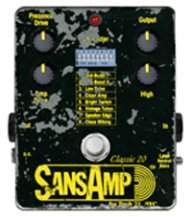
Did the original demo mention a headphone mode? I visited the site yesterday and under "other features" its lists headphone mode button? I do not remember that, although I could very well be mistaken. Could the delayed release be due to a revision of the original design? Again, all speculation.
There is a switch to engage the headphone amp.
This Bass Fly Rig seems like it would be perfect for me but one improvement they could make right away would be to make it run on phantom power.
There is not enough current in phantom to run the DSP portion of the circuit.
Interesting they put the compressor first in the chain.
The compressor was placed first in line as that as pretty much industry standard for most compressors in a stomp box format. While compression brings up the softer sounds and limits the peaks it also will amplify and increase the level of noise. The more devices ahead of it will just add to the noise floor. Unlike a digital processor the order of efx can't easily be changed without physically doing so. While the Boost control can be configured for pre or post there are actually two boost circuits.
Just had a quick read through the manual. Seems very nice and logical.
Two things I didn't understand:
Would sure like to hear some demos. Looks very promising.
- Is the amp-sim in effect only for the XLR-out or also for the 1/4-inch unbalanced out?
- The text refers to a clip indicator, but I didn't find it...
The XLR and 1/4" outs send the same effected or uneffected signals. The 1/4" parallel output is hardwired to the input and send a direct signal from your instrument.
The Chorus control will flash red if the signal to the DSP section clips.
Thanks for posting the manual! Pretty thorough explanation. Very cool. Seems like there would be an infinite # of settings. I have two questions:
What does "bite" exactly do? It is not mentioned in the manual.
BITE Engaged (in position), Bite activates a presence boost and subsonic filter.This tightens up the sound when you are in distorted settings and adds definition to your notes when playing in clean settings.
Sweetwater is now saying they'll get a very small shipment at the end of May but most orders won't be filled until July.
Let's hope it's available by NAMM 2017.
Let's hope it's available by NAMM 2017.

The 1/4" parallel output is hardwired to the input and send a direct signal from your instrument.
Parallel output??? I've only seen 1 TS input and 1 TS ouput. Have you added a parallel output to the finished product? I am GASing pretty hard for one of these, and a parallel output would be a great addition to the features.
I wonder what the holdup is. Maybe tech21 will let us know. It'd be nice if they identified themselves, as well. John?? Andrew?? Who's posting.

I cancelled my preorder with Sweetwater. I can live with my VTRM awhile longer. Besides the Flyrig5 is doing great with the octave up from the Pitchfork, not sure I really need the bells and whistles on the low end. Still looking forward to real world reviews though.
Rondo
Rondo
Last edited by a moderator:


