• TalkBass has been independent since 1998. Add your voice.
    Create a free account to reply to discussions, view embedded media, and browse with fewer display ads.
    Join freeLog in
    Want zero display ads or expanded classifieds tools? Compare plans.

The Sushi Box FX Secret Society

I've thought about advertising it on the site as it's become a popular request since JohnK asked for it, I think I've done about a dozen now. The PA and the LU are really similar topography, and their tonestack is laid out exactly the same, just different values. The PA tonestack gets a little thicker in the low end, so the "JohnK LU" or "LU/PA" or whatever you want to call it.

Due to how amazing it is I've thought about discontinuing the stock PA and the stock LU and just offering the JohnK LU instead of both as it pretty well covers the territory of both, which is why I never advertised the option on the website. PA still responds a little different than the LU with the PA stack, but they're really close and the JohnK LU is the way to go if you're on the fence about which to get.

Here's the JohnK sound sample that is on page 42 of this thread.
 
I've thought about advertising it on the site as it's become a popular request since JohnK asked for it, I think I've done about a dozen now. The PA and the LU are really similar topography, and their tonestack is laid out exactly the same, just different values. The PA tonestack gets a little thicker in the low end, so the "JohnK LU" or "LU/PA" or whatever you want to call it.

Due to how amazing it is I've thought about discontinuing the stock PA and the stock LU and just offering the JohnK LU instead of both as it pretty well covers the territory of both, which is why I never advertised the option on the website. PA still responds a little different than the LU with the PA stack, but they're really close and the JohnK LU is the way to go if you're on the fence about which to get.

I may have missed it, but, is the LU/PA an "X" with the 12AX7 or a "Standard" with the mini tube?
 
  • Like
Reactions: Sonicblaze
Now Dr. Wattson news:

I've FINALLY come up with a solution! It's minimally invasive, you don't even have to completely disassemble the pedal. It only requires two resistors, I recommend 1/4W through-hole resistors, and you need a 33k and 68k. These resistors can be adjusted for more or less volume, but this will put unity volume around 12:00 it will still get louder as you crank to full CW, but not blow-your-eardrums-and-wake-up-the-neighborhood loud anymore.

Basically you'll need to remove the output and ground wires that go between the "Sushi Switch" board and the main Dr. Wattson board. This is easier on the older units because I used individual wires instead of the ribbon cable. You'll want to remove this on both sides, as the resistors will go completely in their place. I don't have any through-hole resistors on hand so you'll have to settle for my graphic representation:

Step 1 - remove G and O wires from ribbon cable. They need to be desoldered on both ends and then removed from the ribbon. You should be able to snip on side to start it then tear it off.

View attachment 4172163

Step 2 - Solder one end of the 33k resistor into the G hole on the Dr. Wattson board and one end of the 68k resistor into the O hole on the Dr. Wattson board. The other end of both resistors will then be soldered into the O hole of the Sushi Switch board.

View attachment 4172165

I plan to start putting this into all new Dr. Wattsons starting this month, unless someone specifically requests earth-shattering volume. This mod has ZERO effect on the tone of the pedal, the gain controls are untouched, this is basically the equivalent of putting a fixed-level volume pedal after the Dr. Wattson, except now the volume pedal turns on and off with the Dr. Wattson.

EDIT: I just ordered some through-hole resistors and they will be here saturday, so I should be able to get an actual picture of the mod then.

funny, that was my first thought about a way to do it, but since i don't have a a DR W to test it on, i didn't want to confuse things.
 
  • Like
Reactions: Sushi Box FX
funny, that was my first thought about a way to do it, but since i don't have a a DR W to test it on, i didn't want to confuse things.
Yeah ideally I could just put the master volume at the very end and it would have the exact same effect, and the current master would just be another inter-stage gain that I would fix with resistors, but this works as well. I was trying to add resistor dividers everywhere else in the circuit, but this is the only place it actually does what I need it to.

And actually after playing with it a little more I really like it this way with a fixed maximum output volume and the master acting as a second gain control. It's neat that cranking the master adds more breakup instead of just more volume.
 
Yeah ideally I could just put the master volume at the very end and it would have the exact same effect, and the current master would just be another inter-stage gain that I would fix with resistors, but this works as well. I was trying to add resistor dividers everywhere else in the circuit, but this is the only place it actually does what I need it to.

And actually after playing with it a little more I really like it this way with a fixed maximum output volume and the master acting as a second gain control. It's neat that cranking the master adds more breakup instead of just more volume.

With the mod you’ve settled on, would it still get loud enough to drive a power amp on its own?
 
With the mod you’ve settled on, would it still get loud enough to drive a power amp on its own?
I think so, again it always depends on the input sensitivity of the power amp, but with the master up it still gets louder than Slampegg, so I think it could still do it.

EDIT: Not sure if this counts, but I just plugged my modified Dr. Wattson into the return of the FX loop in my amp to bypass the preamp and go straight to the power amp. Not only does it work, it sounds freaking amazing.
 
Last edited:
I think so, again it always depends on the input sensitivity of the power amp, but with the master up it still gets louder than Slampegg, so I think it could still do it.

EDIT: Not sure if this counts, but I just plugged my modified Dr. Wattson into the return of the FX loop in my amp to bypass the preamp and go straight to the power amp. Not only does it work, it sounds freaking amazing.
Thats exactly what i had planned! :) Either with my Aguilar TH500 for bass or my Hotrod Deville 212 for guitar.
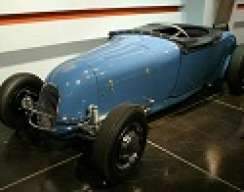
I also have a 1960s Garnet tube slave head that would work for both with the right cabinet(s).
 
E002B06F-589E-495F-A255-5C4282DFD2D4.jpeg


Mod completed. Works great now. Thanks Nathan!
 
It would certainly save a lot of time.

Is DigiKey the best source for the resistors?
Digikey is a source for resistors. DigiKey, Mouser, Tayda, eBay, Amazon. There are plenty out there, just depends on how many you need and how much you want to pay for shipping.
 
Yeah ideally I could just put the master volume at the very end and it would have the exact same effect, and the current master would just be another inter-stage gain that I would fix with resistors, but this works as well. I was trying to add resistor dividers everywhere else in the circuit, but this is the only place it actually does what I need it to.

And actually after playing with it a little more I really like it this way with a fixed maximum output volume and the master acting as a second gain control. It's neat that cranking the master adds more breakup instead of just more volume.
yeah, a simple voltage divider, calculated to what you want the output to be, is the simplest and best method.
 
  • Like
Reactions: Sushi Box FX
So for fun, I plugged my PA X into my Peavey power amp. Worked great, sounded great. Plenty of volume and a little hair pushing the gain.

A/B’d it versus a real Fender preamp, the TBP-1. The TBP-1 took the win, but it has a dedicated OD channel and a Variable Q, which is excellent. Also has a sweet Jensen transformer.

The PA X was close, and in a band mix, I bet only I could tell the difference.