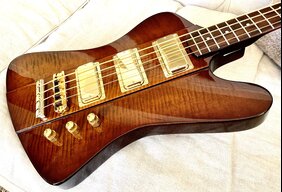
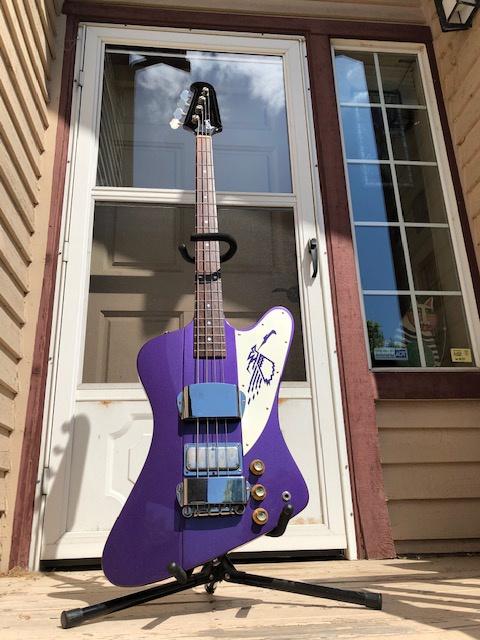
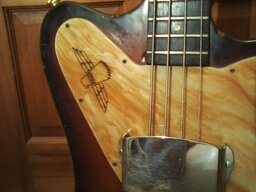
The '76 has "Sidewinders" where the coils are sideways instead of what we think of as vertical (apologies if you knew this). They are more tame than the '64 (or the '64 Epi Embassy). Not quite as big or punchy, but still sounds like a Thunderbird. Much more so than the modern Gibsons which are on any recent or current Gibson if you want the original sound. In part, this is due to having the pickups in the original (correct) locations. I've had TIs and Fender flats, which all sounded really good, but a few months ago I but some Roto 66s on it and that's the ticket for me. They at a little punch that is toned down a bit from the '64. Some do not like them at all because they are more polite sounding. If going for angry piano I can see that a little, but there's no reason at all why they can't do it. Maybe this would be the best way to say it: They sound like the 60s version but with the vol and tone set about 5 on each. That may give you the best idea.
As for the VPs: The VPs are brighter than either the '64 Thunderbird or the '64 Epi and the '76, all of those have a bigger sound to them. Whereas the VPs tend to lack a little on the bigness end and the '76 has more depth, but less natural aggressiveness. Meaning the VPs tend to be a little closer to the '60s than the '76 generally speaking. This is also due to the pickups being pretty close to being in the correct or original positions. Something Gibson seems to be unwilling to do to make the perfect modern Thunderbird (reverse or non-reverse).
Bigness: '60s have it. The 76 is kind of close, the VP lacks this a little.
Something special in the mids: 60s have it. The 76 toned down, the VPs have something pretty close to the original, but not exactly.
Highs: None of the above are crazy bright (using warm Ampeg tube heads), but the VPs are likely the brightest naturally, possibly because of the less present lows, maybe.
I hope that helps a little.











 (easily remedied... the colour that is) That's happened to me more than a few times...


