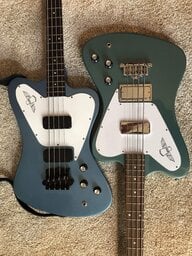
Sorry. I either read it wrong, or you edited it?You’re questioning my purple silk princess fingers?

TalkBass has been independent since 1998. Add your voice.
Create a free account to reply to discussions, view embedded media, and browse with fewer display ads.
Join free Log in
Want zero display ads or expanded classifieds tools? Compare plans.
Sorry. I either read it wrong, or you edited it?You’re questioning my purple silk princess fingers?
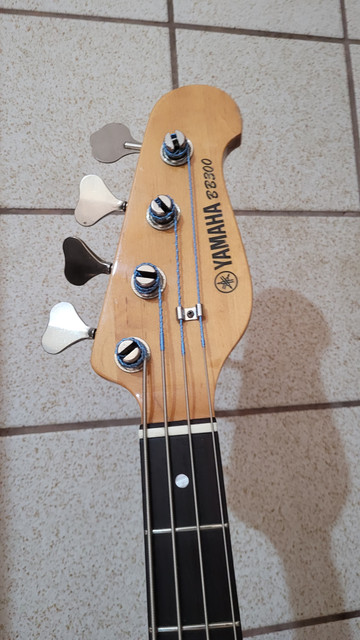
I had a bit of a bad day yesterday; so I took the bass at night and started working on it, to unburden myself
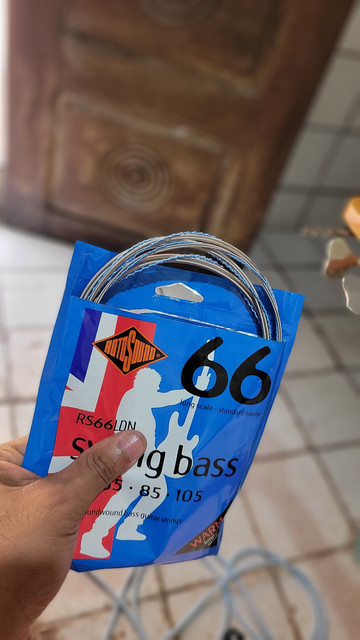
It wasn't my intention to use these Rotosound now, but the ones that came with it were bad.
 )
)
It's either one less step in manufacturing or the Gibson insert doesn't have a flange. Hmmm, I'll have to compare.I know this about the Supertone. But, why does Epiphone not just recess the insert flanges? Seems just dumb. Is it a Gibson-imposed restriction??
Ok, you win the cute puppy picture of the week awardsome have it good…….some, have it REALLY good….
View attachment 4993967
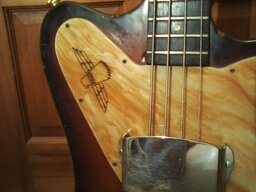
Correct. Power Flats gots purple silks.SIT Power Steels don’t have silk windings. Their flats might, but I don’t know. Ask Mike, I believe he uses them.
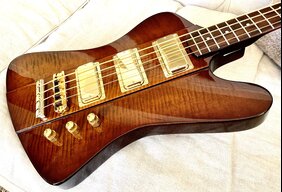
The ones on my Goth are Cobalt flats. There are many others with purple silks though.Quick question: which strings (beyond GHS ones) have purple silk?
Yes. My EBCFs had purple silks. It was a peasant surprise to find purples on the Power Flats since, as we know, TTIITPS(C).The ones on my Goth are Cobalt flats. There are many others with purple silks though.

Interesting question. Turns out the Eppi Embassy bass I got had shoulderless inserts. I haven’t checked my Eppi VP bass, but it might be the same. I wonder if the Eppi shouldered inserts are only related to the three point bridges.

I know this about the Supertone. But, why does Epiphone not just recess the insert flanges? Seems just dumb. Is it a Gibson-imposed restriction??
 ), since Epi's already using the bridge design, why get picky over the inserts?
It's either one less step in manufacturing or the Gibson insert doesn't have a flange. Hmmm, I'll have to compare.


There could possibly be a third reason beyond Pulling and Sourcing…I've heard two different rumors for explanation. Either one, or both, may be true, or false
The first, is that the shouldered design doesn't pull from the body as easily, with the 3-point. It keeps the bridge from impacting the body (which would apply leverage to help pull out the inserts)
The second, like you mentioned, Gibson didn't want Epi to use theirs? But that doesn't make much sense (but hey, it's Gibson, when has that been a requirement?
It would seem like it would be easier/cheaper to just keep making the same insert for all the 'birds, instead of two different designs.......so my guess is either reason #1 (they didn't want to have potentially a lot of troubles from people buying the less expensive Epiphone Thunderbirds, causing a bad impression against the Gibdin versions?), or, for whatever reason, the over-seas parts producer could make the shouldered version more easily/less expensively


The MIJ EB-3 Elite has shoulder less inserts and a three point bridge.Interesting question. Turns out the Eppi Embassy bass I got had shoulderless inserts. I haven’t checked my Eppi VP bass, but it might be the same. I wonder if the Eppi shouldered inserts are only related to the three point bridges.
On the Casady the insert flanges are flush at the front and stick up at the back. It looks like they milled the hole through the finish.There could possibly be a third reason beyond Pulling and Sourcing…
The flush mount Gibson anchor allows the builder to install the anchors before the bass goes through the finishing or painting process. That would eliminate the potential to muck up the finished surface of the bass when press fitting the anchors into the body. However, the Eppi raised shoulder insert cannot be installed prior to finish sanding or painting because of the raised surface, so it must be installed after the finish process is complete, the raised flange may be sized properly to conceal any minor press fit impacts (chipping, cracking, cratering…). So it may come down to fabrication logistics where USA Gibson bodies are finished after the anchor install and Asian Epiphones are finished before the anchor install, each requiring a different type of anchor.
FWIW - having removed, fixed and installed a number of both the Eppi and Gibby inserts I find the Gibson ones to be more robust and harder to remove. That might be because after the insert is press fit into the body (just a hair below flush) the wood closes up around the top to a degree. Might also be because there are more biting splines on the Gibby offering that much more friction.
be jamming this tomorrow
many don’t know it’s actually Anthony Jackson main driving force behind 5 string low B tech by way of his six string “electric contrabass”…..total BADAZZ….. by far one of my fave players…
Excellent post! It got me double checking my birds to see what the anchors looks like. Some of my Gibby anchors match yours (small shoulder, fine spline) and some don’t (no shoulder, fine spline). I revised my post accordingly.Yes, the Gubson has no flange. Also, the fluting is also more....fine? less coarse?
I have a pic of the two around here someplace......
.....here we go
Babicz (in the bag) vs. Gibson inserts:
View attachment 4994288
Epiphone (black) vs. Gibson inserts:
View attachment 4994289
Gibson inserts installed (2013 CP)
View attachment 4994291
Hopefully that's helpful.........
That’s a whole different beast.On the Casady the insert flanges are flush at the front and stick up at the back. It looks like they milled the hole through the finish.
View attachment 4994373
Like my Les PaulOn the Casady the insert flanges are flush at the front and stick up at the back. It looks like they milled the hole through the finish.
View attachment 4994373

I vote for what's behind curtain #3: ¯\_(ツ)_/¯I've heard two different rumors for explanation. Either one, or both, may be true, or false
The first, is that the shouldered design doesn't pull from the body as easily, with the 3-point. It keeps the bridge from impacting the body (which would apply leverage to help pull out the inserts)
The second, like you mentioned, Gibson didn't want Epi to use theirs? But that doesn't make much sense (but hey, it's Gibson, when has that been a requirement?
It would seem like it would be easier/cheaper to just keep making the same insert for all the 'birds, instead of two different designs.......so my guess is either reason #1 (they didn't want to have potentially a lot of troubles from people buying the less expensive Epiphone Thunderbirds, causing a bad impression against the Gibdin versions?), or, for whatever reason, the over-seas parts producer could make the shouldered version more easily/less expensively
 .......so while I was out, I swung by my package drop, and found one of these....
I think Epiphone just come up with a parts list of stuff to build the product consistently. The parts don't need to match Gibson exactly, they just need to function, match the production process, and be easy to procure in Asia.I vote for what's behind curtain #3: ¯\_(ツ)_/¯