Exactly!

TalkBass has been independent since 1998. Add your voice.
Create a free account to reply to discussions, view embedded media, and browse with fewer display ads.
Join free Log in
Want zero display ads or expanded classifieds tools? Compare plans.
Exactly!

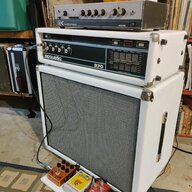
I so need to visit you and Frank.We're off to historic Bremerton, Wa. tomorrow, I'll be all business, but tonight it's bottom's upView attachment 5176506

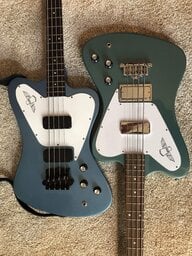
While not definitive, perhaps it adds a data point. My serial number says February 2014 but the dates on pickups say October 2013.


LOL - I use the screw method ("Ahem" added in anticipation of the sophomore class arriving) as a secondary super quick visual check when scanning ads for CP basses. Going through the ads you can't rely on the description or stated year to be accurate.You have *NO* idea how relieved I was that those two screws ended up aligned like that

mixing business and pleasure tonight……Gardinos in Los Gatos is by far one of the coolest venues to play at……We're off to historic Bremerton, Wa. tomorrow, I'll be all business, but tonight it's bottom's upView attachment 5176506


That is an archaic looking panel.There is no visible pipe in the breaker box but all the ground wires exit the top of the panel and into the wall.
View attachment 5176339 View attachment 5176340
You and Frank know how to live. That is all there is.We're off to historic Bremerton, Wa. tomorrow, I'll be all business, but tonight it's bottom's upView attachment 5176506

mixing business and pleasure tonight……Gardinos in Los Gatos is by far one of the coolest venues to play at……
View attachment 5176606

The Cats?mixing business and pleasure tonight……Gardinos in Los Gatos is by far one of the coolest venues to play at……
View attachment 5176606
There is no visible pipe in the breaker box but all the ground wires exit the top of the panel and into the wall.
View attachment 5176339 View attachment 5176340

The Cats?
Looking closer at these pics, I would say you likely have a main disconnect somewhere before that panel. (Based on no main breaker on this panel and use of SER cable)
Disconnect will likely have a big 2 pole 100a or 125a breaker in it.
I would look in there for the grounding and bonding.
Or thats a sub panel fed from a main panel elsewhere in the house.

Now I'm prompted to dig into the Electrical chapters of the IRC book... just passed my exam for Residential Building Inspector certification... I'm a little light on electrical expertise.I am a master electrician. Residential grounding and bonding can happen in a number of ways.
The current standard is two ground wires. One to the water pipe and one to a grounding rod.
A ground wire to a grounding rod can come from the main panel. It can also come from the meter base, or an exterior main disconnect. It will usually be #6 copper solid or stranded, usually bare but not necessarily.
A ground wire to the water pipe will usually come from the main panel will run to a clamp on a cold water pipe. Wire size depending on service size. Can be copper or aluminum, bare or coated.
Bonding between ground and neutral should occur at the first point of disconnect. This may be an outside or inside disconnect, or a main panel with a main breaker.
The bonding may be done in various ways. Could be a bonding strap, bonding screw or a wire. Either way, you should have continuity between the neutral bar and ground. Once it is bonded at the first point of disconnect, no other service equipment gets bonded downstream.
Bonding seems to confuse even some electricians, I see a lot done incorrectly.
Don't know if any of this will solve your noise issue. Just wanted to lay out how it should all look.