
from that post it seems like IVs were only made in the 4th series/run….don’t know if this implies lower number of IVs since there are no quantities listed but intuitively, one would think so…
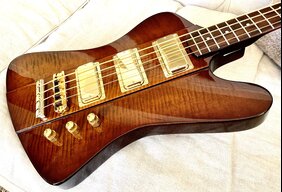
View attachment 5365138
Were there really only 90 built?

TalkBass has been independent since 1998. Add your voice.
Create a free account to reply to discussions, view embedded media, and browse with fewer display ads.
Join free Log in
Want zero display ads or expanded classifieds tools? Compare plans.
from that post it seems like IVs were only made in the 4th series/run….don’t know if this implies lower number of IVs since there are no quantities listed but intuitively, one would think so…
View attachment 5365138

The white ones were discontinued in about 2019? So don’t have regrets. But get a green one.The new colours make me almost regret of getting the white one which replaced the broken sunburst bass. Both apparently discontinued now. The inverness green would match perfectly my IG NR.
View attachment 5367205

The white ones were discontinued in about 2019? So don’t have regrets. But get a green one.

I am doubtful that will happen Brian. The Gibson NR’s are still in production after two plus years. And I’ve got to believe sales have exceeded their expectations. Otherwise they would have stopped making them. I first thought that they would do runs of 400 in each color and that would be it. There is no incentive for them to move NR’s to China and charge 1/3rd the price for them.
That’s what the best information is. I understand that they received a cease and desist, even though Gibson hadn’t made one in forty years.Were there really only 90 built?

60s TBird pickups have very little in common with modern Thunderbird Plus pickups. Alnico vs Ceramic magnets, more copper wire in 60s pickups and nickel silver vs plastic covers make a big difference.
Modern pickups are much harsher sounding than vintage ones for those reasons. You can compare the differences with test equipment as well as hear it with your ears. TB+ pickups are a lot cheaper to make than vintage ones.
It alters the magnetic field mellowing tone slightly.
Depends, if you’re going for that upright organic sound use wood rings. For rock and metal use metal rings (chrome is brighter sounding than nickel which is brighter sounding than black, but gold has the richest sound). For disco just use plastic rings.What material should the rings be made of then?
Like I said.All this talk about pu covers & rings and just happened to look at some posts from 10yrs ago and found this from Carlo -
(on rings & covers)

You also want to match the impedance between the pickup covers and rings, hence using the same material.Depends, if you’re going for that upright organic sound use wood rings. For rock and metal use metal rings (chrome is brighter sounding than nickel which is brighter sounding than black, but gold has the richest sound). For disco just use plastic rings.
Exactly. I haven’t looked into it but I’ve heard it said that the reason six screws are used vs four or even double back tape is because the higher mass further adds to the magnetic field distortion around the pickup. I don’t know if you could hear the difference in a mix, but the article I read said it clearly shows up on a scope or a magnetic flux test strip. Who knows.You also want to match the impedance between the pickup covers and rings, hence using the same material.
Screws are the one place I like to mix. I find metal screws with plastic rings adds some nice sparkle to the tone.Exactly. I haven’t looked into it but I’ve heard it said that the reason six screws are used vs four or even double back tape is because the higher mass further adds to the magnetic field distortion around the pickup. I don’t know if you could hear the difference in a mix, but the article I read said it clearly shows up on a scope or a magnetic flux test strip. Who knows.
And you typed that with a straight face.Depends, if you’re going for that upright organic sound use wood rings. For rock and metal use metal rings (chrome is brighter sounding than nickel which is brighter sounding than black, but gold has the richest sound). For disco just use plastic rings.

Ouch. That's a rough story.was playing in southern Spain (Marbella) and was moving from a house into an apartment with my ex wife and got careless while loading onto a van (lots of stuff) and forgot what thief bait these things can be….the 7ender case had the metal 7ender logo as did the Bird with the Gibson one….unfortunately I (my wife) noticed the next day when they were well gone….no point in talking to the Spanish police…….
mentioned it here a few times….would rather forget as the J was my main player and the Bird was a HS graduation present to myself….careful with your basses guys, when you least expect it…
Cool idea, I haven’t tried that yet.Screws are the one place I like to mix. I find metal screws with plastic rings adds some nice sparkle to the tone.
I did forget to mention the string tension being a factor. Thanks!Cool idea, I haven’t tried that yet.
I think I found the article about the impact of screws on a trim ring, here’s a quote…
“Adding flux from an auxiliary screw will break the symmetry of the magnetisation cycle within the string so the results will depend on the local recoil permeability of the string at the various magnetisations produced by the magnet. I am sure that there would be a flattening of the measured peak but it wouldn't really represent the true flux density.
Surely the best result would come from simply increasing the magnitude of the alternating flux. Getting enough Ampere-turns shouldn't be a problem but the trim ring screw would probably have to be replaced by something with a higher saturation flux density. Losses in the core probably wouldn't matter as long as a reasonably sinusoidal flux could be produced. Mechanical vibration of the string might need to be suppressed.”
My head hurts.
Nope. Only an ugly rumor.huh? there's music other than disco?
TR cover screws should never be mixed.Screws are the one place I like to mix. I find metal screws with plastic rings adds some nice sparkle to the tone.
Only if you use the correct tone cap on the screws. A flat screw cap, especially if it's countersunk, cuts the tone and chokes it. A dome top screw allows the tone to reform on the other side and enhances the sound.Screws are the one place I like to mix. I find metal screws with plastic rings adds some nice sparkle to the tone.


