- Mar 13, 2008
- 18,895
- 142,214
- Disclosures
- Endorsing Artist Mike Lull T Bass pickups, The Bass Shop, Seattle WA.
As there seems to be a community that really loves them, are there particular features/finishes/years that are particularly desirable? I’ll be honest and say that the body styles and headstock puzzle the heck out of me. I’m not enamored with their appearance, but I’m wondering if they’r an acquired taste kind of thing…it’s not a “love at first sight” kind of thing for me. The look mentally and physically awkward- but still I hear a small voice inside my head that says “hmmm…could be interesting”.
Like most basses, yes there is a community that really does love them, it's proportional in size to the relative popularity of course, so we're never going to be as large a group as say, folks that like Jazz basses, but that's cool, we're just devoted. As has been touched on, there are some interesting "Phases" of Thunderbird production over the years, they each have certain points of desirability.
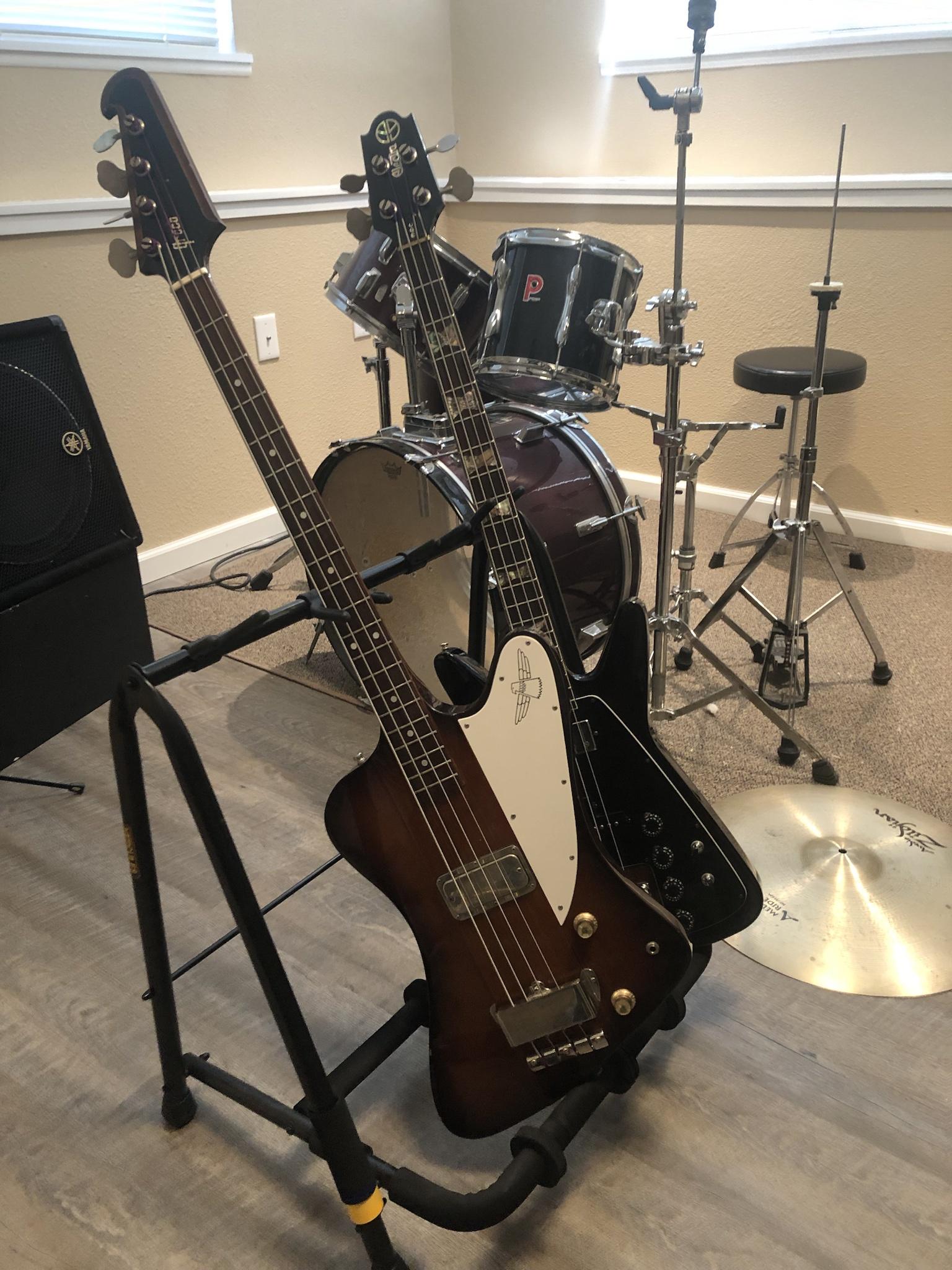
The original "Reverse" from the '60s is held in pretty high regard, the necks are incredibly fast and thin (easily broken too), the multi laminate construction would be copied by many high end builders as time went on, Alembic anyone? The pickups are complex and full sounding, with some variation in each due to Gibson winding the pickups using a timer, which resulted in many being overwound. Low production numbers, just over 1000 for '63-'65 II and IV make them a bit harder to find than vintage 7enders of the same era. Regarding the "lawsuit" with 7ender, I can say that I've never seen any verifiable proof or disproof of it actually happening, I do find it noteworthy that there is no mention of it at all in Rob van den Broek's excellent reference The Gibson Bass Book | An Illustrated Tribute by Rob van den Broek
Gibson did redesign the Thunderbird for the years '65-'69, the body is essentially flipped and is a solid piece with set neck construction, these are commonly called a "Non - Reverse" or NR, again they are very desirable from the collectable and tonal standpoint, even fewer were made, around 720 or so. Both of these early versions used a two point bridge that often wouldn't intonate properly due to insufficient travel for the saddles. Production ended in 1969.
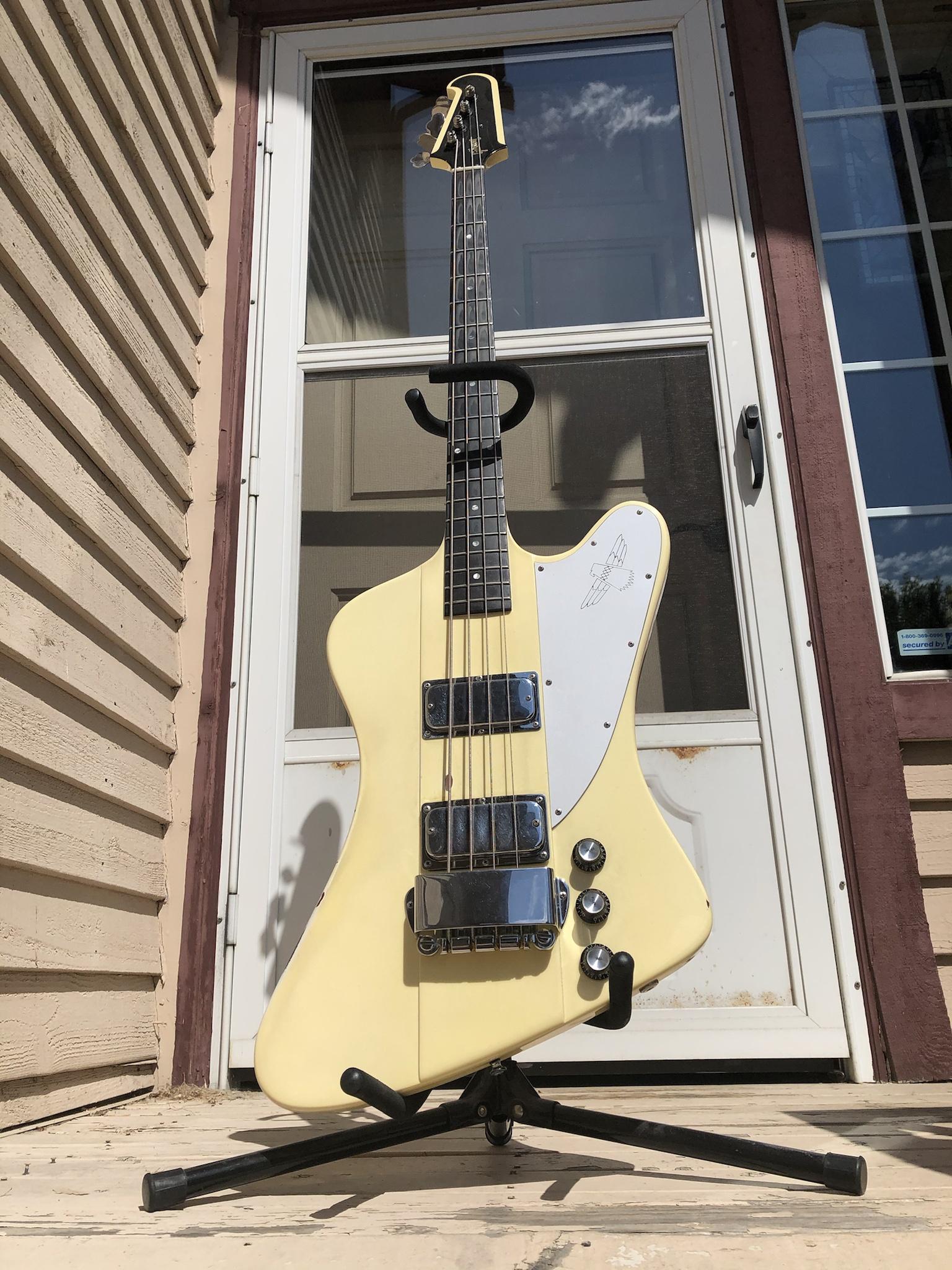
Gibson re-issued the "Reverse" from '76-'79, at first glance these basses look like the original '60s version, but are a little different in a couple of points. The upper 'Bout of the body has a slightly different shape, a new bridge, the much maligned 3 point is used and the pickups are of a completely different design. The pickups are unique to these years of production and are easily discerned from any other Thunderbird pickups by the use of 3 mounting screws instead of the usual two. Tonally, they are like no other as well, the sidewinder design pickups are wired in "series" rather than "parallel, so these Birds really do have a different sound than other - they can be very bassey, even making a lot of sub harmonic, I think they sound best played loud through a big amp, using a pick, the whole combination just seems to ignite rather gloriously. Over the years of production less than 1900 were made, so again they're kind of rare, they seem to going up in value over the last few years.
After being withdrawn from production only a few Thunderbirds were made in '86 and '87, these were done by the Custom Shop in very low numbers, mostly for Japanese dealers, they feature a '76 body, smaller tuning machines and there were a few II models produced as well.
1988 saw the reintroduction of the Thunderbird, largely due to new owner Henry J., slightly redesigned, they feature a much smaller headstock and tuners which along with the 3 point are now black, instead of chrome. The pickups are a complete crapshoot, with some early ones being '76 guts potted into the black plastic covers, some had a short lived bizarre sidewinder design. Gibson eventually settled into a twin coil ceramic magnet design but there are at least four variations of this that I've been able to document. The early years of the reissue are held in pretty high regard, the construction is the traditional 9 ply and is reasonably well done and the neck has virtually no pitch, like all previous versions.
In 2006 Gibson issued a "Studio" version of the Thunderbird, these feature a single piece slab body and a set neck with a trimmed, even smaller headstock. These basses use a more contemporary bridge design and the black plastic covered "TB-Plus" pickups, essentially a "modern" Thunderbird, they are often overlooked, too bad, as the combination of construction, pickups and bridge are excellent all around.
In 2013 Gibson reissued the Non Reverse Thunderbird as a limited run of 400, while these look like the late '60s version, they do differ in neck dimensions, (including a volute) the 3 point bridge and the TB-Plus pickups.
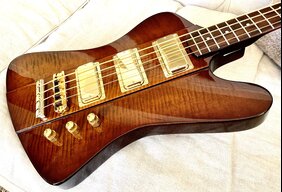
2015 saw Gibson release the "Reverse" with DeCola pickups, a new bridge by Babciz and increased switching options, again a modern variation of the Thunderbird, these are really nice basses.
In 2021 Gibson again reissued the Non Reverse, redesigned from the previous effort, these feature a new reissue pickup, Hipshot tuners, and a new, slightly bigger neck, these are good, sturdy basses with great tone as well.
Were I looking for a Gibson Reverse Thunderbird I would shop for a late '80s or early '90s, these are affordable, great players and have an incredible thin, fast neck with a very shallow pitch. For a Gibson Non Reverse, the 2021 or newer are hard to beat, those new pickups sound really good.
Slow morning at work today............Got a bit long winded.