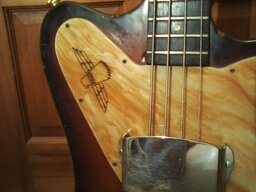
Mahogany and ash aren't all that different from a density standpoint. There's variation, of course, but overall, the ranges of densities are similar between them the various kinds of ash and the various kinds of mahogany. That makes me think that density isn't the main driver. Comparing the 2015 Thunderbird to the 2013 EB is case in point. Mahogany makes the Thunderbird sound darker and warmer. By comparison, the EB is brighter and more precise, if that's good term. The Thunderbird has more black in its sound, and the EB has more lime yellow. Both are good. Maybe the shape and size of bodies makes a difference. I doubt it makes the same amount of difference as the wood, which makes a smaller difference than strings, electronics, and technique.
Which all means that the weight of an instrument probably doesn't matter as much as other factors. It probably does, but I don't know what that means. Acrylic, being a consistent, synthetic product, would be more similar from body to body than wood. If one sounds good, then they probably all do. If one sounds lousy, they probably all do. My guess is that the mass has a tendency to damp out the sound, and that an acrylic bass guitar would sound a bid dull. That's pure speculation.
With unlimited resources and not much brains, I would buy an acrylic Thunderbird to hang on the wall and light up with LEDs. The not much brains part is easier to achieve than the unlimited resources part. So, no acrylic experiments in sound and home decoration.