
Well said! I completely agree.I've built a few basses but I'm no Luthier by a long shot. That said, when playing a bass in a mix I just don't really notice any difference between neck through, set neck or bolt on. When noodling around in the practice room I think I feel a bit more sustain and maybe a slightly different attack and decay with my neck through birds vs my set or bolt birds, but it's very subtle and could just as easily be confirmation bias.
The multi ply mahogany and walnut neck laminations probably do effect the tone to a degree but I suspect it's designed that way more for stability than anything else. I'd assume a single piece non ply neck as thin as some of my birds have would twist like a noodle with humidity, temperature and string tension changes.
I am a member of the Wood Matters club and do think that wood type and density and construction methods all effect the overall tone or character of the bass - how much and how predictable are the real questions. In my opinion the strings/controls/amp/cab chain deliver a sound, the wood and construction methods determine the character of that sound, and the playing style gives expression and emotion to that sound. JMHO, there's many other opinions out there as well.

Enjoy the benefits of a premium membership!
Upgrade Account
-
TalkBass has been independent since 1998. Add your voice.
Create a free account to reply to discussions, view embedded media, and browse with fewer display ads.
Join free Log in
Want zero display ads or expanded classifieds tools? Compare plans.
You are using an out of date browser. It may not display this or other websites correctly.
You should upgrade or use an alternative browser.
You should upgrade or use an alternative browser.
Thunderbird Club
- Thread starter TBird1958
- Start date
-
- Tags
- club thunderbird
More options
Who Replied?
Nice! Would have loved to have been there. Drive would have been something of a problem!went well! thx...the stock bridge pup on the 13 NR continues to be a PITA as the bottom screw (controls side) slowly comes undone (forgot about this since the bass sported three screw 70's winders for a while) and starts rub on the G string (I know ahem) making it useless...then I remember and screw it down and all good until next time....don't wanna super glue it down a' la Fred Flintstone soo trying to figure out how to fix it....no spring? different screw? dunno..
as for the sound, pretty much any tone (except aggressive slap/synth) available from the EQ and beautiful evenness when played with Dunlop nylon 60 and 73s. used my Promethean P500H into a MB 2X12 which never went past 2...all in all pretty good but could have really used a second bass (which I brought but left in the car) with steel rounds for some of the more synthy 80's stuff, thing is, with yesterday's BL we go from a pool of great Bay Area players but you never know who's showing up to play so....
Fill the screw hole and start over maybe? Possibly a little caulk that will grip the screw but not glue it and make it hard to remove if needed. Should be enough to keep it from backing out. That's a problem I've never had.

Oh, it's DeCola. No space. I wonder if people complained that it ruined the simplicity of the Thunderbird.
People will complain no matter what you do - look at 7ender. Accused of being boring for producing only Ps and Js. And told that the dimension was terrible because it was neither P nor J. A good product designer doesn't worry about the product people are asking for, they worry about the problem that is to be solved.
If, in the late 1800s, you had asked people what they wanted, they wanted a better horse and carriage. What they really wanted was a horseless carriage that didn't get tired, didn't smell, didn't poop everywhere, etc. What they got was a car that solved the problems, but wasn't what they asked for.
Could be. I didn't understand why they switched back. They ditched Babicz bridges on Thunderbirds, too. That didn't make any sense to me, either.
That was when management changed and they were "rationalizing" a lot. Assume they get a great deal on a Babicz and it only costs them $50 each. Compare to what it costs to inexpensively cast some cheap metal into a three point bridge in China; probably less than $5 fully loaded costs including shipping. That is a lot of money that can be dropped straight to the bottom line.
Yes, I thought I said that.A J has a murky green quality to its sound. A Thunderbird has a lot of black, with teal and sometimes purple. It's got electric blue edges to the sound. The J sound is all the same color most of the time until it gets burpy, then it gets some maroon and some white. It will occasionally get some blue or teal, but it will never get the black that a Thunderbird has.
 But I forgot about the teal, but you're right.
Me too! Exactly what was it about amazing they didn't like?Wow, I just learned that Jim de Cola is the master luthier and product development manager at Gibson USA. I wonder why they went back to the TB+ after that one year.

I thought I read it was because they couldn’t afford to keep paying Babicz.Yeah, the bridge thing is interesting. I'd guess it was all down to cost. The traditional 3-point must cost next to nothing.
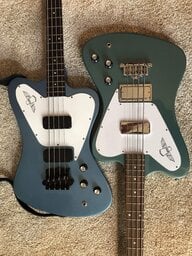
I recall some negative comments on TB about Gibson ruining the Thunderbird by using them. History and all that. But some of those saying that were the same people who talk about flying headstocks and diving necks.Oh, it's DeCola. No space. I wonder if people complained that it ruined the simplicity of the Thunderbird.
The ‘15 was the first year of the factory installed Babicz too. The “retail” price was $2499. I was thrilled when I got mine. And I’m still thrilled by it everyday. I came on here shortly after I got it around this time five years ago and received a nice greeting from Veronica about it being a solid choice. Been hanging around ever since.
The change happened around the time of the BK. So that may have had something to do with it. Who knows for sure.Yeah, the bridge thing is interesting. I'd guess it was all down to cost. The traditional 3-point must cost next to nothing.

- Mar 13, 2008
- 18,895
- 142,214
- Disclosures
- Endorsing Artist Mike Lull T Bass pickups, The Bass Shop, Seattle WA.
I recall some negative comments on TB about Gibson ruining the Thunderbird by using them. History and all that. But some of those saying that were the same people who talk about flying headstocks and diving necks.
The ‘15 was the first year of the factory installed Babicz too. The “retail” price was $2499. I was thrilled when I got mine. And I’m still thrilled by it everyday. I came on here shortly after I got it around this time five years ago and received a nice greeting from Veronica about it being a solid choice. Been hanging around ever since.
You say the nicest things!
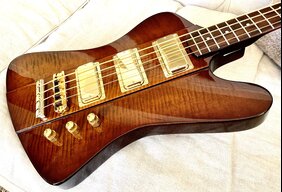
I think those 2015's are really cool Birds and would suggest that they'll become quite sought after in years to come, a nice bridge and serious tonal flexibility!
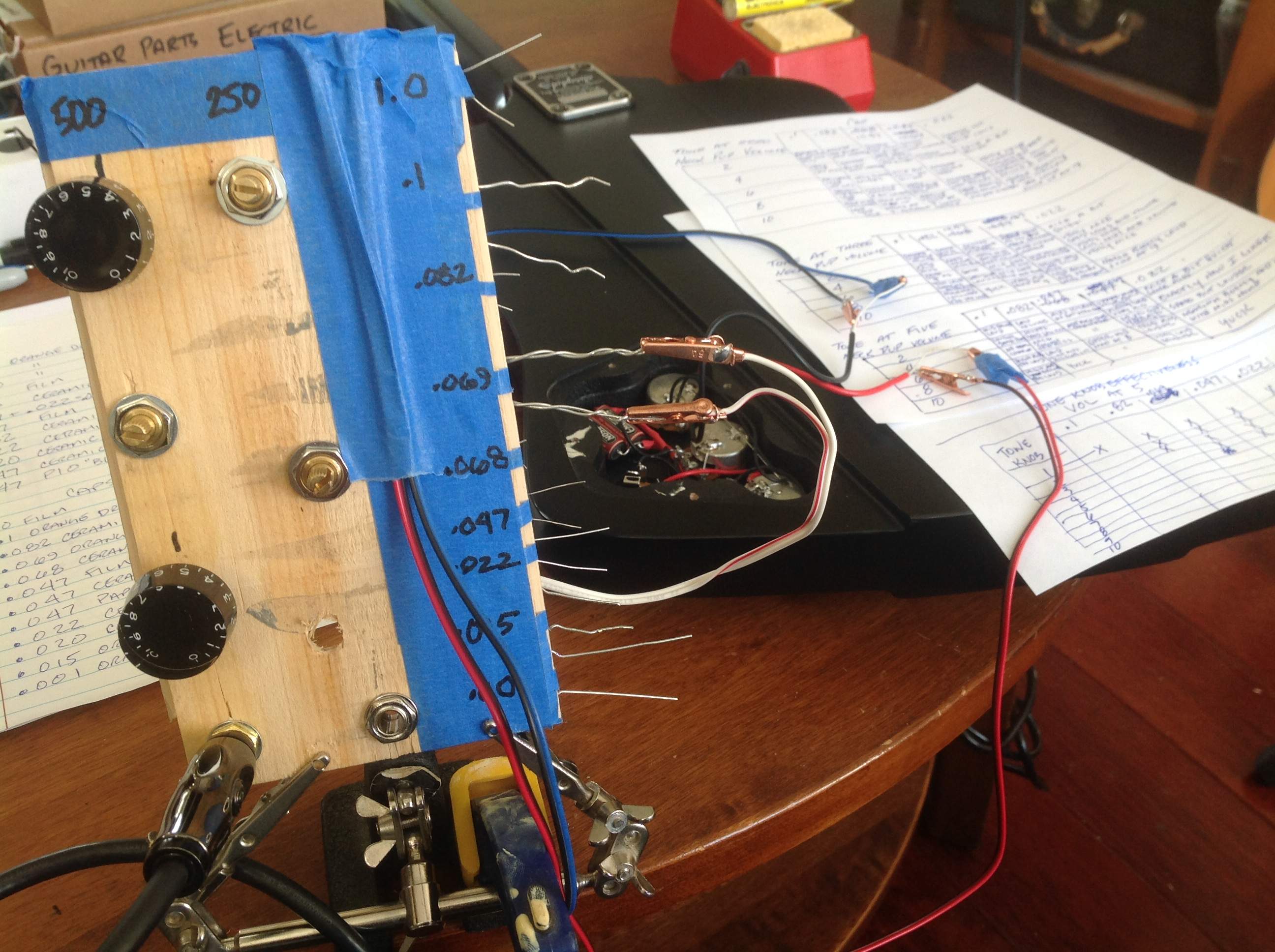
Just wrapped up the first leg of the Goth tone cap and pot test where the 500K pots were in the control circuit.
Keep in mind this test was done with fresh Cobalt Flats and stock Goth pups. String or pup changes could give different results. I also limited the tests to finger playing only, between the neck and the neck pup with the neck pup soloed. No adjustments were made to the amp, everything centered.
The first run through was wired with a specific cap and the tone pot set at zero and the volume knob at two, followed by volume settings of 4,6,8,10 with notes taken at each volume setting.
The second run was the same cap with tone set at 3 and volumes at 2,4,6,8,10.
The third run was the cap with tone set at 5 and volumes at 2,4,6,8,10.
That's 15 data points for each cap.
I didn't bother to record data above a 5 setting on the tone pot because I found no significant change in tone with any tested cap above that setting. I eliminated a few caps in pre-testing, the 1.0 cap ended up being nothing more than an off/on switch. At a tone setting of zero there was no signal to the amp, great if you want a mute switch, settings above that were deep and dark but resulted in very little tone change regardless of the setting. I eliminated the caps with values less than .022uf because they seemed to have very little impact on tone, it was nearly the equivalent of hardwiring the pups to the output jack.
The caps that were tested were .1, .082, .068, .047 and .022 (my apologies to those of you who use commas in place of decimal points, I'm sticking to the American standard on this one).
Findings were different than I anticipated but did highlight a huge interplay between the volume and tone knobs. Some of the caps that sounded best at a given volume were completely unuseable at other volumes. And louder is better doesn't always hold true.
Findings:
.1uf cap - tone on zero gives super loud deep lows even at volume settings as low as 4, thunderous at a volume of 6, destructive at 8, then at a volume of 9 the upper mids mix in and you better have hearing protection and a spare set of speakers for your cab. Increasing the tone cap setting drastically increases mids. On this bass this is the cap to use if all you want is lows and low mids and don't mind leaving the tone pot on zero and the volume at 5 or less. Truly makes a one trick pony (or wrecking ball) out of the Goth. Bottom line - "nuke em from orbit"
.082uf cap - smooth, deep and dark, nice low mids BUT very little adjustability. A tone knob setting of zero requires a volume knob setting of 8 to get any useable level of sound, and at a volume setting of 9 or higher it sounds very harsh and unpleasant (my notes actually say "yuck"). This is the cap that I thought would sound best, so much for confirmation bias. Kick the tone knob up to 5 and you have nice smooth useable lows starting at a volume setting of 4 to 6. At a volume of 8 the high mids start to kick in and quickly ruin the party. Bottom line - not ready for prime time.
.068uf cap - this is what the Goth comes stock with. Unfortunately my stock cap got fried in the desolder so I had to wire a couple of orange caps together for a .069uf value, close enough. Good deep tone, a bit muddy at the low tone settings and moving to more mid focused as the tone pot value is increased. Loud and boomy at volume settings of 9 or higher. Sweet spot on the volume knob is between 4 and 8. Below that and not enough useable volume, above that it's boomy and undefined. Bottom line - ok but could be a lot better.
.047uf cap - I found this one surprising. At zero tone it's much to quiet until you get the volume knob up to about 7 or 8. At that point it sounds great, but then takes a massive volume jump when the volume knob hits 9 and sounds harsh as it's maxed. The good news is it takes on a different personality when the tone knob is set at 3. Sounds very nice and balanced, smooth, deep but defined at volumes of 2 to 8 very linear and predictable, then falls apart again at a volume of 9 or higher when an upper mid hump sets in. If the tone knob is set at 5 the mids kick in much sooner and sound nice until you hit a volume setting of 8 or higher. Bottom line - I could live with this one. Lots of useable tones once you get off the zero tone setting.
.022uf cap - not what I expected at all. At zero tone setting it was very smooth and balanced across all strings. At a tone setting of 3 it had very musical lows and low mids, very useable tone at volumes of 3 or higher. At a volume of 9 still quite nice. Volume maxed at 10 brought out the yuck factor with an almost overdriven distortion boomy obnoxious sound. But again, a picture perfect sound from volume settings of 3 to 8 and tone settings of zero to max. bottom line - this is the keeper cap of the bunch for the 500K pots. Will be interesting to see how it works with the 250K pots.
And there you have it (well, half of it, the other half will happen when the 250k tone pot arrives).
TB rules, pic or it didn't happen...
Keep in mind this test was done with fresh Cobalt Flats and stock Goth pups. String or pup changes could give different results. I also limited the tests to finger playing only, between the neck and the neck pup with the neck pup soloed. No adjustments were made to the amp, everything centered.
The first run through was wired with a specific cap and the tone pot set at zero and the volume knob at two, followed by volume settings of 4,6,8,10 with notes taken at each volume setting.
The second run was the same cap with tone set at 3 and volumes at 2,4,6,8,10.
The third run was the cap with tone set at 5 and volumes at 2,4,6,8,10.
That's 15 data points for each cap.
I didn't bother to record data above a 5 setting on the tone pot because I found no significant change in tone with any tested cap above that setting. I eliminated a few caps in pre-testing, the 1.0 cap ended up being nothing more than an off/on switch. At a tone setting of zero there was no signal to the amp, great if you want a mute switch, settings above that were deep and dark but resulted in very little tone change regardless of the setting. I eliminated the caps with values less than .022uf because they seemed to have very little impact on tone, it was nearly the equivalent of hardwiring the pups to the output jack.
The caps that were tested were .1, .082, .068, .047 and .022 (my apologies to those of you who use commas in place of decimal points, I'm sticking to the American standard on this one).
Findings were different than I anticipated but did highlight a huge interplay between the volume and tone knobs. Some of the caps that sounded best at a given volume were completely unuseable at other volumes. And louder is better doesn't always hold true.
Findings:
.1uf cap - tone on zero gives super loud deep lows even at volume settings as low as 4, thunderous at a volume of 6, destructive at 8, then at a volume of 9 the upper mids mix in and you better have hearing protection and a spare set of speakers for your cab. Increasing the tone cap setting drastically increases mids. On this bass this is the cap to use if all you want is lows and low mids and don't mind leaving the tone pot on zero and the volume at 5 or less. Truly makes a one trick pony (or wrecking ball) out of the Goth. Bottom line - "nuke em from orbit"
.082uf cap - smooth, deep and dark, nice low mids BUT very little adjustability. A tone knob setting of zero requires a volume knob setting of 8 to get any useable level of sound, and at a volume setting of 9 or higher it sounds very harsh and unpleasant (my notes actually say "yuck"). This is the cap that I thought would sound best, so much for confirmation bias. Kick the tone knob up to 5 and you have nice smooth useable lows starting at a volume setting of 4 to 6. At a volume of 8 the high mids start to kick in and quickly ruin the party. Bottom line - not ready for prime time.
.068uf cap - this is what the Goth comes stock with. Unfortunately my stock cap got fried in the desolder so I had to wire a couple of orange caps together for a .069uf value, close enough. Good deep tone, a bit muddy at the low tone settings and moving to more mid focused as the tone pot value is increased. Loud and boomy at volume settings of 9 or higher. Sweet spot on the volume knob is between 4 and 8. Below that and not enough useable volume, above that it's boomy and undefined. Bottom line - ok but could be a lot better.
.047uf cap - I found this one surprising. At zero tone it's much to quiet until you get the volume knob up to about 7 or 8. At that point it sounds great, but then takes a massive volume jump when the volume knob hits 9 and sounds harsh as it's maxed. The good news is it takes on a different personality when the tone knob is set at 3. Sounds very nice and balanced, smooth, deep but defined at volumes of 2 to 8 very linear and predictable, then falls apart again at a volume of 9 or higher when an upper mid hump sets in. If the tone knob is set at 5 the mids kick in much sooner and sound nice until you hit a volume setting of 8 or higher. Bottom line - I could live with this one. Lots of useable tones once you get off the zero tone setting.
.022uf cap - not what I expected at all. At zero tone setting it was very smooth and balanced across all strings. At a tone setting of 3 it had very musical lows and low mids, very useable tone at volumes of 3 or higher. At a volume of 9 still quite nice. Volume maxed at 10 brought out the yuck factor with an almost overdriven distortion boomy obnoxious sound. But again, a picture perfect sound from volume settings of 3 to 8 and tone settings of zero to max. bottom line - this is the keeper cap of the bunch for the 500K pots. Will be interesting to see how it works with the 250K pots.
And there you have it (well, half of it, the other half will happen when the 250k tone pot arrives).
TB rules, pic or it didn't happen...
Interesting! Thanks for taking the time to nicely describe your findings.Just wrapped up the first leg of the Goth tone cap and pot test where the 500K pots were in the control circuit.
Keep in mind this test was done with fresh Cobalt Flats and stock Goth pups. String or pup changes could give different results. I also limited the tests to finger playing only, between the neck and the neck pup with the neck pup soloed. No adjustments were made to the amp, everything centered.
The first run through was wired with a specific cap and the tone pot set at zero and the volume knob at two, followed by volume settings of 4,6,8,10 with notes taken at each volume setting.
The second run was the same cap with tone set at 3 and volumes at 2,4,6,8,10.
The third run was the cap with tone set at 5 and volumes at 2,4,6,8,10.
That's 15 data points for each cap.
I didn't bother to record data above a 5 setting on the tone pot because I found no significant change in tone with any tested cap above that setting. I eliminated a few caps in pre-testing, the 1.0 cap ended up being nothing more than an off/on switch. At a tone setting of zero there was no signal to the amp, great if you want a mute switch, settings above that were deep and dark but resulted in very little tone change regardless of the setting. I eliminated the caps with values less than .022uf because they seemed to have very little impact on tone, it was nearly the equivalent of hardwiring the pups to the output jack.
The caps that were tested were .1, .082, .068, .047 and .022 (my apologies to those of you who use commas in place of decimal points, I'm sticking to the American standard on this one).
Findings were different than I anticipated but did highlight a huge interplay between the volume and tone knobs. Some of the caps that sounded best at a given volume were completely unuseable at other volumes. And louder is better doesn't always hold true.
Findings:
.1uf cap - tone on zero gives super loud deep lows even at volume settings as low as 4, thunderous at a volume of 6, destructive at 8, then at a volume of 9 the upper mids mix in and you better have hearing protection and a spare set of speakers for your cab. Increasing the tone cap setting drastically increases mids. On this bass this is the cap to use if all you want is lows and low mids and don't mind leaving the tone pot on zero and the volume at 5 or less. Truly makes a one trick pony (or wrecking ball) out of the Goth. Bottom line - "nuke em from orbit"
.082uf cap - smooth, deep and dark, nice low mids BUT very little adjustability. A tone knob setting of zero requires a volume knob setting of 8 to get any useable level of sound, and at a volume setting of 9 or higher it sounds very harsh and unpleasant (my notes actually say "yuck"). This is the cap that I thought would sound best, so much for confirmation bias. Kick the tone knob up to 5 and you have nice smooth useable lows starting at a volume setting of 4 to 6. At a volume of 8 the high mids start to kick in and quickly ruin the party. Bottom line - not ready for prime time.
.068uf cap - this is what the Goth comes stock with. Unfortunately my stock cap got fried in the desolder so I had to wire a couple of orange caps together for a .069uf value, close enough. Good deep tone, a bit muddy at the low tone settings and moving to more mid focused as the tone pot value is increased. Loud and boomy at volume settings of 9 or higher. Sweet spot on the volume knob is between 4 and 8. Below that and not enough useable volume, above that it's boomy and undefined. Bottom line - ok but could be a lot better.
.047uf cap - I found this one surprising. At zero tone it's much to quiet until you get the volume knob up to about 7 or 8. At that point it sounds great, but then takes a massive volume jump when the volume knob hits 9 and sounds harsh as it's maxed. The good news is it takes on a different personality when the tone knob is set at 3. Sounds very nice and balanced, smooth, deep but defined at volumes of 2 to 8 very linear and predictable, then falls apart again at a volume of 9 or higher when an upper mid hump sets in. If the tone knob is set at 5 the mids kick in much sooner and sound nice until you hit a volume setting of 8 or higher. Bottom line - I could live with this one. Lots of useable tones once you get off the zero tone setting.
.022uf cap - not what I expected at all. At zero tone setting it was very smooth and balanced across all strings. At a tone setting of 3 it had very musical lows and low mids, very useable tone at volumes of 3 or higher. At a volume of 9 still quite nice. Volume maxed at 10 brought out the yuck factor with an almost overdriven distortion boomy obnoxious sound. But again, a picture perfect sound from volume settings of 3 to 8 and tone settings of zero to max. bottom line - this is the keeper cap of the bunch for the 500K pots. Will be interesting to see how it works with the 250K pots.
And there you have it (well, half of it, the other half will happen when the 250k tone pot arrives).
TB rules, pic or it didn't happen...
View attachment 4000421
Gaolee
Official leathers tester and crash dummy
Mine might be a little, uh, road worn by the time the kid inherits it. Then if it is valuable, he can figure it out.You say the nicest things!
I think those 2015's are really cool Birds and would suggest that they'll become quite sought after in years to come, a nice bridge and serious tonal flexibility!

Just wrapped up the first leg of the Goth tone cap and pot test where the 500K pots were in the control circuit.
Keep in mind this test was done with fresh Cobalt Flats and stock Goth pups. String or pup changes could give different results. I also limited the tests to finger playing only, between the neck and the neck pup with the neck pup soloed. No adjustments were made to the amp, everything centered.
The first run through was wired with a specific cap and the tone pot set at zero and the volume knob at two, followed by volume settings of 4,6,8,10 with notes taken at each volume setting.
The second run was the same cap with tone set at 3 and volumes at 2,4,6,8,10.
The third run was the cap with tone set at 5 and volumes at 2,4,6,8,10.
That's 15 data points for each cap.
I didn't bother to record data above a 5 setting on the tone pot because I found no significant change in tone with any tested cap above that setting. I eliminated a few caps in pre-testing, the 1.0 cap ended up being nothing more than an off/on switch. At a tone setting of zero there was no signal to the amp, great if you want a mute switch, settings above that were deep and dark but resulted in very little tone change regardless of the setting. I eliminated the caps with values less than .022uf because they seemed to have very little impact on tone, it was nearly the equivalent of hardwiring the pups to the output jack.
The caps that were tested were .1, .082, .068, .047 and .022 (my apologies to those of you who use commas in place of decimal points, I'm sticking to the American standard on this one).
Findings were different than I anticipated but did highlight a huge interplay between the volume and tone knobs. Some of the caps that sounded best at a given volume were completely unuseable at other volumes. And louder is better doesn't always hold true.
Findings:
.1uf cap - tone on zero gives super loud deep lows even at volume settings as low as 4, thunderous at a volume of 6, destructive at 8, then at a volume of 9 the upper mids mix in and you better have hearing protection and a spare set of speakers for your cab. Increasing the tone cap setting drastically increases mids. On this bass this is the cap to use if all you want is lows and low mids and don't mind leaving the tone pot on zero and the volume at 5 or less. Truly makes a one trick pony (or wrecking ball) out of the Goth. Bottom line - "nuke em from orbit"
.082uf cap - smooth, deep and dark, nice low mids BUT very little adjustability. A tone knob setting of zero requires a volume knob setting of 8 to get any useable level of sound, and at a volume setting of 9 or higher it sounds very harsh and unpleasant (my notes actually say "yuck"). This is the cap that I thought would sound best, so much for confirmation bias. Kick the tone knob up to 5 and you have nice smooth useable lows starting at a volume setting of 4 to 6. At a volume of 8 the high mids start to kick in and quickly ruin the party. Bottom line - not ready for prime time.
.068uf cap - this is what the Goth comes stock with. Unfortunately my stock cap got fried in the desolder so I had to wire a couple of orange caps together for a .069uf value, close enough. Good deep tone, a bit muddy at the low tone settings and moving to more mid focused as the tone pot value is increased. Loud and boomy at volume settings of 9 or higher. Sweet spot on the volume knob is between 4 and 8. Below that and not enough useable volume, above that it's boomy and undefined. Bottom line - ok but could be a lot better.
.047uf cap - I found this one surprising. At zero tone it's much to quiet until you get the volume knob up to about 7 or 8. At that point it sounds great, but then takes a massive volume jump when the volume knob hits 9 and sounds harsh as it's maxed. The good news is it takes on a different personality when the tone knob is set at 3. Sounds very nice and balanced, smooth, deep but defined at volumes of 2 to 8 very linear and predictable, then falls apart again at a volume of 9 or higher when an upper mid hump sets in. If the tone knob is set at 5 the mids kick in much sooner and sound nice until you hit a volume setting of 8 or higher. Bottom line - I could live with this one. Lots of useable tones once you get off the zero tone setting.
.022uf cap - not what I expected at all. At zero tone setting it was very smooth and balanced across all strings. At a tone setting of 3 it had very musical lows and low mids, very useable tone at volumes of 3 or higher. At a volume of 9 still quite nice. Volume maxed at 10 brought out the yuck factor with an almost overdriven distortion boomy obnoxious sound. But again, a picture perfect sound from volume settings of 3 to 8 and tone settings of zero to max. bottom line - this is the keeper cap of the bunch for the 500K pots. Will be interesting to see how it works with the 250K pots.
And there you have it (well, half of it, the other half will happen when the 250k tone pot arrives).
TB rules, pic or it didn't happen...
View attachment 4000421
Awesome!

Great stuff; makes me want to try the .1 on the GBP, with its much less hot pickups, see what happens

(possibly because of the "nuke from orbit" description
 )
)
At the rate I’m going, mine won’t be road worn at all. But it stays out on the wall or in a stand.Mine might be a little, uh, road worn by the time the kid inherits it. Then if it is valuable, he can figure it out.
Has your wife given you “the look” yet?Just wrapped up the first leg of the Goth tone cap and pot test where the 500K pots were in the control circuit.
Keep in mind this test was done with fresh Cobalt Flats and stock Goth pups. String or pup changes could give different results. I also limited the tests to finger playing only, between the neck and the neck pup with the neck pup soloed. No adjustments were made to the amp, everything centered.
The first run through was wired with a specific cap and the tone pot set at zero and the volume knob at two, followed by volume settings of 4,6,8,10 with notes taken at each volume setting.
The second run was the same cap with tone set at 3 and volumes at 2,4,6,8,10.
The third run was the cap with tone set at 5 and volumes at 2,4,6,8,10.
That's 15 data points for each cap.
I didn't bother to record data above a 5 setting on the tone pot because I found no significant change in tone with any tested cap above that setting. I eliminated a few caps in pre-testing, the 1.0 cap ended up being nothing more than an off/on switch. At a tone setting of zero there was no signal to the amp, great if you want a mute switch, settings above that were deep and dark but resulted in very little tone change regardless of the setting. I eliminated the caps with values less than .022uf because they seemed to have very little impact on tone, it was nearly the equivalent of hardwiring the pups to the output jack.
The caps that were tested were .1, .082, .068, .047 and .022 (my apologies to those of you who use commas in place of decimal points, I'm sticking to the American standard on this one).
Findings were different than I anticipated but did highlight a huge interplay between the volume and tone knobs. Some of the caps that sounded best at a given volume were completely unuseable at other volumes. And louder is better doesn't always hold true.
Findings:
.1uf cap - tone on zero gives super loud deep lows even at volume settings as low as 4, thunderous at a volume of 6, destructive at 8, then at a volume of 9 the upper mids mix in and you better have hearing protection and a spare set of speakers for your cab. Increasing the tone cap setting drastically increases mids. On this bass this is the cap to use if all you want is lows and low mids and don't mind leaving the tone pot on zero and the volume at 5 or less. Truly makes a one trick pony (or wrecking ball) out of the Goth. Bottom line - "nuke em from orbit"
.082uf cap - smooth, deep and dark, nice low mids BUT very little adjustability. A tone knob setting of zero requires a volume knob setting of 8 to get any useable level of sound, and at a volume setting of 9 or higher it sounds very harsh and unpleasant (my notes actually say "yuck"). This is the cap that I thought would sound best, so much for confirmation bias. Kick the tone knob up to 5 and you have nice smooth useable lows starting at a volume setting of 4 to 6. At a volume of 8 the high mids start to kick in and quickly ruin the party. Bottom line - not ready for prime time.
.068uf cap - this is what the Goth comes stock with. Unfortunately my stock cap got fried in the desolder so I had to wire a couple of orange caps together for a .069uf value, close enough. Good deep tone, a bit muddy at the low tone settings and moving to more mid focused as the tone pot value is increased. Loud and boomy at volume settings of 9 or higher. Sweet spot on the volume knob is between 4 and 8. Below that and not enough useable volume, above that it's boomy and undefined. Bottom line - ok but could be a lot better.
.047uf cap - I found this one surprising. At zero tone it's much to quiet until you get the volume knob up to about 7 or 8. At that point it sounds great, but then takes a massive volume jump when the volume knob hits 9 and sounds harsh as it's maxed. The good news is it takes on a different personality when the tone knob is set at 3. Sounds very nice and balanced, smooth, deep but defined at volumes of 2 to 8 very linear and predictable, then falls apart again at a volume of 9 or higher when an upper mid hump sets in. If the tone knob is set at 5 the mids kick in much sooner and sound nice until you hit a volume setting of 8 or higher. Bottom line - I could live with this one. Lots of useable tones once you get off the zero tone setting.
.022uf cap - not what I expected at all. At zero tone setting it was very smooth and balanced across all strings. At a tone setting of 3 it had very musical lows and low mids, very useable tone at volumes of 3 or higher. At a volume of 9 still quite nice. Volume maxed at 10 brought out the yuck factor with an almost overdriven distortion boomy obnoxious sound. But again, a picture perfect sound from volume settings of 3 to 8 and tone settings of zero to max. bottom line - this is the keeper cap of the bunch for the 500K pots. Will be interesting to see how it works with the 250K pots.
And there you have it (well, half of it, the other half will happen when the 250k tone pot arrives).
TB rules, pic or it didn't happen...
View attachment 4000421
LOL - it would actually be an interesting cap to put in a Gibby varitone type switch. Could be really useful for blasting through the mix and commotion at an outdoor biker rally, Solo and intro bass lines could take on a life of their own.Awesome!
Great stuff; makes me want to try the .1 on the GBP, with its much less hot pickups, see what happens
(possibly because of the "nuke from orbit" description
I was smart enough to wait until she went to work. I just hope I got all the knick knacks in the curio cabinet downstairs back in their original places.Has your wife given you “the look” yet?
Seriously, that .1 cap was a monster. Had she heard it when I was playing she'd have flipped out and I'd be typing this message from the dog house.

Test-run successful!
And the headstock didn't even come off once!...


Then clearly you did it wrong!
Gaolee
Official leathers tester and crash dummy
It will be 30 years before the kid gets it. I hope. That is plenty of time. I gotta weat out the Flamingo and the pixie dust '01 in that time, too. And everything else. Too bad I need a day job. That will all take a lot of playing.At the rate I’m going, mine won’t be road worn at all. But it stays out on the wall or in a stand.
Gaolee
Official leathers tester and crash dummy
Amplifiers do have a volume knob. You don't always have to turn up to eleven. Although it is always better if you do.I was smart enough to wait until she went to work. I just hope I got all the knick knacks in the curio cabinet downstairs back in their original places.
Seriously, that .1 cap was a monster. Had she heard it when I was playing she'd have flipped out and I'd be typing this message from the dog house.


