• TalkBass has been independent since 1998. Add your voice.
    Create a free account to reply to discussions, view embedded media, and browse with fewer display ads.
    Join freeLog in
    Want zero display ads or expanded classifieds tools? Compare plans.

Trying to fix a worthless Bass

Okay, maybe worthless is a slight overstatement but this instrument is definitely not worth putting money into. I had an old Teisco Rhythmline Beatle Bass copy fall into my lap several years ago. Up until now, I had always just kept it around cuz it looked cool. I didn't particularly worry that the strings were three quarters of an inch off the 12th fret and the tailpiece is completely lowered. However, lately I have been watching setup videos and working on the basses that I've started gigging with again. Seeing how much simple adjustments could help and in particular being inspired by a video on shimming necks, I decided to take the old girl apart and see if there was anything to be done. I took the neck off intending to put a 1° shim in there and see how much help that would give and to my horror a thin piece of pickguard material had already been in there as a shim. So it was very bad even with someone making an attempt to help it. I seem to recall the person who gave it to me saying that the truss rod was frozen. I was able to get it to turn a little bit clockwise, but when I did instead of correcting the bow it just twisted the entire neck. So then I took the opposite approach and took the truss rod nut off all together. This was an extreme little project. I could not get it to move. So then I waited until my daughter was coming over and I had her stand on the heel well I moved the nut with a breaker bar. I heard a big snap and wasn't sure what had happened but the nut did unscrew and the rod seemed to stay in place. In addition to being a bassist, my day job is as an X-ray tech. So since I wasn't sure whether I had snapped the thing off I did what any good tech would do. I brought it into work with me and took x-rays. Stay tuned for the next post with photos attached.
 
So here is the first image I saw. A PA projection of the neck. To my eye it looked possibly suspicious for a fracture at the level of F6 (meaning the sixth fret, but said in radiographic terms). I drew an arrow at the point of interest.
IMG_20230502_204013.jpg
 
Is that a washer? Is it supposed to be there or was the thing so poorly assembled that one fell in there before they glued on the fretboard and nobody noticed. On the one hand I can't imagine why they would deliberately glue a washer in there, but on the other hand it's spaced so perfectly at the sixth fret and so evenly over the rod that you just barely see it on the PA projection that it does make me wonder if it was deliberate. If it was deliberate, why? What were they trying to accomplish? Were they perhaps trying to increase the relief available from a too Short rod? We're just getting started here.
 
  • Like
Reactions: Microbass
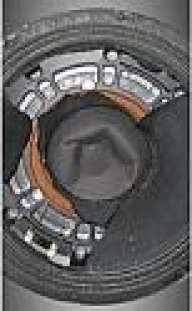
X-ray is an imperfect science, and in those images it looked to me like that might be a nut. If the adjusting nut was trying to tighten over another nut, that would certainly explain why the rod seemed to be of no effect. I couldn't see down into the rod cavity with my naked eye but luckily my phone camera is better than my eye. Sometimes you just have to do things the old fashioned way.

IMG_20230502_210621.jpg
 
To my eye it appears that this is a square washer that the truss rod nut is supposed to adjust against. It certainly appears to be very worn, but I see no reason why it wouldn't be functional. The x-rays seem to show clean threads so I see no reason why that wouldn't be functional. Perhaps it was just seized up because no one had turned it in 40 years.
 
  • Like
Reactions: C Stone and 96tbird
This for me is where things got really interesting. I definitely want to hear from some experienced luthiers about what they see here. Because I'm not sure if I'm correct or not, but what I see is that the truss rod appears to have been cut too short. I would have expected it to be two to three frets further down toward the heel than it is. It seems to me, and again I'm completely uneducated schmuck here just tinkering, that the area of those couple of frets between where the truss rod ends and where the heel begins are very vulnerable because they have no reinforcement and they've had about 30% of the wood drilled out as you can see the the channel seems to go to where it should, but the rod doesn't. So what do I do now? I haven't been able to find a Chinese neck that's only 50 mm wide at the pocket. The instrument is definitely not worth paying someone to hand make a neck. I'd love to try to make one myself but I don't have the tools. Do I remove the fingerboard, install a new rod and glue everything back together? That seems like an awful lot of work and a task that has high potential of destroying the thing to where it's not even useful as a cool looking wall hanging anymore. I think I need to see this a little better.
 
So here is the first image I saw. A PA projection of the neck. To my eye it looked possibly suspicious for a fracture at the level of F6 (meaning the sixth fret, but said in radiographic terms). I drew an arrow at the point of interest.View attachment 5051475

Something going on there for sure, but to me it's hard to tell if it's a fracture or just some crud on the rod. Wouldn't there be a line of separation showing on the x-ray if it was a cracked or broken? Much the same way an x-ray of a bone fracture looks? From the additional pictures the rod looks good and plenty of thread left.

The only was to positively know for sure is to remove the fretboard and see. Which may be a bit difficult if the neck has binding as it would need to be removed prior to heating up the board to remove it. With a wide metal ruler, a common clothes iron and a wide putty knife you can remove the board. Not too difficult if you take your time. Was that a washer behind the nut? If not you can try putting one in there. Take the neck and clamp it into a slight back bow then put the washer and the nut back on. Snug it up and release the clamps. Hopefully it'll remain in that condition. Then string it up with light gauge strings and see what happens. From the additional pictures the rod looks good and plenty of thread left. If the nut is turning freely now I'd add washers and try the clamping I mentioned. My guess is it sat for a long time with tension on the neck and wood being wood, it got set in that position.

Good luck with your project.
 
  • Like
Reactions: Markshan
So like I said, I've been watching setup videos. I feel like I can handle the Earlwine method (I probably didn't spell his name right, no disrespect intended) of heating the neck with a heat lamp and then using clamps and an I-beam to try to straighten it. I also feel like I don't see any reason that that truss rod shouldn't be useful in at least holding the tension the way he talks about in the video. But again I don't know anything and maybe somebody else here see something that I don't. What concerns me is that area where it's currently twisted. Again it's left completely vulnerable by being on a thin part of the neck and having an extra 30% of wood removed with no metal replacing it. So I spent a couple days thinking about how a doctor would fix a bone like that. I thought about adding metal plates and screws, but that certainly wouldn't help the playability or the aesthetics any. So after a while it clicked in my head. I went from the orthopedic surgeon thinking and went to the other famous user of x-rays. The dentist. What if the same way that a dentist fills a cavity with a liquid that sets up into a substance that's even harder than the teeth, what if I could inject something into that cavity? Is there some sort of resin or epoxy that is thin enough that I could put it in there through a syringe and then it would harden in there over a day or a week or a month and would end up harder than the wood? I could drill a hole in the back between the two top screw holes that mount the neck and that would give me a perfect access to that space.

Again I don't mind trying to straighten the neck with a heat lamp and a lot of time. I don't care if I have to leave this thing clamped up for 6 months. But, I don't want to do all that work just to be a learning experience. I actually would like for it to not twist again as soon as it goes under string tension. And with that big open space at those bottom frets before the heel that's what I'm afraid of. Is my concept a brilliant idea worth trying or is it insanity and foolishness and I should just chuck this whole thing in the garbage?

Okay I'm done now and I eagerly await hearing from somebody who knows what they're doing.
 
  • Like
Reactions: 60bass
Something going on there for sure, but to me it's hard to tell if it's a fracture or just some crud on the rod. Wouldn't there be a line of separation showing on the x-ray if it was a cracked or broken?

A fracture line but only be visible if it was perfectly straight across almost like it had been sawn. That's generally not how things break and that's also why we x-ray techs do two different projections. The next image that shows the washer (?) Is that the same spot with just the neck turned 90°. So I'm pretty sure that what is showing in the first image is not representing any kind of a break in the rod, but rather just the little tiny bit of that washer that's protruding out past the rod. With bones, they are radio opaque enough that you can see a little bit of one thing over lying another. Just like with the wood you can see the different thicknesses. But with the steel rod it is completely blocking the X-ray beam and there is no way to see something like that unless it's a complete separation. But the rod is free at the top and if there were a break there I would expect I'd be able to pull the one half of the rod out now and it seems to be seated fine. Plus, if it was broken, I don't think it would have had the strength to twist the neck at all like it did is I was forcefully removing the nut. So that leads me to believe that the rod is intact.
 
So like I said, I've been watching setup videos. I feel like I can handle the Earlwine method (I probably didn't spell his name right, no disrespect intended) of heating the neck with a heat lamp and then using clamps and an I-beam to try to straighten it. I also feel like I don't see any reason that that truss rod shouldn't be useful in at least holding the tension the way he talks about in the video. But again I don't know anything and maybe somebody else here see something that I don't. What concerns me is that area where it's currently twisted. Again it's left completely vulnerable by being on a thin part of the neck and having an extra 30% of wood removed with no metal replacing it. So I spent a couple days thinking about how a doctor would fix a bone like that. I thought about adding metal plates and screws, but that certainly wouldn't help the playability or the aesthetics any. So after a while it clicked in my head. I went from the orthopedic surgeon thinking and went to the other famous user of x-rays. The dentist. What if the same way that a dentist fills a cavity with a liquid that sets up into a substance that's even harder than the teeth, what if I could inject something into that cavity? Is there some sort of resin or epoxy that is thin enough that I could put it in there through a syringe and then it would harden in there over a day or a week or a month and would end up harder than the wood? I could drill a hole in the back between the two top screw holes that mount the neck and that would give me a perfect access to that space.

Again I don't mind trying to straighten the neck with a heat lamp and a lot of time. I don't care if I have to leave this thing clamped up for 6 months. But, I don't want to do all that work just to be a learning experience. I actually would like for it to not twist again as soon as it goes under string tension. And with that big open space at those bottom frets before the heel that's what I'm afraid of. Is my concept a brilliant idea worth trying or is it insanity and foolishness and I should just chuck this whole thing in the garbage?

Okay I'm done now and I eagerly await hearing from somebody who knows what they're doing.


Well when you start talking about heat treating, then I'd suggest sending the neck to warped neck.com. He did a friends 70's jazz bass that had a visible twist and a maxed out rod. It came back perfect and has held up fine.

FIX AN INSTRUMENT'S WARPED NECK
 

Latest posts