• TalkBass has been independent since 1998. Add your voice.
    Create a free account to reply to discussions, view embedded media, and browse with fewer display ads.
    Join freeLog in
    Want zero display ads or expanded classifieds tools? Compare plans.

Unusual Rock Trivia?

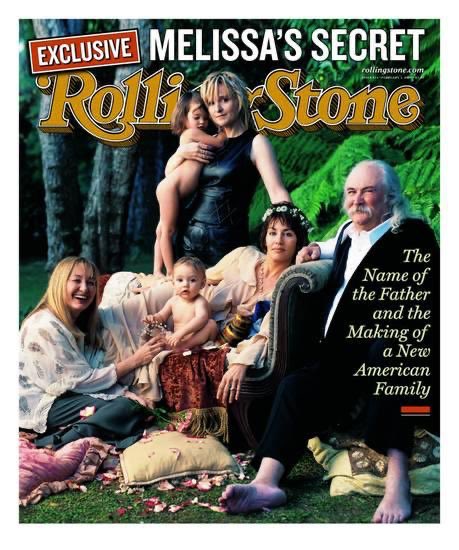
Was reading the Variety article/obituary on David Crosby (RIP). I didn’t know this until today!

In 2000, it was revealed by singer Melissa Etheridge that Crosby was the biological father of two children born to Etheridge’s then-partner Julie Cypher via artificial insemination.
I remember it being a pretty big thing at the time.
EX7l8YAWkAQFSCK.jpg
 
David Crosby had the voice of an angel but fought his demons most of his life. RIP
"Triad" was written while Crosby was a member of the pioneering rock band the Byrds, who were at that time recording their fifth studio album, The Notorious Byrd Brothers. The song's lyrics concern a ménage à trois and were largely inspired by the sexual freedom that Crosby enjoyed at his home in Beverly Glen in Los Angeles but their version went unreleased at the time and was not issued until twenty years later.

Byrds biographer Johnny Rogan has described the song's subject matter as being perfectly in keeping with the "free love" hippie philosophies of the day. The song also alludes to author Robert A. Heinlein's science fiction novel Stranger in a Strange Land, with references to "sister lovers" and "water brothers".

Although the Byrds did record "Triad" and performed it live during a September 1967 engagement at the Whisky a Go Go, it was not included on The Notorious Byrd Brothers album. According to Crosby, bandmates Roger McGuinn and Chris Hillman felt that its subject matter was too controversial which it was back in 1967.

Crosby gave the song to the band Jefferson Airplane, who included a recording of it on their 1968 album, Crown of Creation.

 
David Crosby’s father Floyd was a well-regarded cinematographer, his work on High Noon with Gary Cooper being a perfect example…
666D5817-0728-420F-AA66-162D6B7AC3E9.jpeg

In the mid-90’s, I went to a benefit concert done in Floyd’s memory at the Shrine Auditorium in LA that David organized on behalf of an organization that pushed for better conservation of older films in studio vaults, something that wasn’t a big priority in those days. Crosby performed, of course, along with Chris Isaak, Lou Reed, and Los Lobos.
 
Last edited:
The genesis for the name Fleetwood Mac.

The name of the new band came after Peter, Mick and John started recording songs, which John Mayall reportedly gave them the space to do. One of the songs that came out of those sessions was a sprawling instrumental. The song was dubbed “Fleetwood Mac” thanks to the integral contribution of the drummer and bassist (Mac being a shortened version of McVie).

After naming the song, Green brought up the idea of that being the name of the band itself – an assertion that obviously stuck.

Though the moniker may have started with Green, he was the first to leave the original line-up.
 
The genesis for the name Fleetwood Mac.

The name of the new band came after Peter, Mick and John started recording songs, which John Mayall reportedly gave them the space to do. One of the songs that came out of those sessions was a sprawling instrumental. The song was dubbed “Fleetwood Mac” thanks to the integral contribution of the drummer and bassist (Mac being a shortened version of McVie).

After naming the song, Green brought up the idea of that being the name of the band itself – an assertion that obviously stuck.

Though the moniker may have started with Green, he was the first to leave the original line-up.
Maybe if they had named the band "Fleetwood MacGreen" he'd have stayed longer... :unsure:;)
 
I seem to remember being told by Henry McCullough that Jimi Hendrix produced his first record… And
Henry was in the same studio as Pink Floyd, and he’s at the end of Money saying “I don’t know I was really drunk at the time.”

John Bonham was the minder/baby sitter of Bad Company when they were on Their label… Boz Burrell told me that…
 
For the Randy Meisner buffs out there!
Like me! :laugh:

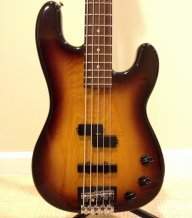
Randy’s basses of choice for the Eagles’ albums were: the Fender P-Bass for the ‘Eagles’ and the ‘Desperado’ albums; the Hagstrom for the ‘On the Border’ and the ‘One of These Nights’ albums; and the Rickenbacker for the ‘Hotel California’ album.
 
"Look at Your Game, Girl" is a song written by Charles Manson from his album Lie: The Love and Terror Cult (1970). A folk rock and psychedelic folk ballad about an insane woman, the song was included on a tape that Manson sent to record companies. His version of the song received mostly positive reviews from critics, who felt that the track had musical merit and drew connections between its lyrics and the ways in which Manson manipulated his followers.

After Axl Rose was introduced to Lie: The Love and Terror Cult, Guns N' Roses released a cover of "Look at Your Game, Girl" on their album "The Spaghetti Incident?" (1993).

Rose said that upon hearing "Look at Your Game, Girl" "I liked the lyrics and the melody. Hearing it shocked me, and I thought there might be other people who would like to hear it. Rose also "felt that it was ironic that such a song [about insanity] was recorded by Charles Manson, someone who should know the inner intricacies of madness."

The song was released upon Rose's demand, despite protest from his bandmates. Rose along with Dizzy Reed (on percussion) are the only members of Guns N' Roses to perform on the track, with the acoustic guitar played by Carlos Booy. Not a very good song by GnR’s Rose.

 
This is a story that Alice Cooper told about John and Brian Wilson.
“I was sitting backstage after the 1974 Grammys with Bernie Taupin (Elton John’s lyricist) and John Lennon. This was when Brian was really having some mental issues,” said Cooper.
“During the course of the conversation, I kept seeing Brian out of the corner of my eye, just kind of staring at us from different angles.”
“Finally, he came up to the table, bent down and whispered in my ear ‘Hey Alice, introduce me to John Lennon.’ I couldn’t BELIEVE that these two men had never met! They were virtually neck and neck in the 60’s as the greatest bands on the planet, and I’m SURE they must have crossed paths at some point. But then I thought to myself, ‘Wow, I’m going to be the one to introduce them and become a part of rock history!’”
“So I merely said, ‘Brian Wilson, this is John Lennon. John Lennon, this is Brian Wilson.’ Lennon was very cordial and polite, saying things like ‘Hello Brian, I’ve always wanted to meet you. I’ve always admired your work, and Paul and I considered Pet Sounds one of the best albums ever made.’ Brian thanked him and walked away, at which point Lennon went right back to his conversation like nothing had happened.”
“About ten minutes later, Brian came by our table again, leaned down and whispered something to Bernie, and all of a sudden, Bernie was saying ‘Brian Wilson, this is John Lennon. John Lennon, Brian Wilson.’ Lennon was just as cordial and polite as the first time, saying essentially the same thing about always wanting to meet him.
As soon as Brian walked away, John looked at both of us and casually said in his typical Liverpudlian accent, ‘I’ve met him hundreds of times. He’s not well, you know.’”
We were impressed by John’s empathy and kindness in dealing with Brian and thankful that Brian has found some mental stability following tumultuous times.
Thanks to Boris for the story, photo and check out Alice’s T-Shirt. It is soooooo Alice Cooper.
Invalid Link Removed
 
The year 1956 saw a significant advance in studio design, when Capitol Records completed the Capitol Tower, a 13-story building that is one of the most iconic buildings in Los Angeles. Designed by Louis Naidorf, the tower resembles a stack of records and the 90-foot spire blinked “Hollywood” in Morse code at night. Inside the building, Michael Rettinger pioneered state-of-the-art acoustic techniques that were used on the first record made there, Frank SinatraConducts Tone Poems of Color. Over the next decade, hit songs from hundreds of musicians, including Bobbie Gentry, Peggy Lee, Nat “King” Cole, Glen Campbell, and The Kingston Trio, were recorded at the Hollywood studio.

Capitol Tower was also renowned for its “echo chambers”, which are part of an underground concrete bunker designed by legendary guitarist and sound engineer Les Paul to get a better reverb sound. The chambers could provide reverb for up to five seconds and the technique was a key factor in creating the sound of The Beach Boys’ classic “Good Vibrations.” As producer Phil Ramone used to say, “People play better at Capitol Towers.”
 
The year 1956 saw a significant advance in studio design, when Capitol Records completed the Capitol Tower, a 13-story building that is one of the most iconic buildings in Los Angeles. Designed by Louis Naidorf, the tower resembles a stack of records and the 90-foot spire blinked “Hollywood” in Morse code at night. Inside the building, Michael Rettinger pioneered state-of-the-art acoustic techniques that were used on the first record made there, Frank SinatraConducts Tone Poems of Color. Over the next decade, hit songs from hundreds of musicians, including Bobbie Gentry, Peggy Lee, Nat “King” Cole, Glen Campbell, and The Kingston Trio, were recorded at the Hollywood studio.

Capitol Tower was also renowned for its “echo chambers”, which are part of an underground concrete bunker designed by legendary guitarist and sound engineer Les Paul to get a better reverb sound. The chambers could provide reverb for up to five seconds and the technique was a key factor in creating the sound of The Beach Boys’ classic “Good Vibrations.” As producer Phil Ramone used to say, “People play better at Capitol Towers.”

Les Paul’s hands are all over modern music but surprisingly a lot still don’t know who he was!
 
The birth of Sun Studios
On January 3, 1950, Sam Phillips a young talent scout, DJ, and radio engineer from Alabama, opened the Memphis Recording Service on Union Avenue, in Tennessee, in a converted car garage. Phillips opened his doors to amateur singers, recorded them, and then tried to sell the tapes to major record labels. He was soon attracting talents such as Howlin’ Wolf and B.B. King, and his small studio became one of the cradles of rock and R&B. The studio that changed the world of music really was humble: a small storefront property with a front office, a 20 x 35-foot live area and a tiny control room equipped with a portable, five-input Presto mixing console and amateur Crestwood and Bell tape recorders.