• TalkBass has been independent since 1998. Add your voice.
    Create a free account to reply to discussions, view embedded media, and browse with fewer display ads.
    Join freeLog in
    Want zero display ads or expanded classifieds tools? Compare plans.

Unusual Rock Trivia?

In 1987, Gordon Lightfoot filed a lawsuit against Michael Masser, the composer of "The Greatest Love Of All". The song's lyrics were written by Linda Creed. It was originally recorded and a 1977 Top 40 song by George Benson and then a huge 1986 hit by Whitney Houston. Lightfoot alleged plagiarism of 24 bars of "If You Could Read My Mind"; the transitional section that begins "I decided long ago never to walk in anyone's shadow" of the Masser song has the same melody as "I never thought I could act this way and I got to say that I just don't get it; I don't know where we went wrong but the feeling's gone and I just can't get it back" of Lightfoot's song. The song's lyrics were written by Linda Creed.

Lightfoot stated that he dropped the lawsuit when he felt it was having a negative effect on Whitney Houston because the lawsuit was about the writer and not her. He also said that he did not want people to think that he had stolen his melody from Masser. The case was settled out of court, and Masser issued a public apology.





 
Lightfoot stated that he dropped the lawsuit when he felt it was having a negative effect on Whitney Houston because the lawsuit was about the writer and not her. He also said that he did not want people to think that he had stolen his melody from Masser. The case was settled out of court, and Masser issued a public apology.
So...Lightfoot dropped the lawsuit out of concern for Whitney Houston, and Masser apologized publicly.

Makes one wonder how many people in today's music industry would behave as decently and reasonably under similar circumstances.
 
The child who appeared as the cover model on The Allman Brothers Band’s 1972 album Brothers and Sisters is Brittany Oakley, the daughter of Allman Brothers bassist Berry Oakley, who passed away in a motorcycle accident in November of 1972.

upload_2023-5-4_8-21-0.jpeg

upload_2023-5-4_8-21-8.jpeg
 
The child who appeared as the cover model on The Allman Brothers Band’s 1972 album Brothers and Sisters is Brittany Oakley, the daughter of Allman Brothers bassist Berry Oakley, who passed away in a motorcycle accident in November of 1972.

View attachment 5051711
View attachment 5051713

The child on the front cover is Vaylor Trucks, son of Butch Trucks (and cousin to Derek).
 
  • Like
Reactions: IMMusicRulz
This is a repeat of what I just posted in “Song Of The Day”, but I find this story fascinating; you’re never too old to make an artistic statement…

Didn’t expect this comeback, but I read about it in Shindig(or was it Mojo?)magazine…


Who? Dorothy was the vocalist in a band called the United States Of America from ‘68/‘69, a blink and you’d miss them pioneering
outfit that had a fretless bass player, electric violin, no guitar, and dabled with early electronics…


That track got played a lot on the free-form hippie FM station I listened to when I was a kid, but they only did that one album. They later were a big influence on certain electronic-ish post rock British bands in the 90’s, like Broadcast.

At 82, an Experimental Musician Returns to Her Roots With a Little Help from Google Translate
 
Last night, I saw a YouTube video about mistakes on recordings of famous songs.

Roxanne by The Police, at the very beginning of the song, we can hear Sting laughing. Which always seemed like a normal part of the song. It's actually a mistake. As the tape was running, Sting decided to sit down and accidently sat unto the keys of a piano sending off an undesired piano chord and thus laughed out loud. The chord and laugh can be heard. The producer/engineer left the mistake there.

 
Despite hailing from England, the group Climax Blues Band were originally called the Climax Chicago Blues Band. They changed their name to the Climax Blues Band to avoid confusion with the Chicago Transit Authority, who themselves shortened their name to Chicago after the CTA threatened legal action over the name.
 
Not rock but the Ear worm music that earned Merv Griffin a fortune

More than 8,000 episodes of Jeopardy! have aired, with daily reruns on multiple networks and a worldwide following thanks to regional adaptations of the show in several countries.

Each time that theme song is played, Merv Griffin's estate gets royalties. (He died in 2007.) "That little 30 seconds has made me a fortune, millions," he told the New York Times in 2005. "Probably close to $70-80 million." Since then, that figure is estimated to have surpassed $100 million mark!
 
Warren Zevon (piano & vocals) and Waddy Wachtel (guitar) tried at least seven different configurations of musicians in the recording studio before for "Werewolves Of London" before being satisfied with John McVie (bass) and Mick Fleetwood's (drums) playing.
Cool! I hadn’t heard that before.
 
A suicide note was the unlikely inspiration behind the song that became Elvis Presley’s first No. 1 hit and million-selling single.

Steel guitarist and session musician Tommy Durden read a newspaper article about a man who had killed himself, leaving behind a piece of paper with the haunting words: “I walk a lonely street.”
Durden brought the article to his friend and cowriter Mae Boren Axton. A 41-year-old high school English teacher who moonlighted as a journalist and a songwriter, Axton had notched a few hits in the early ’50s with artists such as Perry Como and Ernest Tubb. In late 1955, she took a part-time position as a public relations secretary for Elvis’ manger, Colonel Tom Parker. When Mae first met Elvis, she felt he had everything he needed to become a star except a hit song. “You need a million-seller and I’m going to write it for you,” she promised.

As Axton and Durden discussed how they could turn the newspaper article into a song, Axton suggested that there be a “heartbreak hotel” at the end of the lonely street. With that flash of inspiration, the pair was off and running. Painting a picture of a place where “broken-hearted lovers cry away their gloom” and “the desk clerk’s dressed in black,” they managed to convey in very few words a mood that was both romantically charged and funereal.

upload_2023-5-14_23-40-32.jpeg


The Story Behind Elvis Presley's "Heartbreak Hotel"
 
A suicide note was the unlikely inspiration behind the song that became Elvis Presley’s first No. 1 hit and million-selling single.

Steel guitarist and session musician Tommy Durden read a newspaper article about a man who had killed himself, leaving behind a piece of paper with the haunting words: “I walk a lonely street.”
Durden brought the article to his friend and cowriter Mae Boren Axton. A 41-year-old high school English teacher who moonlighted as a journalist and a songwriter, Axton had notched a few hits in the early ’50s with artists such as Perry Como and Ernest Tubb. In late 1955, she took a part-time position as a public relations secretary for Elvis’ manger, Colonel Tom Parker. When Mae first met Elvis, she felt he had everything he needed to become a star except a hit song. “You need a million-seller and I’m going to write it for you,” she promised.

As Axton and Durden discussed how they could turn the newspaper article into a song, Axton suggested that there be a “heartbreak hotel” at the end of the lonely street. With that flash of inspiration, the pair was off and running. Painting a picture of a place where “broken-hearted lovers cry away their gloom” and “the desk clerk’s dressed in black,” they managed to convey in very few words a mood that was both romantically charged and funereal.

View attachment 5062853

The Story Behind Elvis Presley's "Heartbreak Hotel"


Mae Boren Axton's son was musician, singer, songwriter, and actor Hoyt Axton.

Among his best-known songs are "Joy To The World", "The Pusher", "No No Song", "Greenback Dollar", "Never Been To Spain", and "When the Morning Comes" (a hit he did with Linda Ronstadt).

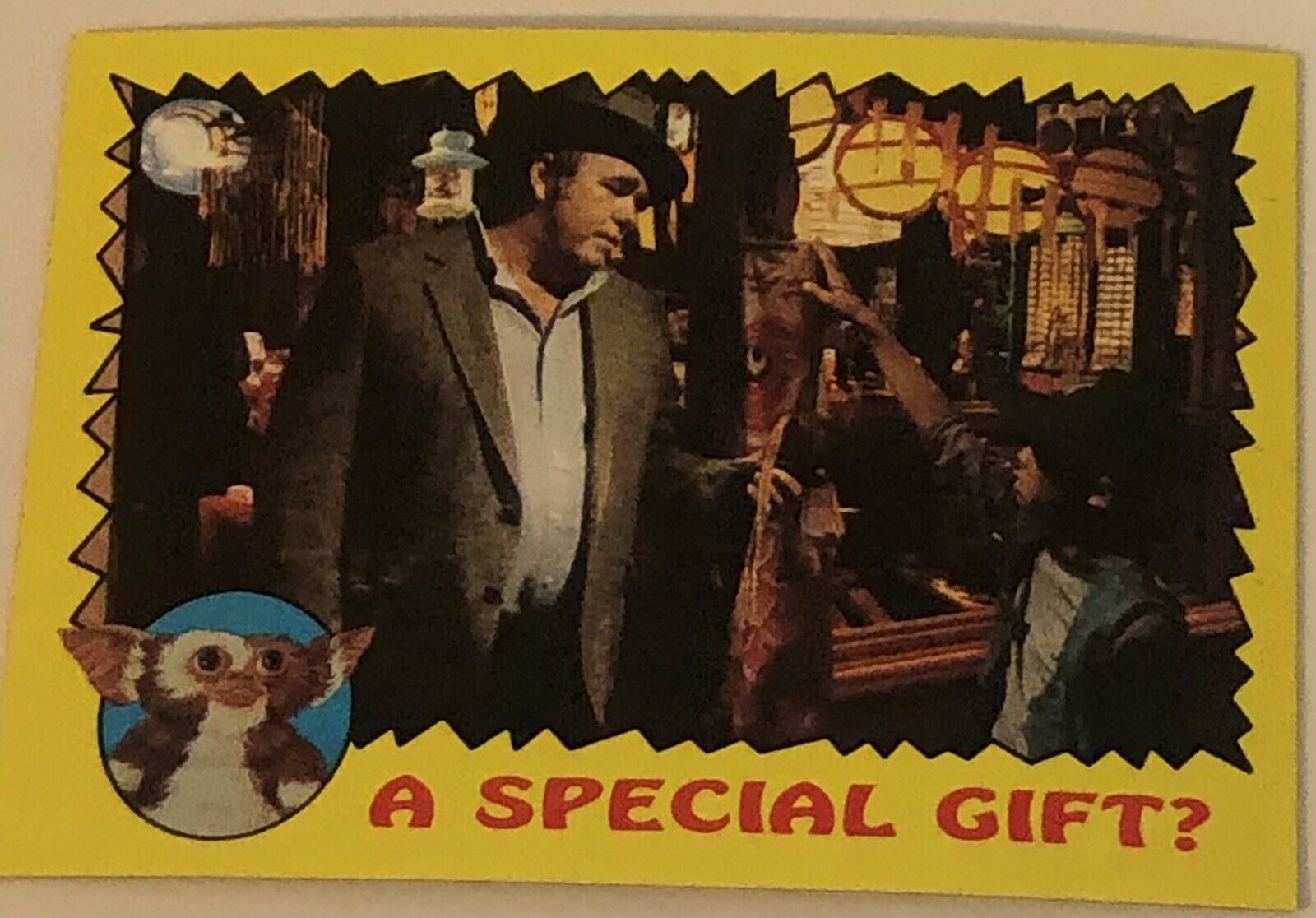
He was in the movie Gremlins and other movies TV shows.

s-l1600.jpg


A suicide note was the unlikely inspiration behind the song that became Elvis Presley’s first No. 1 hit and million-selling single.

Steel guitarist and session musician Tommy Durden read a newspaper article about a man who had killed himself, leaving behind a piece of paper with the haunting words: “I walk a lonely street.”
Durden brought the article to his friend and cowriter Mae Boren Axton. A 41-year-old high school English teacher who moonlighted as a journalist and a songwriter, Axton had notched a few hits in the early ’50s with artists such as Perry Como and Ernest Tubb. In late 1955, she took a part-time position as a public relations secretary for Elvis’ manger, Colonel Tom Parker. When Mae first met Elvis, she felt he had everything he needed to become a star except a hit song. “You need a million-seller and I’m going to write it for you,” she promised.

As Axton and Durden discussed how they could turn the newspaper article into a song, Axton suggested that there be a “heartbreak hotel” at the end of the lonely street. With that flash of inspiration, the pair was off and running. Painting a picture of a place where “broken-hearted lovers cry away their gloom” and “the desk clerk’s dressed in black,” they managed to convey in very few words a mood that was both romantically charged and funereal.

View attachment 5062853

The Story Behind Elvis Presley's "Heartbreak Hotel"
To this day, "Heartbreak Hotel" is still my favorite Elvis song...