hey guys im just curious as i just got back from a music store that had to basses from two different brands (local luthiers) and they were virtually the same (5 string, j pickups, Aggie 3 band mahogany body, set neck) the only difference was one had a alder tone block, i personally couldn't hear a difference but the owner of said shop said tone wise it makes a huge difference, any thoughts?

Enjoy the benefits of a premium membership!
Upgrade Account
-
TalkBass has been independent since 1998. Add your voice.
Create a free account to reply to discussions, view embedded media, and browse with fewer display ads.
Join free Log in
Want zero display ads or expanded classifieds tools? Compare plans.
You are using an out of date browser. It may not display this or other websites correctly.
You should upgrade or use an alternative browser.
You should upgrade or use an alternative browser.
what does a tone block do?
- Thread starter frankenjazz
- Start date
More options
Who Replied?

Musiclogic
Commercial User
- Aug 6, 2005
- 6,505
- 75
- 60
- Disclosures
- Owner/Builder: HJC Customs USA, The Cool Lute, C G O
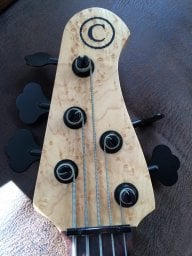
The "tone block' or "sustain block" as it is better known is the idea that if you anchor the bridge to something different(Brass in Alembics case) you can effect the tone, or increase/decrease the sustain of an instrument. It rarely works, and is one reason why the idea never really caught on. Eventually they found you can influence the sound more through the headstock than the body.



Musiclogic
Commercial User
- Aug 6, 2005
- 6,505
- 75
- 60
- Disclosures
- Owner/Builder: HJC Customs USA, The Cool Lute, C G O
Nope Harry, not a Myth, Alembic used brass blocks under their bridges for quite a while. That is basically where it became known.
Greg Curbow did the same thing as Alembic and the idea was perhaps taken to its logical conclusion with the 2Tek bridge.
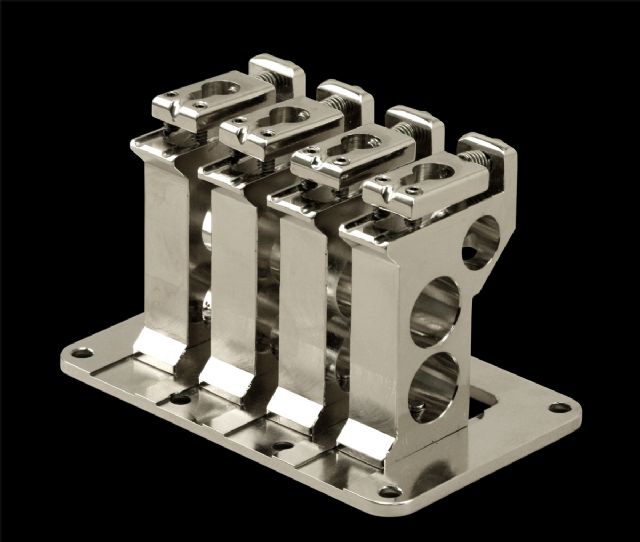
I have the utmost respect & admiration for Alembic and Curbow basses and 2Tek bridges are highly regarded (Chuck Rainey had one put in his 1957 P-bass!) but honestly I think tone blocks in general are attempting to compensate for less resonant materials & designs in the neck and body.
I have the utmost respect & admiration for Alembic and Curbow basses and 2Tek bridges are highly regarded (Chuck Rainey had one put in his 1957 P-bass!) but honestly I think tone blocks in general are attempting to compensate for less resonant materials & designs in the neck and body.
Jazzdogg
Less barking, more wagging!
The "tone block' or "sustain block" as it is better known is the idea that if you anchor the bridge to something different(Brass in Alembics case) you can effect the tone, or increase/decrease the sustain of an instrument. It rarely works, and is one reason why the idea never really caught on. Eventually they found you can influence the sound more through the headstock than the body.
Please expound: I'm interested in learning more about the ways in which headstocks effect sound.
wasn't the OP asking about that piece of wood that some builders glue to the underside of a bass to cover up the section of the neck that runs through the body in the case of neck through basses, when they prefer that look?
I guess in terms of sound differences introduced this way it's mostly "homeopathic".
At least I have not heard any differences between basses in connection with different kinds of wood used as "toneblocks".
The piece of brass (sustain block), alembic use under their bridges is, if I read the first post correctly, not what the OP is talking about...I may, as always be wrong.
I guess in terms of sound differences introduced this way it's mostly "homeopathic".
At least I have not heard any differences between basses in connection with different kinds of wood used as "toneblocks".
The piece of brass (sustain block), alembic use under their bridges is, if I read the first post correctly, not what the OP is talking about...I may, as always be wrong.
Consider the MusicMan SR5 20th Anniversary basses, with a "mahogany tone block" channeled into an ash body, running from the neck, through the pickups, to the bridge. I've played several of these basses, and the best two of them were really outstanding (I own one of those). Could be any number of reasons they sound as good as they do, but there you have it.
This concept of tone block, sustain block, etcetera is old, as JC pointed out, Ampeg and Alembic both mounted bridges to other materials to "improve" tone or sustain.
The modern "tone block" is a design-based marketing approach from EBMM starting in their guitars a few years back. It originally involved routing out an alder body, fitting a block of mahogany from just behind the bridge to the neck join and applying a top to the guitar. It is an alteration of the design and some purists believe they hear a difference in the tone of the guitar versus plain alder bodied or mahogany instruments.
Here is a photo. The tone block is the mahogany bit in the middle:
[Invalid or Expired Link Removed]
Since then, others have [DEL]blindly followed the fallacy[/DEL] also contributed other designs to the idea and a few are out there. Like the ever growing "tone wood" debate, in the face of a lack of proof, the magnitude of it's influence on tone is largely open to opinion...
The modern "tone block" is a design-based marketing approach from EBMM starting in their guitars a few years back. It originally involved routing out an alder body, fitting a block of mahogany from just behind the bridge to the neck join and applying a top to the guitar. It is an alteration of the design and some purists believe they hear a difference in the tone of the guitar versus plain alder bodied or mahogany instruments.
Here is a photo. The tone block is the mahogany bit in the middle:
[Invalid or Expired Link Removed]
Since then, others have [DEL]blindly followed the fallacy[/DEL] also contributed other designs to the idea and a few are out there. Like the ever growing "tone wood" debate, in the face of a lack of proof, the magnitude of it's influence on tone is largely open to opinion...

I guess in terms of sound differences introduced this way it's mostly "homeopathic".
Can I use that? Is there a copyright on that word or phrase?
Here comes Tink:::
Next week: Magic Tone Blocks!
...i personally couldn't hear a difference...
There you go. If you think you can, then it's worth further exploration. If you can't, then it doesn't matter. Let your ears be the judge, not what the salesman tells you.
Hearing is believing.
I'd also say that hearing is seeing. If the bass has looks you like in many cases it also has the sound you like.
Marko
I am struggling with the same issues trying to wrap my head around the benifits of constructing my neck through in this fashion . It would appear most of the big dog builders subscribe to this theory though I don't really know why. I read in a post in this forum that it started with a mistake by luthier Carl Thompson when he cut the channel too deep for the neck and was later copied by Ken Smith ,and then Fodera.
I wish I knew what goes on in there. I'm told it is a simple cut of the laminated neck and then the tone block is glued to the back. I hope it is that simple as I am about to perform some major surgery on my 9 ply neck to acomidate this construction technique . If any body out there can lend some advise on this , please do so I don't turn my bass into a clock!
I wish I knew what goes on in there. I'm told it is a simple cut of the laminated neck and then the tone block is glued to the back. I hope it is that simple as I am about to perform some major surgery on my 9 ply neck to acomidate this construction technique . If any body out there can lend some advise on this , please do so I don't turn my bass into a clock!
You might like to watch this...
After you watch this, you might like to watch all of his vids about neck construction. Carl Thompson has some interesting things to say about "tone blocks" and similar.
After you watch this, you might like to watch all of his vids about neck construction. Carl Thompson has some interesting things to say about "tone blocks" and similar.
Latest posts
-

-

-
Double Bass Almost 3 years..zero to none result..any help?
- Latest: bass player 53
-

-
