• TalkBass has been independent since 1998. Add your voice.
    Create a free account to reply to discussions, view embedded media, and browse with fewer display ads.
    Join freeLog in
    Want zero display ads or expanded classifieds tools? Compare plans.

Why is it called "bolt on neck" when they all use...

I pledge to use the term "Screw-on" neck from now on to describe these the of electric bass and bass

  • Screw-on neck, yes, sign me up.

    Votes: 16 7.6%
  • Bolt-on sounds better, even though they are screws..

    Votes: 99 46.9%
  • What's the difference again between a screw and a bolt?

    Votes: 12 5.7%
  • Less "talk bass" more "play bass".

    Votes: 84 39.8%

  • Total voters
    211
Just give a hoot, about what anything's called. Nothing sinister will happen. ;)

I'm well aware that H is used as a musical note in some countries, the Modern Jazz Quartet taught me that decades ago. If I'm ever in that situation and you don't want to hear it all you have to do is show up 5 minutes late and we will have worked that all out. I deal with mixed units all the time and have no problems with that, sorry that NASA can't handle that. They didn't do such a hot job overseeing the figure of the Hubble space telescope, or tragically the design flaws in the shuttle either. These failures were bad management not sloppy terminology.

I do give a hoot when it matters, the name used for the fasteners used to attach a neck to a bass body is not one of those times. Not until you need to replace one and then most people correctly call them screws.
 
  • Like
Reactions: packrat
Lag bolts do not require nuts to fasten and the nuts & bolts you refer to can also be called machine screws. Why be concerned about such triviality. Let's play music.

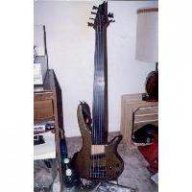
Too late to read all 8 pages. But I always felt that a superior method would be a fastener with a positive drive. Rather than the typical Phillips screw that is designed to cam out. When I built my 6 string I used 5 lag bolts in counterbores, that I could tighten with the leverage of a ratchet.
 
Too late to read all 8 pages. But I always felt that a superior method would be a fastener with a positive drive. Rather than the typical Phillips screw that is designed to cam out. When I built my 6 string I used 5 lag bolts in counterbores, that I could tighten with the leverage of a ratchet.
"Camming out" is rarely a problem when the right type and size of screwdriver is used and the shaft of the driver is aligned with the axis of the screw when applying force. Few have the toolbox and patience for that. I agree that a star drive (e.g. Torx(R))would be better but I don't underestimate the power of stupid people to defeat clever inventions.
 
I heard Usain Bolt on necks are the fastest.
.
Not without merit! :smug:

Part joke, pun, part mumbo jumbo bs. I've always cringed when - still, not in the 80's - saw ads (still seeing) with the latest pointy electric guitars equipped with Floyd Rose and "fast neck" and I never ever got that idea. They flaunt it with "fast neck", and other bs. Even working in music store, people came in and wanted a "fast" neck guitar (shredders mostly). I took a deep breath inside and realised they'd read these ads and ... buckled up ... and took my time on them, explaining that there's no such thing as a fast neck. Took a lot of mansplaining. Bolt-on, set or glued neck notwithstanding. Some people have still soaked that bs up, and wonders what that means:


"Camming out" is rarely a problem when the right type and size of screwdriver is used and the shaft of the driver is aligned with the axis of the screw when applying force. Few have the toolbox and patience for that. I agree that a star drive (e.g. Torx(R))would be better but I don't underestimate the power of stupid people to defeat clever inventions.

All my US Masters instruments have square drive bolts into threaded inserts in the body. Very solid construction.