• TalkBass has been independent since 1998. Add your voice.
    Create a free account to reply to discussions, view embedded media, and browse with fewer display ads.
    Join freeLog in
    Want zero display ads or expanded classifieds tools? Compare plans.

Why more than four strings?

What this tread needs!
 

Attachments

  • f_258Trollsprm_2ccc2b2[1].jpg
    f_258Trollsprm_2ccc2b2[1].jpg
    20 KB · Views: 35
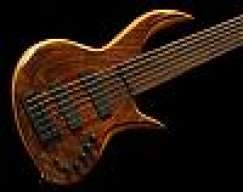
Recently having gone to a 6 String from a 4 - I absolutely love it!!!!

I can play a guitar sounding part on the upper strings - and play a nice melody with the higher registers - and still play the Bass part. This allows you to essentially have greater creative flexibility and flesh out an entire song on a single instrument.

Huge creative potential in my opinion and my 6 has a great Fat Full Sound when I am playing bass - I easily get the standard P-Bass and Jazz sounds. In my opinion, 6 Strings are the future standard of Bass - it is just taking people awhile to make the transition.

As with 5's - which are nearly becoming the standard - I can see people going to 6 and beyond - especially the younger generations of musicians that are exposed earlier and not tied to the past of the instrument as much as those of us that grew up with 4 String Fenders.

Music is should have no boundaries - whatever the tool of choice - making great music is the goal. I still sit down with my 4's on occasion and they seem so easy to play after using the 6 String - and I also miss or notice the lack of extra range. Having said that, in the certain situations just playing the 4 fits. My Basses are tools or brushes to paint the music with - to use an Artist Analogy. A Painter does not pick one Brush and then say that is it - anything else is unaccepted. Painters use all the tools at their disposal and some unconventional methods to get their Feelings and Ideas onto the Canvas.

We need be less categorical - more open - accepting and sharing of music - it is a Gift. And anyone playing today should feel fortunate to be doing so regardless of what you are making music with.

 
Recently having gone to a 6 String from a 4 - I absolutely love it!!!!

I can play a guitar sounding part on the upper strings - and play a nice melody with the higher registers - and still play the Bass part. This allows you to essentially have greater creative flexibility and flesh out an entire song on a single instrument.

Huge creative potential in my opinion and my 6 has a great Fat Full Sound when I am playing bass - I easily get the standard P-Bass and Jazz sounds. In my opinion, 6 Strings are the future standard of Bass - it is just taking people awhile to make the transition.

As with 5's - which are nearly becoming the standard - I can see people going to 6 and beyond - especially the younger generations of musicians that are exposed earlier and not tied to the past of the instrument as much as those of us that grew up with 4 String Fenders.

Music is should have no boundaries - whatever the tool of choice - making great music is the goal. I still sit down with my 4's on occasion and they seem so easy to play after using the 6 String - and I also miss or notice the lack of extra range. Having said that, in the certain situations just playing the 4 fits. My Basses are tools or brushes to paint the music with - to use an Artist Analogy. A Painter does not pick one Brush and then say that is it - anything else is unaccepted. Painters use all the tools at their disposal and some unconventional methods to get their Feelings and Ideas onto the Canvas.

We need be less categorical - more open - accepting and sharing of music - it is a Gift. And anyone playing today should feel fortunate to be doing so regardless of what you are making music with.

I don't know about "the standard" -- around here there's still a bit of a stigma attached to 5 and 6 string players (they're that 80's guy with the tight pants, etc.) which is too bad. I don't understand why people make an issue about it, it's just another option for bassists.
 
I play in groups that generally don't look at ERB'ers with much sympathy. The key to staying in peoples good books is to NOT noodle just because you've got an ERB. I'm not really a noodler, and I have the ERB moreso for the finger-position options it brings me playing some complicated pieces. Since I play so many styles and ranges week-to-week, the 6 seems to work well for me. None of them use "bass solos"...
I've been toggling back and forth between my Sray5 and my MTD Z6 - both fretless...

Part of playing music is enjoying the process and educating yourself. If playing a 5er or a 6er does that for you then that's a good thing. Besides, if the keyboard player digs into you (it always seems to be the keyboard players for me) just ask them to swap out their 400 voice Yamaha for a Boesendorfer - and oh yah, they have to get it into the car and from the car into the studio all by themselves...;-)
 
Well, I've stopped to read through this thread a few times today but I have been playing bass and sax and recording and doing other things. I figured this wouldn't be the first time this has been discussed, but I haven't seen any threads about it since I joined. My question was if there were any "good reasons" for more strings. The only "good" one I see is about the need to compete with the keyboard synth bass capabilities in the 80s. Sure there's more range and you can stay in one position and there's the resonance of the big lows, but that's just bells and whistles or fun stuff or personal preference. That's cool, whatever floats your boat. I'm certain now that 4 is enough for me, thanks.


OK here is something you might not know, five string basses have been is existence for over 100 years in upright form, A LOT of classical DB players use what are called C and B extensions so they can reach lower notes to play the music as written.

And there are Octobasses................
Octobasse.jpg

octo.jpg

You see, not everyone sees limits to what you can do with sound and what is practical, and what is musical. Music is art, and art should not be limited. I use a five most of the time and I play with a blues/roots/folk/jug band every now and then and you know what I USE those lower notes all the time, a well placed low D or C can really add depth to a song.
 
I own 4, 5, and 6 string basses and for me it's really about what the music calls for. If I need the low B or high C in a song, I play my 6. If I don't need either of those, I love playing my Fender jazz.

If what you play calls for an ERB with 9, 10, 11 strings and up, it's all about the right tool for the right job.
 
I own 3 six-string basses. I'd try a 7, but I've not got a chance to play any, and they're expensive to order online...

I played upright 4 for a little bit, then fretless 4, that I had to sell for rent money several years ago.

When I got back to playing bass, I ordered a really cheap 6. It was so comfortable to play, I wondered why anyone wanted to play 4's instead.

Nowadays the only 4's I'd play are uprights...and even those are better with either 5 or at least an extension to get some lower notes (frequently found in both renaissance/baroque and modern music).
 
I'd be curious to know what the OP would do if his bandmaster handed him a chart that scanned all the way down to a C (or lower) below E? You might as well pluck a rubber band than drop all the way down to a C on a 4 string...

BEA: I've always wondered what it feels like to play a C extension on an upright... I've seen them before but nobody I know of has one ... any major pitfalls on using them in regular bass-scale repertoire - ie: Does the extension alter the E string tone substantially?
 
I'd be curious to know what the OP would do if his bandmaster handed him a chart that scanned all the way down to a C (or lower) below E? You might as well pluck a rubber band than drop all the way down to a C on a 4 string...

BEA: I've always wondered what it feels like to play a C extension on an upright... I've seen them before but nobody I know of has one ... any major pitfalls on using them in regular bass-scale repertoire - ie: Does the extension alter the E string tone substantially?

One of the main reasons my 5 is the first thing I pick-up to carry to a show. I do lots of theater work and many books are written now with the expectation that the bass player can go below E. (and many now are also written with the expectation of 24 frets or C string.)

The weird one though goes to the bass book for Rent. It is written for 4 with "obvious" intentions for 5. Everytime they expect you to go below E it will say "Octave Pedal" above those couple of notes, lol. And then later in the book has a song written for 24 fret Fretless with no "cheats" to get around it. :eyebrow:

EDIT: Not really. In fact on Ken Smith's board we got into a discussion how in many ways it actually helps the overall tone of the instrument since B/C extensions require you to switch the A string to the normal E tuning peg. We found that it tends to really help the tone of the A string a lot. It's actually a good idea (IMO) to do the swap even if you don't have an extension. Only wierd thing about the extension is getting used to E not being an open string.
 
I don't know about "the standard" -- around here there's still a bit of a stigma attached to 5 and 6 string players (they're that 80's guy with the tight pants, etc.) which is too bad. I don't understand why people make an issue about it, it's just another option for bassists.

Depending on the genre, they might be there or not. It would seem that a lot of the indie/folk style rock is obsessed with vintage gear, thus there aren't going to be any real vintage 5-6 string basses (discounting the bass vi and Leo's first 5ers.

Pop, adult contemporary, and modern country seems to be able to sneak in the low B string fairly routinely, but not overdone.

Also, keep in mind that just because you're not hearing the low B or high C string being used, doesn't mean it isn't there. ;) Sometimes it's a bit entertaining with the notion that you can't play 4 string stuff on a 5 or 6 stringer.

 
i played 4 string for 25 years. I always wanted a low D option. 5 offers that and more. I do not like playing open notes as a rule and with my 5'er, I don't have to play any open notes and I can use a lot less movement for songs in D. My main focus is the low D, but it is in no way limited to that.
 

Latest posts