
Enjoy the benefits of a premium membership!
Upgrade Account
-
TalkBass has been independent since 1998. Add your voice.
Create a free account to reply to discussions, view embedded media, and browse with fewer display ads.
Join free Log in
Want zero display ads or expanded classifieds tools? Compare plans.
You are using an out of date browser. It may not display this or other websites correctly.
You should upgrade or use an alternative browser.
You should upgrade or use an alternative browser.
Worship Bass Pedalboards
- Thread starter Cshanks5
- Start date
More options
Who Replied?

One parallel cable off two ports on the CIOKS DC7 and the Effectrode is pedalboard friendly. 

Right. I just figured for my little board $250 worth of power supply wasn't worth it. I can plug in a couple wall warts.One parallel cable off two ports on the CIOKS DC7 and the Effectrode is pedalboard friendly.
So I had my first rehearsal with the Oracle tonight and this is how I ran it...it's honestly amazing
Two questions for you who have used the RNDI.
If you use the 'thru' connection on the RNDI and it has phantom power applied, does it boost the signal to your amp (or in my case to my Tasty Blender for personal monitoring)?
Without phantom power, does the thru still send the signal to your amp?
If you use the 'thru' connection on the RNDI and it has phantom power applied, does it boost the signal to your amp (or in my case to my Tasty Blender for personal monitoring)?
Without phantom power, does the thru still send the signal to your amp?
Two questions for you who have used the RNDI.
If you use the 'thru' connection on the RNDI and it has phantom power applied, does it boost the signal to your amp (or in my case to my Tasty Blender for personal monitoring)?
Without phantom power, does the thru still send the signal to your amp?
If I'm not mistaken, and generally speaking, "Thru" jacks are passive and bypass the circuit inside. I will let an RNDI owner speak up, but, I'm pretty sure your signal should pass through without phantom power.
My Strymon R300 also. That double lock is crazy stuff, too much and the glue will give up before the double lock lets go.
Strymon says if using dual lock (instead of mounting brackets) to mount the Zuma upside down underneath your pedal board. I'm not sure whether they mean looking at the board from the top or the bottom, or whether it matters. I think the output jacks on the Zuma are oriented a bit differently than on the R300.
I'm looking into getting the Zuma, and not quite sure how to mount it. It may not fit under my board at all and end up going on top.
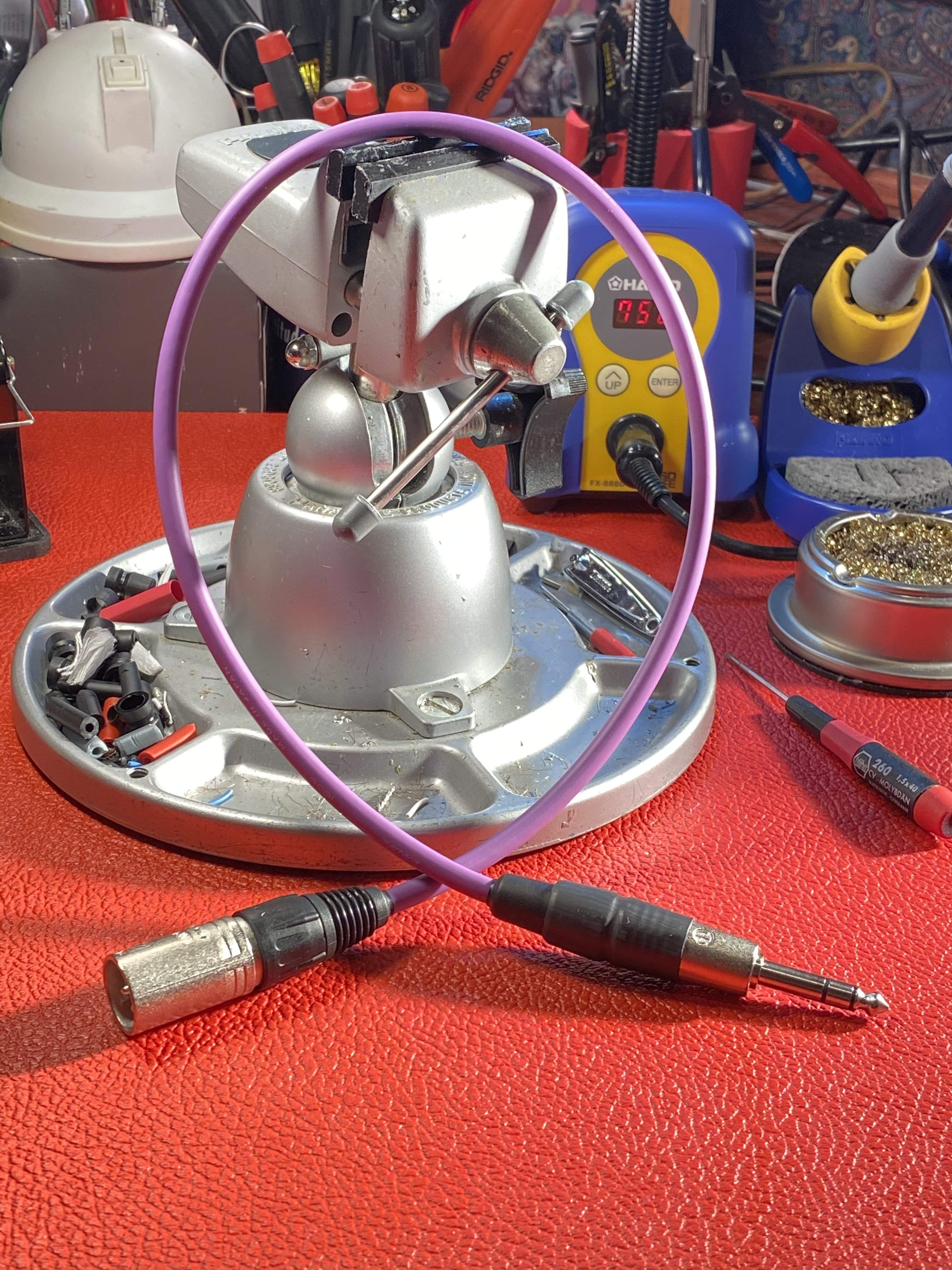
Got my cable yesterday so I'm good to go Sunday. Thanks, Dave!

What board? It fits under my Mono Lite, it should also fit under a Pedaltrain Nano, I believe they're the same clearance underneath.I'm looking into getting the Zuma, and not quite sure how to mount it. It may not fit under my board at all and end up going on top.

^^^ this...no RNDI "magic" in the thru jackIf I'm not mistaken, and generally speaking, "Thru" jacks are passive and bypass the circuit inside. I will let an RNDI owner speak up, but, I'm pretty sure your signal should pass through without phantom power.

Two questions for you who have used the RNDI.
If you use the 'thru' connection on the RNDI and it has phantom power applied, does it boost the signal to your amp (or in my case to my Tasty Blender for personal monitoring)?
Without phantom power, does the thru still send the signal to your amp?
If I'm not mistaken, and generally speaking, "Thru" jacks are passive and bypass the circuit inside. I will let an RNDI owner speak up, but, I'm pretty sure your signal should pass through without phantom power.
^^^ this...no RNDI "magic" in the thru jack
Thru jack wired in Parallel with the input jack before the input level switch.

Got my cable yesterday so I'm good to go Sunday. Thanks, Dave!
View attachment 3741152
Love the purple...
And my Dave cables
Please note that using the thru jack puts the input impedance of the RNDI in parallel with the input impedance of whatever is plugged into the thru jack. That can have a real, audible impact to the tone. Particularly if a passive bass is plugged directly in (or going through true bypass pedals all in the bypass state, i.e., unbuffered).
- John
- John
If I'm not mistaken, and generally speaking, "Thru" jacks are passive and bypass the circuit inside. I will let an RNDI owner speak up, but, I'm pretty sure your signal should pass through without phantom power.
^^^ this...no RNDI "magic" in the thru jack
View attachment 3741206
Thru jack wired in Parallel with the input jack before the input level switch.
Please note that using the thru jack puts the input impedance of the RNDI in parallel with the input impedance of whatever is plugged into the thru jack. That can have a real, audible impact to the tone. Particularly if a passive bass is plugged directly in (or going through true bypass pedals all in the bypass state, i.e., unbuffered).
- John
Thanks one and all with your feedback!
So if I understand correctly, the thru jack of the RNDI is passive and does not boost the signal in any way and is operable with or without phantom power but if I use the thru in addition to the DI connection, the tone will be changed in some way (correct me if I am wrong).
I do wonder if anyone would even notice the tone change in a live situation.
I use active basses but I run them through a compressor into a JDI and use the thru of the JDI to run into my Tasty Blender mixer on my pedal board. I do that so I can hear what I am sending to FoH (in case the sound tech on duty changes the gain instead of the level, I will still be able to hear myself since we don't have amps on stage but use IEMs). I also run from an Aviom mixer (which brings the rest of the band) into my Tasty Blender so that I have a limiter in place between the feed from the board and my ears. If the sound tech changes the gain mid service (which affects the Aviom signal), I will not be able to hear myself unless I have my own independent feed away from the Aviom.
The bass signal is pretty low (even running the compressor to the Tasty Blender without the passive JDI in between) to the Tasty Blender and to the FoH board, so I was toying with the idea of an active DI to raise the level going to the FoH board so the WL will be happy at rehearsals where we don't have a sound tech (and so he doesn't have to mess with gain at the FoH board in order to hear through the floor monitor on stage that he uses).
I know that the general rule is active basses (or passive basses through pedals that add gain) should use passive DIs (or risk adding noise). I have also seen videos where you have an active guitar with low output benefiting from use of an active DI to raise that level.
I have been putting a Sparkle Drive (always on) before the JDI to raise the signal level before the JDI, but I am not happy with the tone that way. That still does not increase the level to the FoH board. And I get that raising the gain at the FoH board is not an issue as long as you don't incur additional noise to FoH. Without sound techs at rehearsal and our rehearsals start so late that anything that helps us get started quickly and end quickly is a plus. So this is a first world problem.

I am looking for other options. Maybe a bass-specific boost pedal to increase the signal to the Tasty Blender and an active DI to boost the signal to FoH.
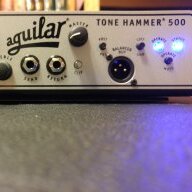
In the mean time, I am going to go tuner->compressor->Tone Hammer 500 amp head DI post EQ so I can add gain at the head (with no cabinet) as that has no issues with sending a strong signal (though it is cumbersome to add an amp head next to a pedal board). I won't be able to hear my signal going to the FoH board this way and will have to rely on the Aviom to hear myself, but that is not the end of the world.
Thanks for your ideas!
Last edited:
Only if using a passive bass straight in. Then it's a maybe. The RNDI's input impedance is 2.2 MOhms, so plugging something with a 1 MOhm input impedance into the Thru jack would mean a 688 kOhm load on the instrument. That's not terrible.the tone will be changed in some way
Then you're totally fine.I use active basses
- Join
The JDI is a great DI (I've used one for years) but it does greatly reduce your signal. I'm actually using a tube compressor for a DI.

@FunWithBass Is there enough headroom in your compressor to boost its output to a sufficient level? Not sure what compressor you're using, but I've used an MXR M87 as a boost before and it's got plenty of volume on tap.
Great question! Unfortunately my Aguilar TLC compressor does not give me enough boost. I used it in addition to the Sparkle Drive to give me enough boost. The Sparkle Drive was enough on its own but I would use the make up gain on the compressor sometimes so that I could back down the boost of the Sparkle drive to prevent the tone change too much. Both of those pedals are very quiet. I did use an OmniCabSim at one point but it added some noise (not too much, just amplifier hiss) in comparison to my other two pedals.@FunWithBass Is there enough headroom in your compressor to boost its output to a sufficient level? Not sure what compressor you're using, but I've used an MXR M87 as a boost before and it's got plenty of volume on tap.
I tried my JDI with my LA-1A (which has plenty of output by itself) and it reduced the level significantly.

What board? It fits under my Mono Lite, it should also fit under a Pedaltrain Nano, I believe they're the same clearance underneath.
The Zuma or the Zuma R300? I think the R300 fits under a Nano, the normal Zuma would not though.


