
Enjoy the benefits of a premium membership!
Upgrade Account
-
TalkBass has been independent since 1998. Add your voice.
Create a free account to reply to discussions, view embedded media, and browse with fewer display ads.
Join free Log in
Want zero display ads or expanded classifieds tools? Compare plans.
You are using an out of date browser. It may not display this or other websites correctly.
You should upgrade or use an alternative browser.
You should upgrade or use an alternative browser.
Worship Bass Pedalboards
- Thread starter Cshanks5
- Start date
More options
Who Replied?

I don't actually use the AutoWah (At least not yet)--but it's there because I like it.
I do use the other pedals
So if we ever get back to playing as a group I would be using this board--as long as I get a couple of new cables to clean this up better.
View attachment 3771712
I had one of those FAB choruses... I liked it better on guitar than bass. Those little Dan Electro pedals have some hidden gems


I'm going to email Effectrode and see if there's some way to get this to work. If not, I'll just use my Radial Pro DI. No biggie if it isn't on the board.
I really like the look of that Pinstripe....I was thinking about going with the Radial Stagebug DI. Anybody use it before?
I had the active Stagebug. It works fine and does not add anything. It will do the job, if you're wanting something that will just do the job. I expect it sends a little more signal than the passive Stagebug, but requires phantom power from the board, whereas I think the passive one does not.
I really like and prefer the RNDI that I have now. Probably because of the transformer that is built into it. The RNDI just adds something special.
The other thing you could probably do is (pre) order a Lightning Boy Audio 2020 (transformer) and plug it between the LA-1A and your DI. That will help.
Lightning Boy Audio Thread
Last edited:

jacoby75
Supporting Member
- Mar 11, 2010
- 5,661
- 10,716
- Disclosures
- Endorsing Artist: Mike Lull Custom Guitars, DR Strings
I have a passive stagebug. Built like a tank and works great. Does not seem to add or subtract anything significant from your tone, near as I can tell. Definitely nothing fancy. Just a relatively inexpensive, really small DI.I really like the look of that Pinstripe....I was thinking about going with the Radial Stagebug DI. Anybody use it before?

I prefer it on bass, as I prefer a subtler chorus on bass.I had one of those FAB choruses... I liked it better on guitar than bass. Those little Dan Electro pedals have some hidden gems
For guitar I've been using a TC Electronic Corona Chorus.
But those Dano pedals were/are indeed gems.
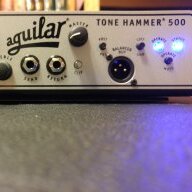
I am still troubleshooting my new-to-me RNDI and the huge XLR signal drop when using the Thru jack.
It appears that if I use the Thru jack on the RNDI, whatever I connect the other end, be it an amp or a mixer for example, the device must be powered on for the XLR signal not to take a severe drop in signal strength.
I simplified my testing by running my bass directly into the RNDI to my soundboard (no pedals involved). I played my bass and had a strong signal to the soundboard. Then I ran a cable between the Thru jack and my amp head. With the amp head off. The RNDI XLR signal dropped significantly. If I turned on the amp head, the signal to the sound board went back to the same strong signal as before I plugged a cable into the Thru jack.
I repeated the exercise by running the Thru jack into a sub mixer on my pedal board and if the sub mixer had power the XLR to the sound board produced a strong signal. If it was not powered, the XLR signal to the sound board dropped in strength significantly.
So it seems that the Thru jack depends on power from the other end somehow.
I am in dialog with Rupert Neeve tech support to see why that is the case (and verify my DI is working correctly).
At least now, I have a way of making the Thru jack work without killing the signal to the sound board. I am hoping this is the way it is supposed to work (so I don't have to return the DI or send it for servicing). I would just like to know why it is working this way.
It appears that if I use the Thru jack on the RNDI, whatever I connect the other end, be it an amp or a mixer for example, the device must be powered on for the XLR signal not to take a severe drop in signal strength.
I simplified my testing by running my bass directly into the RNDI to my soundboard (no pedals involved). I played my bass and had a strong signal to the soundboard. Then I ran a cable between the Thru jack and my amp head. With the amp head off. The RNDI XLR signal dropped significantly. If I turned on the amp head, the signal to the sound board went back to the same strong signal as before I plugged a cable into the Thru jack.
I repeated the exercise by running the Thru jack into a sub mixer on my pedal board and if the sub mixer had power the XLR to the sound board produced a strong signal. If it was not powered, the XLR signal to the sound board dropped in strength significantly.
So it seems that the Thru jack depends on power from the other end somehow.
I am in dialog with Rupert Neeve tech support to see why that is the case (and verify my DI is working correctly).
At least now, I have a way of making the Thru jack work without killing the signal to the sound board. I am hoping this is the way it is supposed to work (so I don't have to return the DI or send it for servicing). I would just like to know why it is working this way.

Sounds impedance related. I'm assuming an amp input only has a high impedance when power is on? With the amp off it is loading down the output of the bass. I'm sure you will get a much better and more technical answer soon.I am still troubleshooting my new-to-me RNDI and the huge XLR signal drop when using the Thru jack.
It appears that if I use the Thru jack on the RNDI, whatever I connect the other end, be it an amp or a mixer for example, the device must be powered on for the XLR signal not to take a severe drop in signal strength.
I simplified my testing by running my bass directly into the RNDI to my soundboard (no pedals involved). I played my bass and had a strong signal to the soundboard. Then I ran a cable between the Thru jack and my amp head. With the amp head off. The RNDI XLR signal dropped significantly. If I turned on the amp head, the signal to the sound board went back to the same strong signal as before I plugged a cable into the Thru jack.
I repeated the exercise by running the Thru jack into a sub mixer on my pedal board and if the sub mixer had power the XLR to the sound board produced a strong signal. If it was not powered, the XLR signal to the sound board dropped in strength significantly.
So it seems that the Thru jack depends on power from the other end somehow.
I am in dialog with Rupert Neeve tech support to see why that is the case (and verify my DI is working correctly).
At least now, I have a way of making the Thru jack work without killing the signal to the sound board. I am hoping this is the way it is supposed to work (so I don't have to return the DI or send it for servicing). I would just like to know why it is working this way.
I am still troubleshooting my new-to-me RNDI and the huge XLR signal drop when using the Thru jack.
It appears that if I use the Thru jack on the RNDI, whatever I connect the other end, be it an amp or a mixer for example, the device must be powered on for the XLR signal not to take a severe drop in signal strength.
I simplified my testing by running my bass directly into the RNDI to my soundboard (no pedals involved). I played my bass and had a strong signal to the soundboard. Then I ran a cable between the Thru jack and my amp head. With the amp head off. The RNDI XLR signal dropped significantly. If I turned on the amp head, the signal to the sound board went back to the same strong signal as before I plugged a cable into the Thru jack.
I repeated the exercise by running the Thru jack into a sub mixer on my pedal board and if the sub mixer had power the XLR to the sound board produced a strong signal. If it was not powered, the XLR signal to the sound board dropped in strength significantly.
So it seems that the Thru jack depends on power from the other end somehow.
I am in dialog with Rupert Neeve tech support to see why that is the case (and verify my DI is working correctly).
At least now, I have a way of making the Thru jack work without killing the signal to the sound board. I am hoping this is the way it is supposed to work (so I don't have to return the DI or send it for servicing). I would just like to know why it is working this way.
Do you have a passive DI that you can connect to the thru jack, to see how it affects the signal?Sounds impedance related. I'm assuming an amp input only has a high impedance when power is on? With the amp off it is loading down the output of the bass. I'm sure you will get a much better and more technical answer soon.
Yes, I did the same thing with my JDI (in a previous post). JDI dropped a little but the RNDI took a huge drop in signal compared to the JDI.Do you have a passive DI that you can connect to the thru jack, to see how it affects the signal?

Hi all - been checking out this thread for a while and loving the stuff I see on here! For those of you that use IEMs, do you use cab sims or not? Do you use OD? Curious because I've heard many opinions on the matter, and I'm not sure which I like better. It seems like from FOH perspective you can get the same amount of "bass" whether a cab sim is used or not, but I know some insist on a cab sim if OD is used. But to me it comes much clearer through IEMs without the cab sim.
I mean use the JDI to load the thru output of the RNDI. Only checking the output of the RNDI. Bass>RNDI>XLR Out of RNDI and compare the output of that with Bass>RNDI>through to JDI>XLR out.Yes, I did the same thing with my JDI (in a previous post). JDI dropped a little but the RNDI took a huge drop in signal compared to the JDI.
Hi all - been checking out this thread for a while and loving the stuff I see on here! For those of you that use IEMs, do you use cab sims or not? Do you use OD? Curious because I've heard many opinions on the matter, and I'm not sure which I like better. It seems like from FOH perspective you can get the same amount of "bass" whether a cab sim is used or not, but I know some insist on a cab sim if OD is used. But to me it comes much clearer through IEMs without the cab sim.
I have used cab sims (via HxStomp) to FoH. They sound good, but, in a dense mix, not wholly different than not having one (from a FoH perspective). As far as, in your ears, yes it will sound different.
As for overdrive, I am absolutely loving my MBD2 right now. Now low end lost and plenty to add in if needed. Also has a really wide gain range and a clean blend.
Last edited:
jacoby75
Supporting Member
- Mar 11, 2010
- 5,661
- 10,716
- Disclosures
- Endorsing Artist: Mike Lull Custom Guitars, DR Strings
I had a DSM OCSD. Great piece of kit for using overdrive and especially for practicing alone with the aux in and headphone amp. However, I ultimately decided that it muddied my tone too much. Darkened things up unnecessarily. Especially since I was typically also playing through an amp. Not to mention the fact that the PA is a speaker(s), so one way or another your signal is coming out of an actual speaker eventually. I preferred the clean, direct tone, which was clearer and with more punch. But I do feel like you need something, especially with overdrives, to tame the harsh high end if you're running direct. If I were playing in a studio or doing home recording and didn't want to mic an amp, a cab sim would be a great way to go.Hi all - been checking out this thread for a while and loving the stuff I see on here! For those of you that use IEMs, do you use cab sims or not? Do you use OD? Curious because I've heard many opinions on the matter, and I'm not sure which I like better. It seems like from FOH perspective you can get the same amount of "bass" whether a cab sim is used or not, but I know some insist on a cab sim if OD is used. But to me it comes much clearer through IEMs without the cab sim.
I opted to go with a Broughton HPF/LPF to dial out the lowest of lows and tame the harsh highs of drives and the clank of my jazz bass with a maple board. It's sort of a compromise between having no cab sim and a cab sim. And the end result is a clean, punchy sound. Even without overdrives, it tightens up my tone in a beautiful way, but does not make it muddy. I think earlier in this thread I also posted my thoughts on using a CAL Grizzly as a cab sim of sorts to tame the mids and highs of some drive pedals, but it is used very subtly and if I had to I could do without it. I wouldn't use it on my clean tone, unless I was specifically going for a darker, maybe driven, cab tone.
Last edited:
I will give that a try. Thanks!I mean use the JDI to load the thru output of the RNDI. Only checking the output of the RNDI. Bass>RNDI>XLR Out of RNDI and compare the output of that with Bass>RNDI>through to JDI>XLR out.
I had a really good cab sim. It just didn't give me what I was looking for. I now have a really good tube compressor and it gives me what I was looking for - both FOH and IEM.
The compressor @SteveC is referencing is the Effectrode LA-1a and he is right. When I use the LA-1a I ditch any cab sims too.
Last edited:
So, in the isolation boredom I am debating effects - again. I LOVE my LA-1A. I never loved an effect before. I never paid that much for an effect before. My cover band has been asking for dirt on a couple songs and I have an old Big Muff that I got for like $40 that I could use again. The LA-1A. I'll probably use my Radial Pro for a DI, or maybe the Sadowsky if I don't sell it. My TU-2, and Rolls box. I'm debating a reverb (again) to use. For jazz soloing and maybe at church. Any ideas?
This won't fit on a Nano/Nano+ so I need to go to a classic jr. probably And at this point add a CIOKS 7 for power.
Not sure if I'll do it but on the vein of spending for god stuff I was looking at a Strymon Blue Sky reverb. My guitar player has the Big Sky and they sound amazing.
Ok, let me have it.
This won't fit on a Nano/Nano+ so I need to go to a classic jr. probably And at this point add a CIOKS 7 for power.
Not sure if I'll do it but on the vein of spending for god stuff I was looking at a Strymon Blue Sky reverb. My guitar player has the Big Sky and they sound amazing.
Ok, let me have it.

Had the Blue Sky, Big Sky, Resound, Nimbus, HOF...and a few more I can't recall atm. Ghost Ridge is my fav...So, in the isolation boredom I am debating effects - again. I LOVE my LA-1A. I never loved an effect before. I never paid that much for an effect before. My cover band has been asking for dirt on a couple songs and I have an old Big Muff that I got for like $40 that I could use again. The LA-1A. I'll probably use my Radial Pro for a DI, or maybe the Sadowsky if I don't sell it. My TU-2, and Rolls box. I'm debating a reverb (again) to use. For jazz soloing and maybe at church. Any ideas?
This won't fit on a Nano/Nano+ so I need to go to a classic jr. probably And at this point add a CIOKS 7 for power.
Not sure if I'll do it but on the vein of spending for god stuff I was looking at a Strymon Blue Sky reverb. My guitar player has the Big Sky and they sound amazing.
Ok, let me have it.
[Invalid or Expired Link Removed]
...very natural sounding—4 types of reverb and 4 preset-save locations. Plus, it has fantastic modulation (edit/add: chorus), too...a "two for one" pedal, so to speak. Not a lot of controls to tweak...I sure don't miss any.
Obviously, it doesn't compete with the variety of reverbs available in the Big Sky. I had both pedals at the same time, and found I kept preferring the operation simplicity, and quality of the verbs GR does have...(ymmv)
You know I'll spare no expense...this is the best I've found to date. 2.6" width, top jacks!
 (No affiliation...just a satisfied customer)
Last edited:


