• TalkBass has been independent since 1998. Add your voice.
    Create a free account to reply to discussions, view embedded media, and browse with fewer display ads.
    Join freeLog in
    Want zero display ads or expanded classifieds tools? Compare plans.

1965 Fender Jazz Nut Issue (With Pictures)

My dad pretty much gave me his 1965 Fender jazz that he has owned for the past 50 years or so. I've been playing it for a few years now and I wanted it to play its very best so I set it up the other day, adjusted the truss rod, string height, intonation etc. All according to the proper specifications provided by Fender. The bass plays way better, and it already played great!

The only issue I am having now is some fret buzz coming from the first fret when I play open strings. I checked the nut and according to the few tests people recommend, the nut slots are too deep, especially the G string.

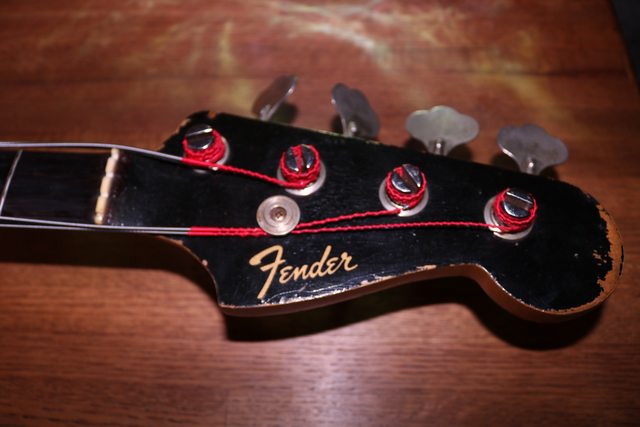
I took a closer look and I think for certain the nut slots are too deep. I would attribute this to being played for half a century or so:
GfWirEgl.jpg


jNi6inRl.jpg


Now the bass is all original for the most part. My dad had a clear coat put on the body, over top of the original paint years ago as he said the paint was coming off everywhere when he played. Other than that it is original and I don't want to replace the nut or anything like that.

Side note: The height adjustment screws on the bridge would loosen up after playing a gig and it would be a mess. Someone on this forum recommended using clear nail polish to lock the screws after they have been adjusted. That was phenomenal advice and they don't move a bit. Others recommended replacing the bridge and keeping the original tucked away safe in the case. I didn't want to do that though, I wanted the bass to look the same as always. In this situation with the nut, I don't want to replace it or have to modify it much. I want the bass to remain looking original.

With that being said, I'm looking for any tips or tricks that can help keep this bass original yet playable with respect to the nut issue I'm having. I've thought of sticking something in the nut slots to raise the strings a bit but that seems a little half assed. Maybe not, depending on the material?

Please let me know if you have heard or known of a trick to fix too deep of nut slots. Worst case I will just leave it alone, the bass plays great and it sounds phenomenal plugged in.

Thank you very much and bellow there will be some pictures of the bass. Who doesn't like a thread with pictures.

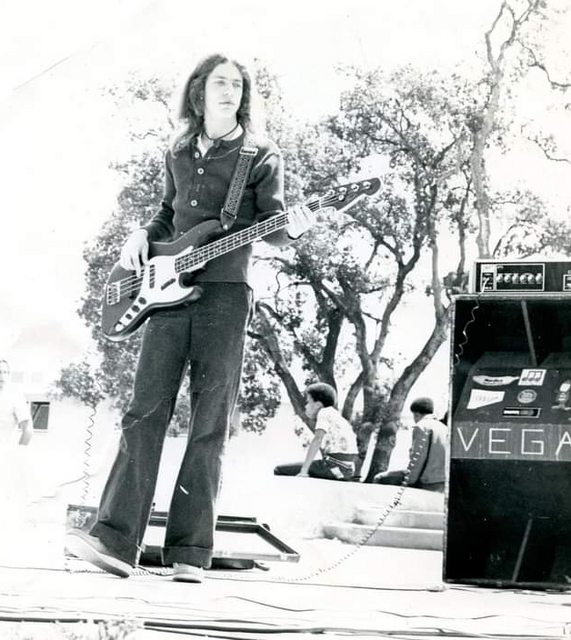
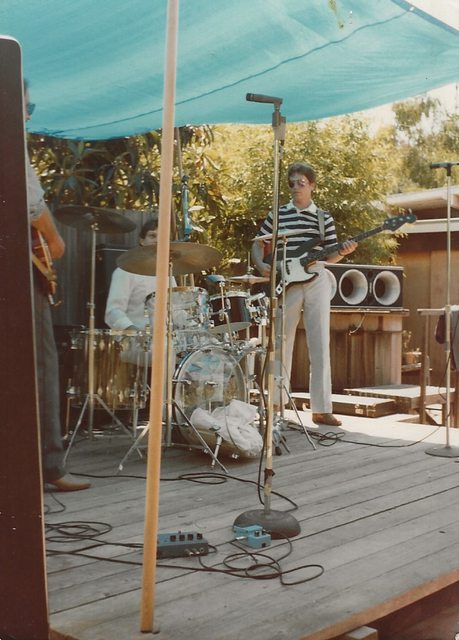
Here is the same bass in different decades:

Late 60's?:

vj3Kh5gl.jpg


Early 70s's?:

XYWT2Tnl.jpg


1980s?:

Ut2DxKfl.jpg


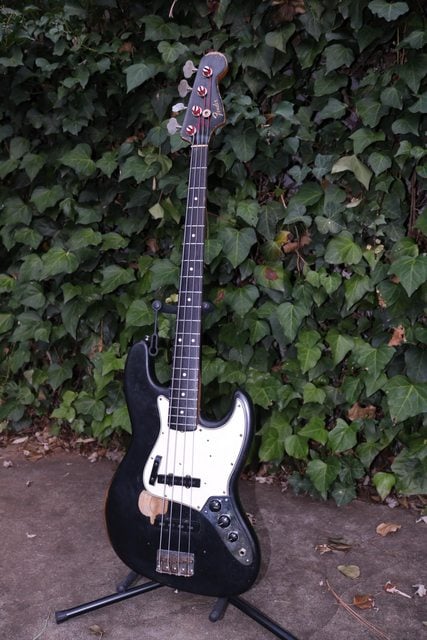
Here is the bass now:

qCAvcHSl.jpg


I greatly appreciate any advice regarding the nut, and in return, I hope this thread is a little bit entertaining.

- Sonny
 
Lots of tips. Simplest is just to put a small piece of paper (folded as needed) under the string in the nut slot. For something a little more permanent and substantial, you can mix a little bone sanding dust with superglue. Put it in the slot, then when dry, use a string to “file” the slot back to the desired depth. I’ve done both and both worked fine.
 
Great story and a great bass. I keep hoping my son takes an interest in playing so I can pass along my 1965 Jazz Bass to him; if he doesn’t play I’ve made it clear my gear won’t go to him. Back in 1980 the G string nut was cracking so I had a brass nut installed. I recall the tech (Cisler’s Music Cat in Marietta, Ohio) tried filling in the nut with some substance prior to replacing the nut but the crack was to big. You might check out some type of filler to resolve the issue. Here is a recent photo of my bass.
 

Attachments

  • FFB4A1F0-1322-4778-80CE-700F24F05351.jpeg
    FFB4A1F0-1322-4778-80CE-700F24F05351.jpeg
    1.6 MB · Views: 161
CA glue and baking soda fix? Should be be able to google/YouTube, seems pretty common. That said, I wouldn't think a new nut would decrease it's value, It's a wear item like frets.

A new one would stick out like a sore thumb, the original is really faded. I'd never sell the bass anyways but I want it to look the same as it always has.

Great story and a great bass. I keep hoping my son takes an interest in playing so I can pass along my 1965 Jazz Bass to him; if he doesn’t play I’ve made it clear my gear won’t go to him. Back in 1980 the G string nut was cracking so I had a brass nut installed. I recall the tech (Cisler’s Music Cat in Marietta, Ohio) tried filling in the nut with some substance prior to replacing the nut but the crack was to big. You might check out some type of filler to resolve the issue. Here is a recent photo of my bass.

Interesting. Yeah I grew up as a guitar player since around age 7 when my dad got me a guitar. I still play guitar to this day. But I remember clearly one day when I was probably 14 years old, my dad showed me Jaco's Modern Electric Bass video as he thought I should check it out, he set it up for me and left. So I watched it and I was instantly blown away. Jaco made the bass so cool, and I literally picked up the '65 which happened to be in the corner of the room (as I was watching the video). I remember it felt like a man's instrument, it was huge compared to my Les Paul. Anyways, I had no idea what the '65 was even worth or anything until years later but from that day onward I played bass ever since.

I bought a few of my own basses but they never played or sounded as good as the '65 and I didn't even know how coveted the '65 was until I was much older, I just knew I liked playing my Dad's bass because the neck was so damn smooth.

As for my Dad, I don't think he necessarily wanted me to play bass but it just so happened that that one day when I was 14 I became a bass player for life. I honestly don't think I'd be playing bass if it weren't for Jaco's video. Funny enough he was considered past his prime around then but his playing still moved me enough to pick up bass.

As for your son, maybe the direct approach will deter him. It just so happened in my case it sort of organically worked out but maybe you can inspire him some way indirectly. Your '65 is beautiful and I would feel the exact same way as you. I'd much rather give it to someone who will cherish it than give it to a family member who has absolutely no idea how special it is. I don't think a non musician can even fathom how special these instruments are, especially if they have a long family history.

Some basses will buzz at the first fret if the neck is set too straight too.

Yes you are right. The bass in question had a rather bowed neck, not too much but I straightened it a bit. The neck now only has a slight bow which I correctly measured. The fret buzzing was already present before the adjustment but is now exacerbated. If you look in the photo, the strings are sort of eating the headstock as the nut slots are too shallow.

Lots of tips. Simplest is just to put a small piece of paper (folded as needed) under the string in the nut slot. For something a little more permanent and substantial, you can mix a little bone sanding dust with superglue. Put it in the slot, then when dry, use a string to “file” the slot back to the desired depth. I’ve done both and both worked fine.

I have researched as per your recommendation and this method seems to be pretty good in my opinion. I just need to get the color right. The nut is yellowed pretty well, would bone be a good match? Or do I look to some other material. I would assume the baking soda trick would work well on a newer nut.
 
A new one would stick out like a sore thumb, the original is really faded. I'd never sell the bass anyways but I want it to look the same as it always has.


Interesting. Yeah I grew up as a guitar player since around age 7 when my dad got me a guitar. I still play guitar to this day. But I remember clearly one day when I was probably 14 years old, my dad showed me Jaco's Modern Electric Bass video as he thought I should check it out, he set it up for me and left. So I watched it and I was instantly blown away. Jaco made the bass so cool, and I literally picked up the '65 which happened to be in the corner of the room (as I was watching the video). I remember it felt like a man's instrument, it was huge compared to my Les Paul. Anyways, I had no idea what the '65 was even worth or anything until years later but from that day onward I played bass ever since.

I bought a few of my own basses but they never played or sounded as good as the '65 and I didn't even know how coveted the '65 was until I was much older, I just knew I liked playing my Dad's bass because the neck was so damn smooth.

As for my Dad, I don't think he necessarily wanted me to play bass but it just so happened that that one day when I was 14 I became a bass player for life. I honestly don't think I'd be playing bass if it weren't for Jaco's video. Funny enough he was considered past his prime around then but his playing still moved me enough to pick up bass.

As for your son, maybe the direct approach will deter him. It just so happened in my case it sort of organically worked out but maybe you can inspire him some way indirectly. Your '65 is beautiful and I would feel the exact same way as you. I'd much rather give it to someone who will cherish it than give it to a family member who has absolutely no idea how special it is. I don't think a non musician can even fathom how special these instruments are, especially if they have a long family history.


Yes you are right. The bass in question had a rather bowed neck, not too much but I straightened it a bit. The neck now only has a slight bow which I correctly measured. The fret buzzing was already present before the adjustment but is now exacerbated. If you look in the photo, the strings are sort of eating the headstock as the nut slots are too shallow.


I have researched as per your recommendation and this method seems to be pretty good in my opinion. I just need to get the color right. The nut is yellowed pretty well, would bone be a good match? Or do I look to some other material. I would assume the baking soda trick would work well on a newer nut.


I have just put a drop of superglue in low slots before and let it sit for a day, does the trick and is very easy to do and is clear and pretty much invisible. Nice bass by the way.
 
I have just put a drop of superglue in low slots before and let it sit for a day, does the trick and is very easy to do and is clear and pretty much invisible. Nice bass by the way.

I see, just like a little bead. See these ideas are great and I wouldn't have thought of them on my own.

Place something under the nut to raise it a bit?

That is another option. Although I don't really want to disturb the nut. No idea if it would come off easy.

Also what material are the nuts on a 60's Fender bass? Are they plastic?
 
Nice bass. Very valuable, especially in black. Definitely keep the original nut, it matters to the value.

Do not shim the nut, that's just creating more problems and you risk cracking it. Do the superglue method. You can mix in some baking soda or bone dust or whatever. Then refile the slot. I use the thicker glue for this job, works great. Youtube is your friend. Good luck.
 
Two good options.

Shim, or replace and keep the original nut.

Both will work fine, and will not reduce the value of the bass.

Filling in the original nut slots with epoxy or cyanoacrylate is a bad idea, both physically speaking and historically speaking. From a workmanship standpoint, it’s ghetto. From a historical standpoint, it’s adding non period correct material to an original component in a non reversible way.

If you cannot make the stock nut work with a reversible and non destructive method like a well crafted shim, then just store the unmolested original and put in a new one so you can play. That’s the right way to do it on a collectible and valuable thing. Do not alter an original part that no longer works. Replace it with a modern day ringer and store the unmodified original.
 
Last edited:
I'd start with the paper technique, that will give you a chance to see how much you need to raise the string(s), and a chance to see how you feel about the way it plays. I can't tell for sure from the pictures, but are the strings actually resting on the end of the fret board instead of the nut?

I've seen the bone dust in the slot, then a touch of thin CA ( and do protect either side of the nut from run off). I've seen the paper, or foil as a shim in the nut trick (Don't let it get past the front edge of the nut.).

Best suggest found in an old repair book, if you got the bone dust and CA route, get a junker at a yard sale or Craigs list, and practice. No sense in first timing on a '65 jazz.
 
Last edited:
  • Like
Reactions: SonnyMorrow
I'd start with the paper technique, that will give you a chance to see how much you need to raise the string(s), and a chance to see how you feel about the way it plays. I can't tell for sure from the pictures, but are the strings actually resting on the end of the fret board instead of the nut?

Pretty much, yeah you can see the grooves created from the strings from the years and years of playing. Hence why I know for certain the nut slots are too deep. Good idea about the paper. I'm going to paper all 4 slots soon and see how it plays and sounds. I'll go from there. But yes the strings are eating the headstock so this needs to be addressed sooner rather than later.
 
Two good options.

Shim, or replace and keep the original nut.

Both will work fine, and will not reduce the value of the bass.

Filling in the original nut slots with epoxy or cyanoacrylate is a bad idea, both physically speaking and historically speaking. From a workmanship standpoint, it’s ghetto. From a historical standpoint, it’s adding non period correct material to an original component in a non reversible way.

If you cannot make the stock nut work with a reversible and non destructive method like a well crafted shim, then just store the unmolested original and put in a new one so you can play. That’s the right way to do it on a collectible and valuable thing. Do not alter an original part that no longer works. Replace it with a modern day ringer and store the unmodified original.

I kinda feel the same, as you can't really undo gluing. So that is why I'm looking for some more tips/tricks. I'm seriously considering using paper but what would work more long term similar to paper?

I don't want to really remove the nut it looks very old and fragile. I'd honestly rather just play it the way it is but like I said, the strings are beginning to eat the headstock a little bit.