• TalkBass has been independent since 1998. Add your voice.
    Create a free account to reply to discussions, view embedded media, and browse with fewer display ads.
    Join freeLog in
    Want zero display ads or expanded classifieds tools? Compare plans.

54 Precision Attic Find

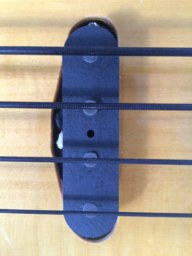
Tim, are you planning on an original vintage SC pickup or one of the stack "quiet" pickups like a Duncan 51 P bass stack? The stack pups require a bit more depth.

EDIT: I might recommend that you consider keeping the current depth since you're going to be selling this eventually. This would give the buyer the option of using a standard pup or one of the stacked versions. I have a Fender custom shop P with dual SD 51 stack pups as standard (same ones as the Dusty Hill). Let me know if you want me to measure that depth.
Thank you....that's good to know. If you wouldn't mind posting that dimension, that would be helpful. If my route is deep enough,I'll fit a removable spacer, instead of sealing it up.
 
I have heard about these pictures on several sites...do you know by chance, where I might be able to see these? Thanks!
I believe I saw pictures in Forrest White’s book on his time with Leo. It seems a relatively hard book to get a hold of so I last read it almost 20years ago. I may have not made myself clear earlier; unless you have reason to believe otherwise I’d stick with the route you have. The Squier pup may not be a standard depth. The Duncan stacked pup is the only one I’ve heard of that is taller than normal.
 
I don’t think Fullerplast came into use in the first 6-8 years iirc. I remember seeing a picture of a large tank where the bodies were literally dunked into it.

I think it was more complex than that. The photo you describe is apparently reproduced in Tom Wheeler's American Guitars book.

As per: Vintage Guitars Info - Fender custom color finishes on vintage Fender guitars

The consensus is that the large tank was simply the yellow stain or dye that went under everything else on an Alder body; even solid colours. The center of sunburst finishes is this yellow stain, and worn Fender finishes from the era go down to the yellow.

Fullerplast doesn't have a colour and was sprayed, rather than applied by submersing the body in it. Some think it appeared in the late '50s whereas others think it appeared either in the early'60s or even with the genesis of the CBS era. 1963 appears to be the common consensus according to the website I linked above, but I've seen other years cited elsewhere. Fullerplast wouldn't have been applied to a 1954 bass, which explains why the early '50s P basses appear to wear back to bare wood when they 'relic' over time.

Thinking about it a bit more, I imagine that a large tank of Fullerplast would seize up and cure eventually, and this seems anathema to Leo Fender's cost-cutting measures. If you had to start the day by skimming a skin off the top of the Fullerplast tank, and then chucking the skim in the bin, then this would be considered a needless waste by Fender in all likelihood.
 
  • Like
Reactions: EdBo
One double 0 seven's back in her birthday suit....I cleaned up the neck pocket after the stripping operation...again...and found what looks to be some additional writing under the original finish besides the 11-54 date. The 3rd picture shows it as best I can at this point....I'm scared to take any more finish off to see what it says for fear of eliminating it completely....I'm going to try UV light, and some different color filters to see if I can make it out any better...
 

Attachments

  • IMG_0574.JPG
    IMG_0574.JPG
    207.8 KB · Views: 55
  • IMG_0575.JPG
    IMG_0575.JPG
    200.6 KB · Views: 59
  • IMG_2655.JPG
    IMG_2655.JPG
    496.2 KB · Views: 57
Last edited:
I absolutely am engrossed in the work you are doing. I am a weekend woodworker and just love watching the transformation. However being I guess what they call ADD these days the backwards step Hurley’s a wee bit. I can’t wait to see act two. The first curtain call was pretty spectacular...... I do have a question. I have never stripped and refinished a bass. Lots of antiques. Never a bass. I do think I am going to refinish an old Ibanez I toured with in the 80’s. Something that wouldn’t be a great loss if I completely muck it up..... Do you mask off the neck pocket? Seems a right fitting neck may become an impossible fit with half dozen layers of finish added. Just wondering.
 
  • Like
Reactions: ExaltBass
I absolutely am engrossed in the work you are doing. I am a weekend woodworker and just love watching the transformation. However being I guess what they call ADD these days the backwards step Hurley’s a wee bit. I can’t wait to see act two. The first curtain call was pretty spectacular...... I do have a question. I have never stripped and refinished a bass. Lots of antiques. Never a bass. I do think I am going to refinish an old Ibanez I toured with in the 80’s. Something that wouldn’t be a great loss if I completely muck it up..... Do you mask off the neck pocket? Seems a right fitting neck may become an impossible fit with half dozen layers of finish added. Just wondering.
I've been masking off the flat surface of the neck pocket to preserve the writing...and I'm using a flat piece of wood screwed in place of the neck to serve as a handle, and to keep any stripper from migrating into the tape. I would not be protecting it if there were no historic writing in there. As it is , the neck will screw back on against the original finish, as it was in 1954.
 
One double 0 seven's back in her birthday suit....I cleaned up the neck pocket after the stripping operation...again...and found what looks to be some additional writing under the original finish besides the 11-54 date. The 3rd picture shows it as best I can at this point....I'm scared to take any more finish off to see what it says for fear of eliminating it completely....I'm going to try UV light, and some different color filters to see if I can make it out any better...
Wow. This is getting like, archeological. It's great!
 
Ok...so from what I've researched, Fender didn't waste alot of time putting finishes on their guitars. The amount of grain filler and blond coating...I think.....was dependent on what it took to be able to make it a mostly blonde finish by filling the darker grains with a white filler. Ash can really look like a zebra in some cases, but that type of grain definition does not lend it self to the appearance of the finish he was apparently looking for. Looking at the wear patterns on some of the basses in that book, the layers are pretty evident. Wood, white, color, clear. According to some Telecaster historians, ( who would know blond finishes better?)it was a milky white sealer, with a clear top coat...it looks like one layer 'cause nitro melts back into itself...so to speak.
I'm using StewMac water based ash filler with white pigment added. The results were better than I expected right from the start...the consistency of the filler makes all the difference in the way it adapts itself to the grain.
The problem I had with my earlier attempts was obscuring the grain "definition" ..with the blond effect. My first two attempts were with colorless sealing and translucent blonde color coats and they just seemed to blur the grain..the second time to a much less degree because I used a much lighter coat of translucent blonde ( spray cans), but the lightest even coat I could get was still too opaque for my liking.
This wood filler is very user friendly for this application...I slathere some onto my test piece befor I committed to the real one. It's hard to describe how fine the particles of it actually are, like a fine clay slurry...incredibly dense. It takes away the apprehension of sanding away on the wood...I brushed it on, and squeegeed it off just like they said..the even-ness of the grain is dependent on how much you sand off. If you go a little too far, paint some back on...it hardens like thin clay..and blend some more...it sands very fast with 400....I'm digging it! I've still got a way to go, but I know I'm on the right track ...
I'm blending my own color coat this time....a slightly milky clear with a taste of yellowing added...the test board will will get alot of stripes before I do it for real..
You can see the difference in the overall brightness of the body in the before and after pics. The contrast between the lightest and darkest streaks of the grain is reduced, but the definition of the grain is retained.
If somebody was practiced in this type of filler I would imagine a worker would be able to sand it into spraying condition in about 30 minutes...according to Fenders timetables.
 

Attachments

  • IMG_0578.JPG
    IMG_0578.JPG
    302.1 KB · Views: 55
  • IMG_0579.JPG
    IMG_0579.JPG
    288.2 KB · Views: 59
  • IMG_0580.JPG
    IMG_0580.JPG
    219.2 KB · Views: 52
Last edited:
This stage seems like you have to carefully, slowly, painstakingly try to recreate what someone slapped together as fast as possible.
In a way...yes,exactly! What I think I have put together "forensically" so far.. Ash is hard wood...It takes a long time to sand to a very smooth finish. I don't think they spent the time to get it really smooth...if they did, the grain filler would have not had as many low areas to sink into..maybe 100 - 150 grit..then it was grain filled with a white filler..THEN it was sanded to maybe a 320 - 400 finish... enough to flatten the surface, and expose just the high parts of the grain, and make it slate smooth...that would explain the amount of white filler coat you see on worn basses...then "milky white" translucent sealer coat, then enough clear coats to give it the good look. That's my story so far, and I'm sticking to it!
 
Wow...I got a trophy....to add to my above post...I sanded the body to a 220 finish...as per the filler recommendations..I didn't want any more of this bass going into the vacuum cleaner..which is what would have happened if I took it down to 100 grit...it had been stripped and sanded before I got it..I felt like I should hold onto as much original flesh as I could and let the finish play out where it will. I'm going to try sanding a test piece with 80-100 grit and fill it and see what it looks like..
 
  • Like
Reactions: fourstringdrums