A SILLY ASK:
why ,if these basses have the same system like the BB, not sounds with the same punch ? (i`m listened any records ,and ...no ...)
perhaps ,the punch is given by the attack of the fingers ...?

The pickup system in the Ampeg Baby Bass and the "mystery" pickup in the Ampeg Scroll Basses (AEB-1, AUB-1 and Devil Basses) are similar in construction, but they work a little different. It has to do with the geometry. Like Nicky said, they both have coils and magnets mounted down in the body. Right over the magnets are flexible steel diaphragms, and the bridge is mounted to the top of the diaphragm. When you pluck the strings, the oscillating motion is transmitted down to the diaphragm, which wiggles within the magnetic field and creates the signal in the coil. The diaphragm takes the place of the string over a normal magnetic pickup. The Baby Bass and the Scroll Bass each have two coils, which are hooked up as a humbucking pair. The magnets are opposite polarity, and the coils are wired in series, but with the winding in opposite directions. The Baby Bass has two separate coils; on the Scroll Bass the two coils are cast into an epoxy block.
The difference in how they sound comes from the geometry. On the Baby Bass, the two coils are spaced fairly far apart, each with its own small round diaphragm. Also, the bridge is fairly tall. And, you have a tight, about 4" radius across the fingerboard and the strings. When you pluck the strings hard, you're mostly pulling the string sideways, and the bridge is twitching side-to-side, rolling about an axis. As it does this, one foot of the bridge is pushing down on one diaphragm, while the other is lifting up on the other diaphragm. Because the two coils are wired as humbuckers, the two signals end up adding together. You get a powerful "Pop" pulse at the beginning of the signal, which comes directly from that side-to-side snap of the bridge. That's the percussive attack on each note that makes the Baby Bass tone so distinctive. You Salsa guys love that sound!
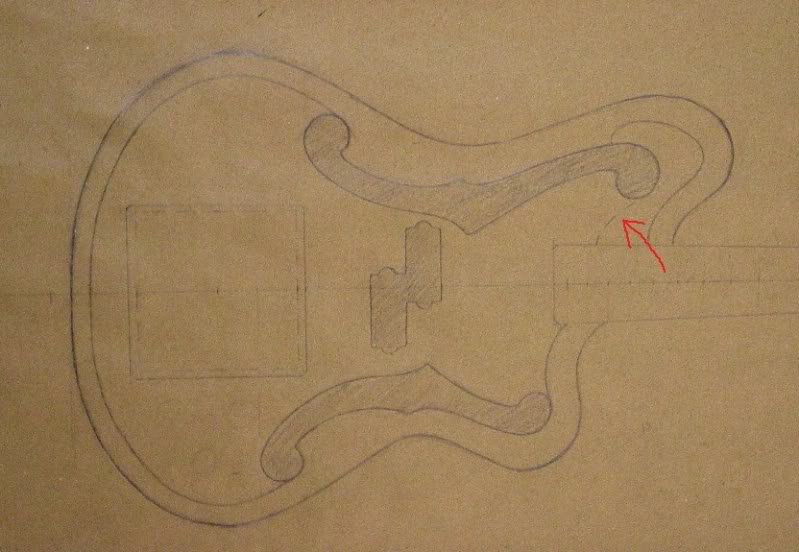
In comparison, the "mystery" pickup on the Scroll Bass has a single diaphragm about 5" square over the two coils, which are close together. The bridge is mounted down low over the diaphragm. It has to be; on an electric bass you don't have the thickness to work with. As a result, there's hardly any side-to-side rolling motion of the bridge or the diaphragm. It primarily just bounces up and down like a drum head. When you pluck an AEB-1, some of that plucking motion gets transferred into the vertical motion of the diaphragm, but it's not as direct as on the Baby Bass. The AEB-1 has a percussive pulse in its notes, but the effect isn't as dramatic as it is on the Baby Bass.
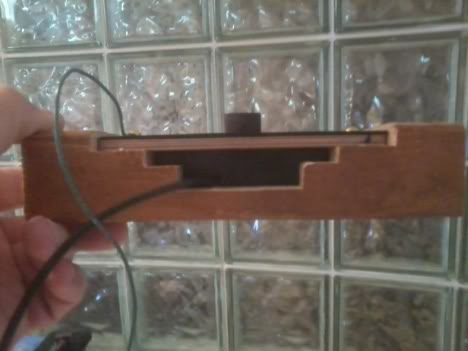
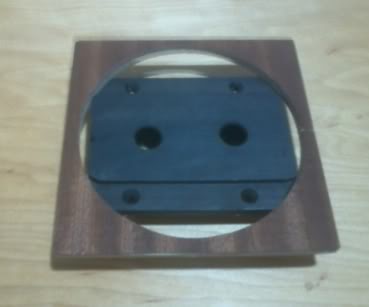
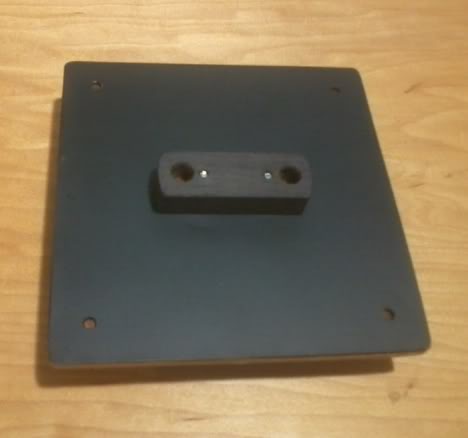
Going even further with this type of pickup, Nicky posted a picture above of the "percussive" pickup that I developed for my Series IV Scroll Basses. I got rid of the diaphragms and mounted the bridge on a frame of spring steel rods. I worked with the geometry of the rods so that the bridge can snap and roll side-to-side, in the confined space available. My pickup actually does both the rolling motion and the vertical motion. I found by experimentation how to control the ratio of the spring rates in the rolling direction and in the vertical direction. The rolling motion creates that heavy "pop" at the start of the note, like the Baby Bass. The vertical motion creates a softer "warble" for a couple of cycles just behind it. This Pop and Warble in the attack profile of the note is part of the character of an upright bass, caused by the rolling motion of the bridge and the flexing of the top. With my pickup, I'm trying to approximate that motion in a compact spring steel assembly, in the confines of an electric bass body. That why all that stuff is crammed into there!