
This is more tempting everydayOh yeah. Old school SD slot. haha. Now show me a Smartmedia or Memory stick and I'll call that old school. I know what you mean though. I picked up a Tascam DP-24SD for $400. Should make my life simpler.

Enjoy the benefits of a premium membership!
Upgrade Account
-
TalkBass has been independent since 1998. Add your voice.
Create a free account to reply to discussions, view embedded media, and browse with fewer display ads.
Join free Log in
Want zero display ads or expanded classifieds tools? Compare plans.
You are using an out of date browser. It may not display this or other websites correctly.
You should upgrade or use an alternative browser.
You should upgrade or use an alternative browser.
Dingwall Owners Club
- Thread starter FroggyOne2
- Start date
More options
Who Replied?

I just use Garageband for recording clips (requires Mac/iOS, of course). Simple and effective. I use a Focusrite Scarlett 2i2 USB interface.
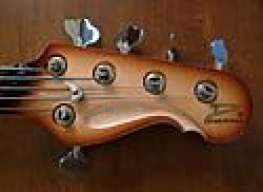
The real key is less the electronics and/or finishing options and more the body shape & neck. AB's have straight-pull headstocks. Z's and Prima's have composite angle tilt back headstocks.
Interesting. Is there a specific purpose to the angled tilt back headstock on the Z's/Prima's? Or is it merely aesthetic?

The angle means they don't need low tuners or a string tree. I don't know what difference it makes in the build process but it must be a lot more labour intensive or else all the models would have it.Interesting. Is there a specific purpose to the angled tilt back headstock on the Z's/Prima's? Or is it merely aesthetic?

BurningSkies
CRAZY BALDHEAD
- Feb 20, 2005
- 27,956
- 20,348
- Disclosures
- Endorsing artist: Dingwall Guitars
The angle means they don't need low tuners or a string tree. I don't know what difference it makes in the build process but it must be a lot more labour intensive or else all the models would have it.
It is more intensive. There's a joint at the end of the neck that angles the headstock back. So, more time/effort woodwork involved. Straight pull headstocks were something that Fender really engineered and embraced (think strat/tele/jazz/precision, while the joint/angled headstock was always more of a trademark of makes like Gibson.

For some reason, I just prefer the aesthetic of a straight headstock.
Although I don't have any experience with angled headstocks, I just feel straight ones are more solid. That's probably due to the many horror stories you hear of tilt back headstock guitars snapping/breaking at or near that joint (mostly Gibson Les Pauls).
Although I don't have any experience with angled headstocks, I just feel straight ones are more solid. That's probably due to the many horror stories you hear of tilt back headstock guitars snapping/breaking at or near that joint (mostly Gibson Les Pauls).
For some reason, I just prefer the aesthetic of a straight headstock.
Although I don't have any experience with angled headstocks, I just feel straight ones are more solid. That's probably due to the many horror stories you hear of tilt back headstock guitars snapping/breaking at or near that joint (mostly Gibson Les Pauls).
Hadn't thought of angled headstocks being a bit more prone to severe damage.
On the plus side, I'd think an angled headstock might make the reach for tuning a smidge easier. My shoulder can bark at me when I reach for that A-tuner.

My current Dingwall family: NG2 retrofitted with FretTrax (midi), 2016 ABHS 6 string (solid bubinga body), and 2005 AB II (figured bubinga top), modded with Nordy Jazz pickups, Nordy preamp and medium jumbo Jazz frets.
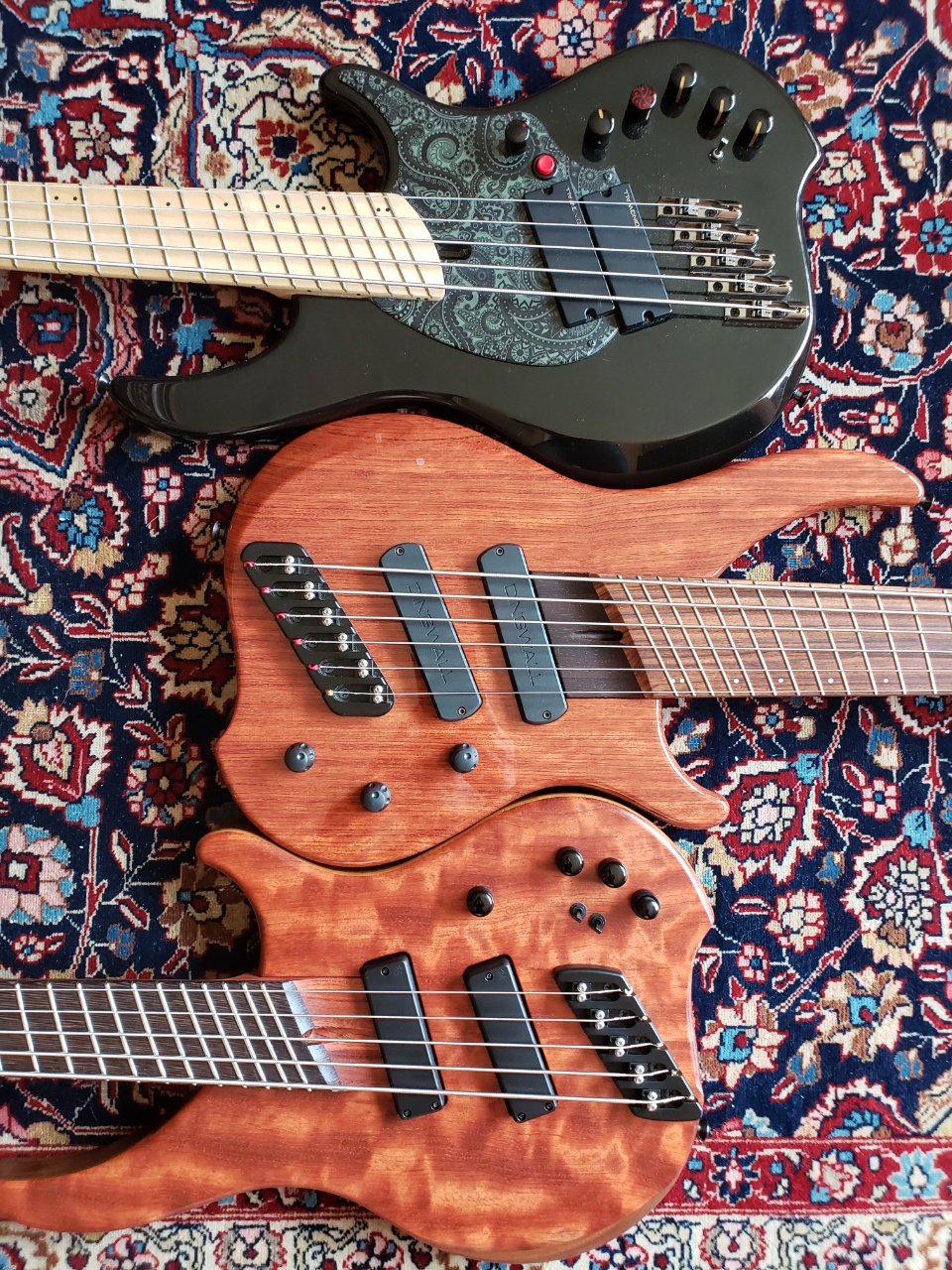
My current Dingwall family: NG2 retrofitted with FretTrax (midi), 2016 ABHS 6 string (solid bubinga body), and 2005 AB II (figured bubinga top), modded with Nordy Jazz pickups, Nordy preamp and medium jumbo Jazz frets.
View attachment 3358005
I dig the paisley guard on your NG. What happens when the red button is engaged?
When the red button is pushed while pushing a certain string down on a certain fret, various changes can be made. Like changing program presets on the Motif, making it compatible with Ableton Live, move the fret board up or down and octave, deactivating midi on a portion of the fret board.I dig the paisley guard on your NG. What happens when the red button is engaged?

My current Dingwall family: NG2 retrofitted with FretTrax (midi), 2016 ABHS 6 string (solid bubinga body), and 2005 AB II (figured bubinga top), modded with Nordy Jazz pickups, Nordy preamp and medium jumbo Jazz frets.
View attachment 3358005
Where did the paisley pickguard come from?
My current Dingwall family: NG2 retrofitted with FretTrax (midi), 2016 ABHS 6 string (solid bubinga body), and 2005 AB II (figured bubinga top), modded with Nordy Jazz pickups, Nordy preamp and medium jumbo Jazz frets.
View attachment 3358005
How do you like the FretTrax on your Dingwall?
Damn that figured bubinga looks cool in stage lighting! Gigging with the Jazzwall.
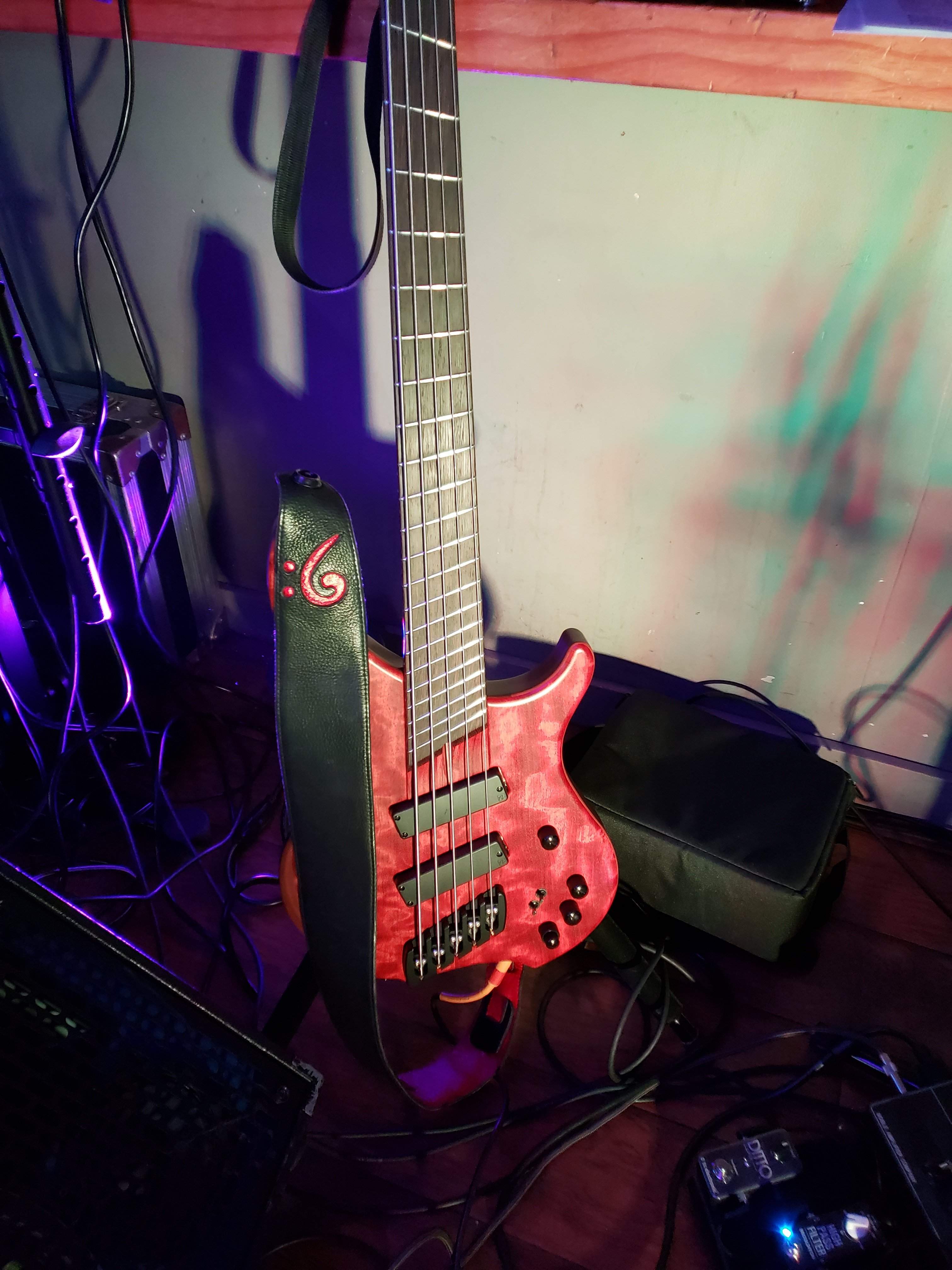
Feeling is not as accurate as measuring. If you'll put a ruler on it, you'll find that your strings are 18mm apart.
You are correct, of course (when measured perpendicularly). I guess because of the diagonal, you effectively have a 22+mm spacing if you follow the line of a pickup when playing, for example. It's a looong way across a 6 string (especially compared to my Yamaha BB5000 with 15mm spacing).

johnsonabq
Watch out where the huskies go...
Call me when you've got a Guinness harp logo inlay on the fretboard.
johnsonabq
Watch out where the huskies go...
Call me when you've got a Guinness harp logo inlay on the fretboard.


 Whoop.


