@5StringPocketThat blue starting to grow on you? It sure is a great looking bass!
It is, I wish the color was darker but the tone and playability of this thing is so damn good. The Dbird custom had wenge as well and is super smooth.

TalkBass has been independent since 1998. Add your voice.
Create a free account to reply to discussions, view embedded media, and browse with fewer display ads.
Join free Log in
Want zero display ads or expanded classifieds tools? Compare plans.
@5StringPocketThat blue starting to grow on you? It sure is a great looking bass!

I had a Dbird with FDVs that was passive. Sounded great and did the things that passives do. If I had a choice from the factory I would want a 4band with passive tone control. I like to have all the controls.Hello all,
For those of you who own passive Dingwalls, can I solicit some of your opinions? A few passive Afterburner 5'ers with 2 and 3 pickups have popped over recent months, and I find myself GAS'ing for one, especially after having played a Combustion and NG3 in a store. I was impressed by the comfort of the neck, the strength of the low notes on the E and especially B strings, but I'm in no need of active electronics.
I've combed through a few hundred pages of this thread but there's not much talk of passives. (I wish TB had a slightly better search function).
Thank you!
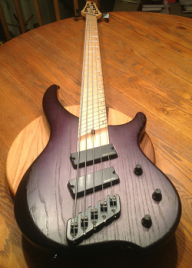
Hello all,
For those of you who own passive Dingwalls, can I solicit some of your opinions? A few passive Afterburner 5'ers with 2 and 3 pickups have popped over recent months, and I find myself GAS'ing for one, especially after having played a Combustion and NG3 in a store. I was impressed by the comfort of the neck, the strength of the low notes on the E and especially B strings, but I'm in no need of active electronics.
I've combed through a few hundred pages of this thread but there's not much talk of passives. (I wish TB had a slightly better search function).
Thank you!
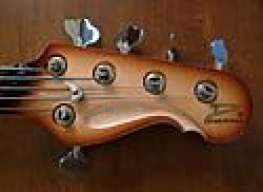
I own a passive AB-1 - the world of boutique, forward-thinking design basses isn’t exactly full of examples with passive electronics - builders either want to finish the arc with an advanced active electronics suite or are maybe are afraid to admit that their instruments don’t sound all that great without electronic help.
A Dingwall passive bass is not like that. It’s a design that still sounds really good with a passive setup, not just “okay”. It’s a modern sound that won’t be mistaken for classic Fender, and it carries a clarity, presence, and depth that could easily fill in for what an active tone would bring to the table. It can all be also reigned in with the tone knob, S/P switches, pickup selection, and playing techniques to cover old-school territory.
Anyway, I can’t imagine that a player that prefers a passive setup would not be able to make a passive Dingwall work for them. It’ll always have a touch of modern smoothness and refined sound, but you can dial that to where you want it.

I usually bypass the pre in my NG-3. Hoping to get a passive ABZ or AB1 eventually...I own a passive AB-1 - the world of boutique, forward-thinking design basses isn’t exactly full of examples with passive electronics - builders either want to finish the arc with an advanced active electronics suite or are maybe are afraid to admit that their instruments don’t sound all that great without electronic help.
A Dingwall passive bass is not like that. It’s a design that still sounds really good with a passive setup, not just “okay”. It’s a modern sound that won’t be mistaken for classic Fender, and it carries a clarity, presence, and depth that could easily fill in for what an active tone would bring to the table. It can all be also reigned in with the tone knob, S/P switches, pickup selection, and playing techniques to cover old-school territory.
Anyway, I can’t imagine that a player that prefers a passive setup would not be able to make a passive Dingwall work for them. It’ll always have a touch of modern smoothness and refined sound, but you can dial that to where you want it.
Amen, brother. My four-string Super P is the 'essence' of bass for me. No electronic tone shaping is needed (I don't even have a tone control on it). My active Dingwalls have Glock pre's which I run flat. No boost or cut is necessary...

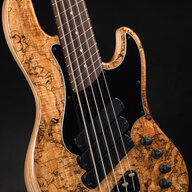
Damn...I need to buy a rug like that for my band

I’ve never played an active Dingwall live - I will when my build slot comes up and my Z gets built. I don’t really communicate with any Extreme Rock players, but the clean-tone Dingwall Z players I know that I have stage time with them don’t really use the active EQ that much. Just a dash of salt and pepper. It’s mentioned that the natural Dingwall sound is already dialed in and doesn’t need a big push to work well in the ensemble.
Saw that! GLWTS! It’s a gorgeous bass and looks like a player for sure!Hello fellow Dingwall lovers,
I have this ABZ 5 passive available: Dingwall ABZ 5 - Matte Trans Black | Reverb
I could do $2750USD including shipping (PPFF) to US/Canada for fellow Talkbass members.


My ABZ5 and D-Roc5 standard are both passive. When I plug them in people say they are active and don’t believe me when I say the opposite. These basses are so damn well designed that their tone needs no tweaking.I own a passive AB-1 - the world of boutique, forward-thinking design basses isn’t exactly full of examples with passive electronics - builders either want to finish the arc with an advanced active electronics suite or are maybe are afraid to admit that their instruments don’t sound all that great without electronic help.
A Dingwall passive bass is not like that. It’s a design that still sounds really good with a passive setup, not just “okay”. It’s a modern sound that won’t be mistaken for classic Fender, and it carries a clarity, presence, and depth that could easily fill in for what an active tone would bring to the table. It can all be also reigned in with the tone knob, S/P switches, pickup selection, and playing techniques to cover old-school territory.
Anyway, I can’t imagine that a player that prefers a passive setup would not be able to make a passive Dingwall work for them. It’ll always have a touch of modern smoothness and refined sound, but you can dial that to where you want it.
Hello all,
For those of you who own passive Dingwalls, can I solicit some of your opinions? A few passive Afterburner 5'ers with 2 and 3 pickups have popped over recent months, and I find myself GAS'ing for one, especially after having played a Combustion and NG3 in a store. I was impressed by the comfort of the neck, the strength of the low notes on the E and especially B strings, but I'm in no need of active electronics.
I've combed through a few hundred pages of this thread but there's not much talk of passives. (I wish TB had a slightly better search function).
Thank you!

My ABZ5 and D-Roc5 standard are both passive. When I plug them in people say they are active and don’t believe me when I say the opposite. These basses are so damn well designed that their tone needs no tweaking.