I play double bass and I occasionally use drive pedals just to bring out some of the upper harmonics so I can hear my lines when I'm soloing, also take the edge off the note a bit. I find I have to set it just at the edge of breakup. Also. I play seated so my left leg is damping the back of the instrument, it makes for less volume acoustically but that doesn't matter to me if I'm playing amplified, but it certainly helps reduce the feedback playing amplified. I find if I stand up and take my knee off of the bass it will go into feedbackI play mainly DB, which tends to go into feedback faster than a bass guitar. I think having higher headroom helps prevent feedback, that may or may not be true, I've never measured it myself, but that's my "experience". A 42" string-length vs typically 34"... whatever, DB's a completely different beast once amplified, maybe because DB seems to have more upper harmonics?
https://courses.physics.illinois.ed...12/Michael_Zevin_P406_Project_Report_Sp12.pdf
My initial interest in effects was more bent on modulation and things that make weird noises, so I went for the highest headroom possible, which usually coincided with higher voltage power. Physics, I'm fighting them on the band stand or just at home trying to hear my affected/effected double-bass sound above its acoustic properties — really difficult to hear a chorus or flanger effect at neighbour-friendly volumes when standing next to the acoustic-source, and headphones can only isolate so much.
It was, I suppose, inevitable that my interests in effects eventually made me want to see what all the fuzz was with dirt. I came to the dirt-game late, and I've found there's no faster way to make an amplified DB howl than start throwing gain-based pedals at it. Well maybe hard compression... but dirt is a form of compression.
Why do I always seek higher voltages? I don't know. Force of habit? Most sane people could've answered your question in one sentence.
If I run the Barbershop at higher voltage, I'm less likely to get feedback, but it'll take more gain/volume to get the desired grit... Where's the balance point?

Enjoy the benefits of a premium membership!
Upgrade Account
-
TalkBass has been independent since 1998. Add your voice.
Create a free account to reply to discussions, view embedded media, and browse with fewer display ads.
Join free Log in
Want zero display ads or expanded classifieds tools? Compare plans.
You are using an out of date browser. It may not display this or other websites correctly.
You should upgrade or use an alternative browser.
You should upgrade or use an alternative browser.
Fairfield Circuitry - THE CLUB
- Thread starter liveburning274
- Start date
More options
Who Replied?

- Feb 16, 2008
- 21,240
- 23,638
- Disclosures
- John K Custom Basses
i tried my barbershop at 18V yesterday. it runs quite a bit cleaner (more headroom), but is till able to get dirty (just not as overdriven) with high gain and sag settings.


Does the character of the reakup change?i tried my barbershop at 18V yesterday. it runs quite a bit cleaner (more headroom), but is till able to get dirty (just not as overdriven) with high gain and sag settings.
- Feb 16, 2008
- 21,240
- 23,638
- Disclosures
- John K Custom Basses
it's quite a bit smoother, but still sounds awesome.Does the character of the reakup change?

it's quite a bit smoother, but still sounds awesome.
Same effect and reducing your input signal with the pedal running at 9v, or a whole different thing? Thanks.
it's quite a bit smoother, but still sounds awesome.
Are you going to continue running it at 18v or go back to 9v?
- Feb 16, 2008
- 21,240
- 23,638
- Disclosures
- John K Custom Basses
IMO, a whole different thing.Same effect and reducing your input signal with the pedal running at 9v, or a whole different thing? Thanks.
- Feb 16, 2008
- 21,240
- 23,638
- Disclosures
- John K Custom Basses
i haven't decided yet.Are you going to continue running it at 18v or go back to 9v?

That settles it- I’m going to have to get another Barbershop. Very curious to see how its character changes with increased voltages.
- Feb 16, 2008
- 21,240
- 23,638
- Disclosures
- John K Custom Basses
i'll try to make a soundclip of it at both voltages tomorrow.
Alright, here we go for round 2:
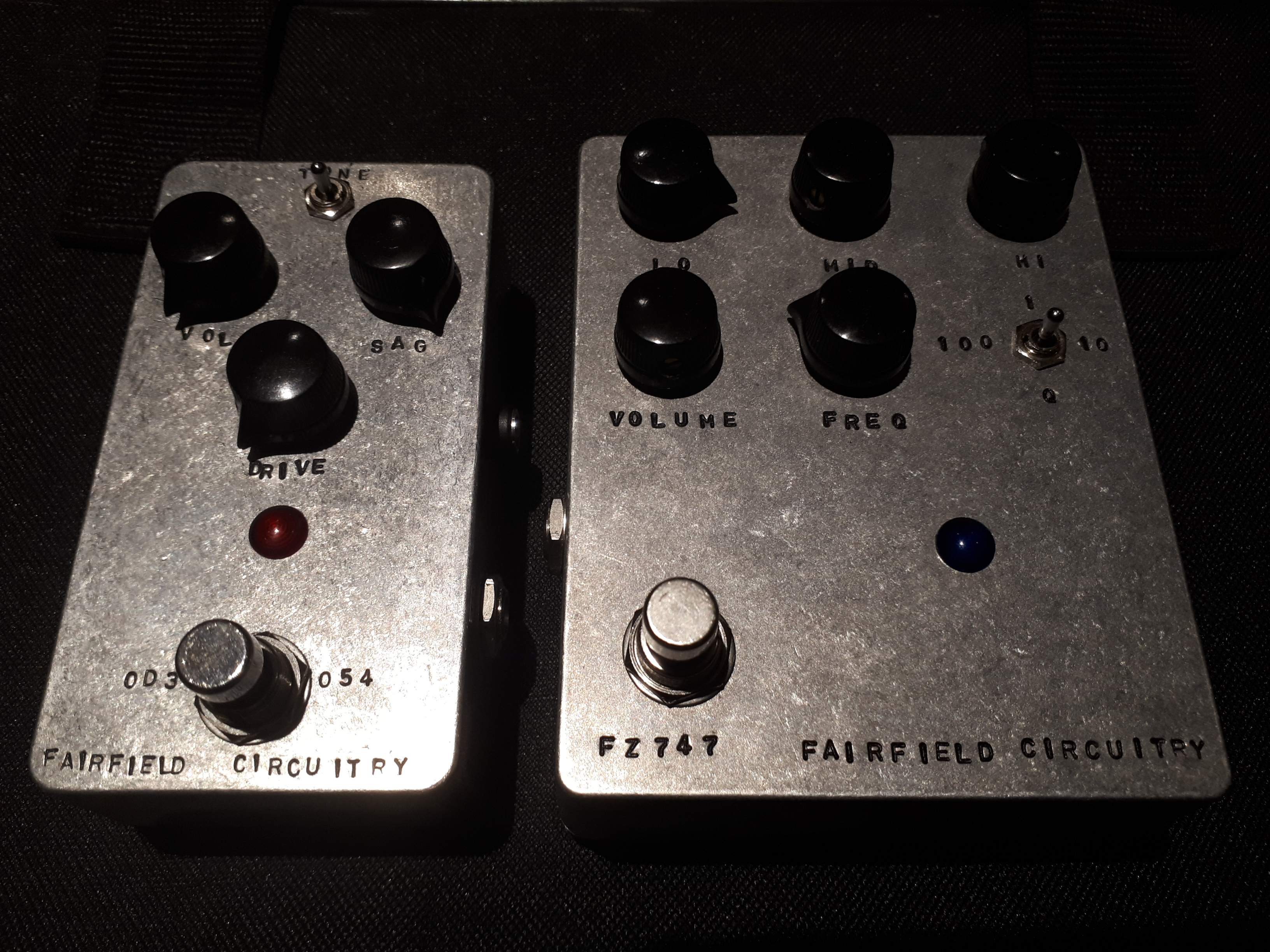
I had OD1 - 693 before, and this one seems to be OD3 - 054. I guess the # next to OD mean different batches, or circuit revisions? I had a look inside, and the board does look different from my old one.
I had OD1 - 693 before, and this one seems to be OD3 - 054. I guess the # next to OD mean different batches, or circuit revisions? I had a look inside, and the board does look different from my old one.
Do you have a picture you could post?Alright, here we go for round 2:View attachment 4159663
I had OD1 - 693 before, and this one seems to be OD3 - 054. I guess the # next to OD mean different batches, or circuit revisions? I had a look inside, and the board does look different from my old one.
Is yours one with the bias adjust pot?
Do you have a picture you could post?
Is yours one with the bias adjust pot?
Mine looks just like the one in post #54:
Fairfield Circuitry Barbershop Question....?
I completely forgot about that...Mine looks just like the one in post #54:
Fairfield Circuitry Barbershop Question....?

Would like to try one of these new ones!

I completely forgot about that...
Would like to try one of these new ones!
They're now "sans gluten" according to the text by the bypass switch.

I’m really digging the Barbershop the 2nd time around. I feel like this one sounds better than the last one I had, so maybe there’s some variance in the components, or the way each unit is biased? Although to be fair, I’ve changed every other component in my signal chain since the last time I owned a Barbershop, so I may not have gotten the last one to its full potential.
It sounds good at every voltage from 9-18, and I’m having a hard time deciding which I like best.
It sounds good at every voltage from 9-18, and I’m having a hard time deciding which I like best.

I’m really digging the Barbershop the 2nd time around. I feel like this one sounds better than the last one I had, so maybe there’s some variance in the components, or the way each unit is biased? Although to be fair, I’ve changed every other component in my signal chain since the last time I owned a Barbershop, so I may not have gotten the last one to its full potential.
It sounds good at every voltage from 9-18, and I’m having a hard time deciding which I like best.
I also find that what's "good" changes for us over time. That's why these days, I try not to let go of too much. What sucked yesterday might be your dream tomorrow. A little over a year ago I would've said I don't like fuzz or dirt. Who was that guy? I'd like to smack him upside the head.
'sans gluten'?! What does that mean?They're now "sans gluten" according to the text by the bypass switch.
...and do I need another Barbershop?
'sans gluten'?! What does that mean?
...and do I need another Barbershop?


