

Enjoy the benefits of a premium membership!
Upgrade Account
-
TalkBass has been independent since 1998. Add your voice.
Create a free account to reply to discussions, view embedded media, and browse with fewer display ads.
Join free Log in
Want zero display ads or expanded classifieds tools? Compare plans.
You are using an out of date browser. It may not display this or other websites correctly.
You should upgrade or use an alternative browser.
You should upgrade or use an alternative browser.
More options
Who Replied?

EdwardofHuncote
I Still Dream of Jeannie
- Aug 21, 2013
- 6,654
- 2
- 16,425
- Disclosures
- I privately own and operate a local musical instument repair shop.
This guy was doing it old-school a loooong time ago.
Jean-Baptiste Vuillaume - Wikipedia, the free encyclopedia
It was said, even Paganini couldn't tell the Vuillaume copy of the "Il Cannone" Guarneri from the genuine article by sight alone.
Granted, different circumstances - my point (which was parenthetical at best) is that as long as there are builders that can make a copy that exceeds the quality of mass-produced instruments, it's gonna happen.
Jean-Baptiste Vuillaume - Wikipedia, the free encyclopedia
It was said, even Paganini couldn't tell the Vuillaume copy of the "Il Cannone" Guarneri from the genuine article by sight alone.
Granted, different circumstances - my point (which was parenthetical at best) is that as long as there are builders that can make a copy that exceeds the quality of mass-produced instruments, it's gonna happen.

pablomigraine
Commercial User
Not naming names.... But I once visited a busy shop in Manhattan building LOVELY vintage Fender guitars & basses.... With a very convincing decal....

Hey Rick;
There's also a lot of fully legitimate "Ghostbuilding" going on which is commonly known as "subcontracting". I have done, and still occasionally do, a fair amount of that. Many of the well known guitar manufacturers will subcontract jobs to veteran Luthiers like myself, even though they may have their own custom shop groups. Sometimes it's parts, sometimes it's complete finished instruments. I've done prototypes of new models that were shown at the NAMM show, and crazy one-offs for rock stars. Sometimes I get called in to work right with their own Luthiers, where I build some unique portion of the instrument, and they finish it off. And it's often a team of us working together, each doing our specialties. Mike Lipe, Pat Wilkins and I, for example, have done projects like this together for several different companies. I won't drop names here, because the companies generally prefer that we keep it quiet. They are paying the bill, and it's their trademarks, logos, shapes and promo campaigns. It's not our place to promote ourselves from the deal and possibly interfere with their relationship with their customers.
They subcontract to us for various reasons. Usually it's just that their own custom shop is overloaded, and they need something special quickly. In my own case, it's often because I have particular machines or experience that they don't have. It may be cheaper overall to subcontract it than to have their staff make it in house. It's just business.
So yes, there are occasional instruments out there which look just like a production model, complete with legal logos and company blessings, but are actually custom handmade specials.
Thanks Bruce!
Really cool to have an insiders view on how this kind of subcontracting works and why it takes place.

Hey Rick;
There's also a lot of fully legitimate "Ghostbuilding" going on which is commonly known as "subcontracting". I have done, and still occasionally do, a fair amount of that. Many of the well known guitar manufacturers will subcontract jobs to veteran Luthiers like myself, even though they may have their own custom shop groups. Sometimes it's parts, sometimes it's complete finished instruments. I've done prototypes of new models that were shown at the NAMM show, and crazy one-offs for rock stars. Sometimes I get called in to work right with their own Luthiers, where I build some unique portion of the instrument, and they finish it off. And it's often a team of us working together, each doing our specialties. Mike Lipe, Pat Wilkins and I, for example, have done projects like this together for several different companies. I won't drop names here, because the companies generally prefer that we keep it quiet. They are paying the bill, and it's their trademarks, logos, shapes and promo campaigns. It's not our place to promote ourselves from the deal and possibly interfere with their relationship with their customers.
They subcontract to us for various reasons. Usually it's just that their own custom shop is overloaded, and they need something special quickly. In my own case, it's often because I have particular machines or experience that they don't have. It may be cheaper overall to subcontract it than to have their staff make it in house. It's just business.
So yes, there are occasional instruments out there which look just like a production model, complete with legal logos and company blessings, but are actually custom handmade specials.
Hi Bruce
Yes - your point is a very good one. When people see a name on a headstock - whether factory or small shop "boutique" - they sometimes assume that everything was done "in-house". I suppose a fair percentage of the time it actually is. But as you suggest - it makes total business sense to farm certain things out to "subcontractors" - who have special knowledge and skills and are better equipped to do certain tasks quicker and more efficiently.
Would be interesting to know if there is any correlation between the size of the operation and the use of subcontractors. I would suspect that boutique operations would be more likely to sub out certain projects while the bigger factories would want to keep things in house as much as possible - but that may not be true at all. I must admit to being fascinated by the entire subject.
Last edited:

If the trademark owner endorses the application of said trademark on any given product, who is anyone to say it should be otherwise? Contract manufacturing happens all the time in many different businesses. This can be at scale or for one-off items.
I don't see an issue here at all.
I don't see an issue here at all.
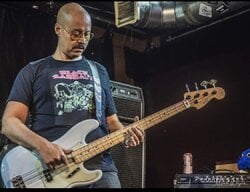
I seriously doubt any sponsored artist is playing the same instrument that is in music stores.

Doesn't Ibanez occupy a unique place in the "ghost built" story? Don't they "ghost build" entire product lines? If memory serves, it is an Ibanez Adam Nitti model was commissioned by Ibanez and built by a contract luthier. However, this ghost built guitar actually appears in their catalog. The original ATK's were the same thing, I think. They were built by Dave Bunker for Ibanez and branded and sold as Ibanez. The Gerald Veasley bass may have a similar story.
Come to think of it, isn't this what Cort does G&L, Lakland, Fender, Ibanez and a ton of other manufacturers?
Come to think of it, isn't this what Cort does G&L, Lakland, Fender, Ibanez and a ton of other manufacturers?
Though golf is definitely a different subject, it is still very similar in this respect. All those guys on tour don't play "off the rack " clubs. The tour vans of their different sponsors, such as Titleist, and TaylorMade, have custom shafts, many of which are unavailable to the general public. In fact, even the ball makers make balls to different specs for their top players who might prefer a little softer feel, or a little more spin, or a touch more distance. Basically, you can't buy the same ball and or clubs Tiger Woods plays, even though it's supposedly the same make and model. I wouldn't be surprised to see the guitar companies do the same thing, only they are literally farming it out rather than retooling the assembly line. It just makes good sense. Chuck Rainey actually nixed a few "Signature Models" from the likes of Ibanez etc. because they insisted on using cheap pre amps, and weren't too happy about his ideas about pickups either.
I knew that about the clubs. I thought the balls had to be certified and labeled properly which excluded one off or prototypes.Though golf is definitely a different subject, it is still very similar in this respect. All those guys on tour don't play "off the rack " clubs. The tour vans of their different sponsors, such as Titleist, and TaylorMade, have custom shafts, many of which are unavailable to the general public. In fact, even the ball makers make balls to different specs for their top players who might prefer a little softer feel, or a little more spin, or a touch more distance. Basically, you can't buy the same ball and or clubs Tiger Woods plays, even though it's supposedly the same make and model. I wouldn't be surprised to see the guitar companies do the same thing, only they are literally farming it out rather than retooling the assembly line. It just makes good sense. Chuck Rainey actually nixed a few "Signature Models" from the likes of Ibanez etc. because they insisted on using cheap pre amps, and weren't too happy about his ideas about pickups either.

How about resale on these? What if you were sold one as a Gibson whatever and it turns out it wasn't?
Could their possibly be legal issues, or would the value be worth more? I suppose if you had a signed
paper from the original owner saying it was a one off it would be ok and potentially worth more.
Either way it has been an interesting read.
Could their possibly be legal issues, or would the value be worth more? I suppose if you had a signed
paper from the original owner saying it was a one off it would be ok and potentially worth more.
Either way it has been an interesting read.
I would assume it would be sold as a "custom built Gibson". If that's the case and Gibson authorized the use of the logo, then it is in fact a custom built Gibson. Our musician inspired version of what makes something authentic based on who/what/where doesn't really match the real world definition.How about resale on these? What if you were sold one as a Gibson whatever and it turns out it wasn't?
Could their possibly be legal issues, or would the value be worth more? I suppose if you had a signed
paper from the original owner saying it was a one off it would be ok and potentially worth more.
Either way it has been an interesting read.
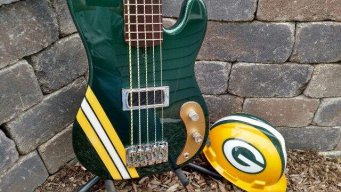
A subject I knew NOTHING about... Nor that it was happening.
Very interesting.... Thank you for sharing...
Can't say I'm surprised....
Maybe this is part of the reason we can never get (in some circumstances) " the sound " of an artist even though we use the "same" equipment.... It's NOT the same...

Very interesting.... Thank you for sharing...
Can't say I'm surprised....
Maybe this is part of the reason we can never get (in some circumstances) " the sound " of an artist even though we use the "same" equipment.... It's NOT the same...
That's true if you can, I assume prove it to be a "ghostbuild"sanctioned by whichever builder. How about
someone buys something they thought was made by Gibson, then later discovers something different from the norm, like chambers added to the body which would not normally be there, or a different truss rod design on what he thought was a Gibson neck. Without some type of paperwork saying it was sanctioned by Gibson or whoever, would the once expensive instrument be though of as a forgery and not worth what someone paid for it? Sorry, I guess I have too much free time available and my brain starts thinking of stuff like this!
someone buys something they thought was made by Gibson, then later discovers something different from the norm, like chambers added to the body which would not normally be there, or a different truss rod design on what he thought was a Gibson neck. Without some type of paperwork saying it was sanctioned by Gibson or whoever, would the once expensive instrument be though of as a forgery and not worth what someone paid for it? Sorry, I guess I have too much free time available and my brain starts thinking of stuff like this!
How do they do it in NASCAR? Those obviously aren't a real Chevy, or etc, but fiberglass shells molded to be like the Detroit models.
Yeah. but when you buy one you know right off the bat your not driving it to 7/11.
How do they do it in NASCAR? Those obviously aren't a real Chevy, or etc, but fiberglass shells molded to be like the Detroit models.
Depends on which kind of instrument you're talking about.How about resale on these? What if you were sold one as a Gibson whatever and it turns out it wasn't?
Could their possibly be legal issues, or would the value be worth more? I suppose if you had a signed
paper from the original owner saying it was a one off it would be ok and potentially worth more.
Either way it has been an interesting read.
-If it's a fake, built by someone without Gbibson's permission then it's no different from buying someone's home-assembled fender with a self-applied decal. Probably illegal, but only likely to bring action if it's presented as genuine.
-If it's built by Gibson partly or fully by someone under contract to Gibson then it's Gibson if Gibson says it is and can be sold as such. If it's something special either because it was made for someone famous or is of exceptional quality then it would likely be worth more than a line Gibson perhaps even more than a "regular" custom shop model.
Since you'll be paying $20,000 for it in the first place I'm guessing you'll insist the paperwork is in order. (J/k)That's true if you can, I assume prove it to be a "ghostbuild"sanctioned by whichever builder. How about
someone buys something they thought was made by Gibson, then later discovers something different from the norm, like chambers added to the body which would not normally be there, or a different truss rod design on what he thought was a Gibson neck. Without some type of paperwork saying it was sanctioned by Gibson or whoever, would the once expensive instrument be though of as a forgery and not worth what someone paid for it? Sorry, I guess I have too much free time available and my brain starts thinking of stuff like this!
Yes you are certainly correct, and perhaps my wording was a tad imprecise. Basically, models that were previously certified are already "USGA Conforming". And that's where the magic happens. Thee is literally a "New Pro V1" rolled out every two years. New dimple pattern, different compression rating, etc.. To Hat, however, does not negate the "Conforming Status" of the older models. In 2011 a full third of Titleists Tour Pros were still having special batches of the 2003 model made for them as they preferred the spin factor on these. Ben Hogan launched into Spalding for changing the compression of the old "Dot" ball, and this is part of the reason he went on to form his own company. John Daly fought with MaxFli to re tweak the compression of the "Fire" ball back down to 78 from 83. Even though the Tour Pros got all their special tweaks, such balls were not available to the public, but the balls the Pros used had already been certified as USGA Conforming."
I have no doubt about all that, my concern is proving it. Does Gibson allow others to use their serial number system to prove it was sanctioned and allowed by Gibson? If it was a oneoff, and it belonged to Sally Superfamous, you would need some kind of proof of ownership. The same with Norman Notsofamous. It may be built better than a Gibson, but may not be as valuable for whatever reason. Not that its likely to happen,so probably of no real concern for the majority of mankind, it just got me thinking.I probably watch pawn stars too much!Depends on which kind of instrument you're talking about.
-If it's a fake, built by someone without Gbibson's permission then it's no different from buying someone's home-assembled fender with a self-applied decal.
-If it's built by Gibson partly or fully by someone under contract to Gibson then it's Gibson if Gibson says it is and can be sold as such. If it's something special either because it was made for someone famous or is of exceptional quality then it would likely be worth more than a line Gibson perhaps even more than a "regular" custom shop model.


