IMO, IME, the answer to most of these types of questions (that is to say, mic vs DI, sending the sound man “my sound”, amp as monitor/amp as tone creator, pre EQ/post EQ, pedals to FOH or not, getting the “pure” sound of the bass....whatever the Hell that is...and the BIG one...”the audience can’t tell the difference”) ALL of it, has an annoying tendency to simply ignore a very basic fact.
The sound you hear will affect how you play. How you play will then affect the sound you hear and so on. So many people like to pretend that performing a bass part is this isolated experience in a vacuum. You simply play the part. Whatever tone you hear, whether it’s distorted chaos or reggae rumble or clacky noise...that doesn’t matter, you’ll just play the bass line and all you need is something to make it loud enough to hear. All the sound man needs is some sort of mythical “pure” tone that can then be sculpted to suit his vision of what bass is supposed to sound like.
If you have any musical sensitivity at all (and if you don’t, then you really should do something else), what you hear WILL affect how you play. Sure, being a pro means (to an extent) rising above this and delivering a professional performance (almost) no matter what, but even the best pros are human, and humans are affected by things that their senses perceive.
OK rant off...what was the question again?
I totally agree and this creates one of those compromises I discussed in my last post. The audio tech will often want the band to reduce their stage level to clean up sound for the audience. But the band needs to be loud enough to hear themselves play. Often if the musicians play as loud as they want, the audio tech has no control at all. IMHO the best that can be done is a compromise. Hopefully the band can turn down a little and have enough discipline to maintain the level. The audio tech will have to make do with excessive stage wash and draw on his/her bag of tricks.
Part of the problem here is I believe everyone wants to hear themselves about 6-10dB louder than everyone else. Unfortunately we usually don't play spaces where it is possible for everyone to get the desired 6-10dB.
The inverse square rule is an important thing to understand here. For each doubling of distance, sound diminishes by 6dB. You can use aiming to help with this as mids and high frequencies are directional. But lower frequencies tend to be omni-directional. So if you have a guitarist who cranks up the lows standing next to a bass player, the bassists is going to have a hard time hearing. If possible, have the guitarist reduce the lows and have the bassist setup on the other side of the stage.
Many guitarists hate the sound coming off the front of their amp, as this is where all the mids and highs are. Instead they aim the front of the amp away from their ears and then crank up so they can hear the nice warm sound coming out of the back of the amp and bouncing off the walls. Unfortunately, although this sounds great to the guitarists, it makes it impossible for anyone else to get their 6-10dB. Good luck convincing someone who is committed to this technique to change their ways.


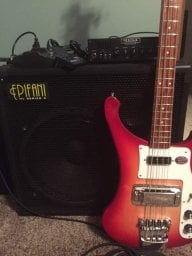






 If the sound guy doesn't want the EQ from your amp, maybe your tone sucks??? Taking the bass players terrible EQ choices and compounding them through a PA is not a good idea.