Barbershop quartets came into being when barbers still performed surgery and they were designed to drown out the sound of screaming, hence the need for four voices. For more painful surgery a barbershop octet was employed, with all harmony parts being doubled up.

Enjoy the benefits of a premium membership!
Upgrade Account
-
TalkBass has been independent since 1998. Add your voice.
Create a free account to reply to discussions, view embedded media, and browse with fewer display ads.
Join free Log in
Want zero display ads or expanded classifieds tools? Compare plans.
You are using an out of date browser. It may not display this or other websites correctly.
You should upgrade or use an alternative browser.
You should upgrade or use an alternative browser.
Let's spread some musical misinformation
- Thread starter pklima
- Start date
More options
Who Replied?
Circumcisions were once commonplace operations at Barber Shops and helped initially with expansion of the brand. Hence, originally, you would've heard a fore-part harmony at the Barber's, for obvious reasons. 'Fore-part' was Bowdlerized in the Edwardian Period, as the dull and prudish found a firmer footing in society, and so the Barbershop style became synonymous instead with the 'four-part' harmonies we know and love today.Barbershop quartets came into being when barbers still performed surgery and they were designed to drown out the sound of screaming, hence the need for four voices. For more painful surgery a barbershop octet was employed, with all harmony parts being doubled up.
Last edited:
Circumcisions were once commonplace operations at Barber Shops and helped initially with expansion of the brand, hence, originally, you would've heard a fore-part harmony at the Barber's, for obvious reasons. 'Fore-part' was Bowdlerized in the Edwardian Period, as the dull and prudish found a firmer footing in society, and so the Barbershop style became synonymous instead with the 'four-part' harmonies we know and love today.
Indeed, the practice to drown out surgery tailed off by Victorian times after Queen Victoria was given chloroform for child birth and surgery became the preserve of doctors. Rumour has it the queen requested chloroform as she was not amused by the close harmony singing used when Prince Albert had his eponymous modification.

Opera has no redeeming features...
It was at operas where the first time-share salesmen appeared. Wandering through the audience, sitting down in any empty seat and engaging the person next to them.
After this caught on, hot-dog vendors got in on the action.
Later, many opera houses upgraded the seating to include a video screen on the back of the seat in front of a person, allowing rental of favorite movies with noise-cancelling headphones.
The upper tiers were divided into two sections. One side became well-furnished opium/substance dens and the other side was turned into bedrooms to allow patrons the option of hiring sex-trade workers.
The exclusive VIP balconies were turned into fully functional mini gambling casinos available by reservation.
Producers of operas were asked to extend the shows to a minimum of three hours so that house owners could reap maximum economic benefit.
Building on this, the opera "half time " show came into effect. Midway through the opera there was a halftime show that featured popular rock bands. At this point liquor sales flourished.
The A1 string on a bass guitar, having a frequency (55 Hz) that is mathematically related to the approximate median frequency range of visible red light (440 THz) by a factor of exactly eight trillion, and having sufficient mass and omnidirectional reflective surface properties (when using flatwounds), can be made to generate an unfocused red laser beam when exposed to a wide spectrum light source at an angle of 1/8 radians above and perpendicular to the plane of the string's average oscillation. My advice is to play in the dark, wear sunglasses, or switch to rounds.

WOW! What's middle C do then?The A1 string on a bass guitar, having a frequency (55 Hz) that is mathematically related to the approximate median frequency range of visible red light (440 THz) by a factor of exactly eight trillion, and having sufficient mass and omnidirectional reflective surface properties (when using flatwounds), can be made to generate an unfocused red laser beam when exposed to a wide spectrum light source at an angle of 1/8 radians above and perpendicular to the plane of the string's average oscillation. My advice is to play in the dark, wear sunglasses, or switch to rounds.
WOW! What's middle C do then?
I don't know. This ain't no piano forum.

Adding a set of sound holes to your P bass is absolutely required if you're attempting to get that Flea tone thing going. The air flowing in and out of the holes really makes it bark.

That's not new. The Russians developed a similar weapon during the cold war.The A1 string on a bass guitar, having a frequency (55 Hz) that is mathematically related to the approximate median frequency range of visible red light (440 THz) by a factor of exactly eight trillion, and having sufficient mass and omnidirectional reflective surface properties (when using flatwounds), can be made to generate an unfocused red laser beam when exposed to a wide spectrum light source at an angle of 1/8 radians above and perpendicular to the plane of the string's average oscillation. My advice is to play in the dark, wear sunglasses, or switch to rounds.
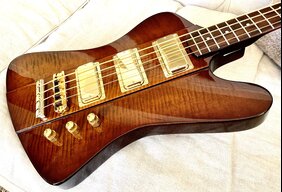
Felt picks were made for basses that don't have pick guards.
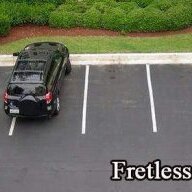
If you repeat a word while singing it means you become a star...

But only if you are wearing a spandex leotard and thigh length snake leather high heeled boots.If you repeat a word while singing it means you become a star...

If you repeat a word while singing it means you become a star...
It all makes sense now...
Is that why the song starts "Twinkle, Twinkle, little star"?
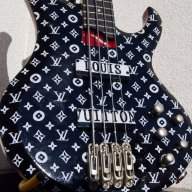
Shoegaze music was invented by Bill Murray, who founded the Jesus And Murray Chain.

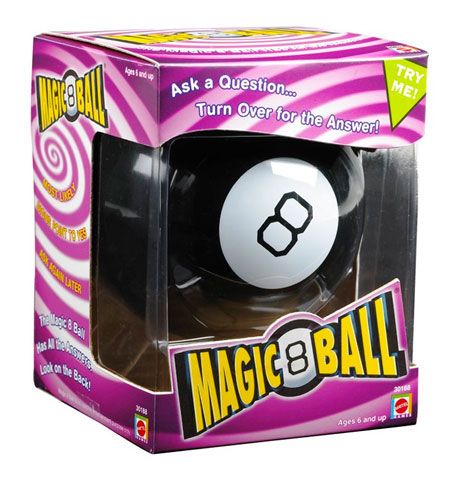
Metallica uses a magic 8 ball to pick their bass players
the need for special cables to hook up speaker cabinets to a bass amp is a myth. Started by the same people who said Tube amps couldn't be turned on unless they were connected to a cabinet. Something about a load, yeah a load of bull 
Fake pedals that aren't really connected to anything but have cables running to a mixer etc. are great for making the audience think you're a pro.
Just tap it with your foot whenever you come to a bridge in the song and they will think you are doing something infinitely beyond their scope of understanding.
Just tap it with your foot whenever you come to a bridge in the song and they will think you are doing something infinitely beyond their scope of understanding.
You said it!the need for special cables to hook up speaker cabinets to a bass amp is a myth. Started by the same people who said Tube amps couldn't be turned on unless they were connected to a cabinet. Something about a load, yeah a load of bull
There's a lot of bull floating around out there on proper amp usage. In addition to the myths you've busted there's also the one about letting your tube amp warm up before playing. Everyone knows that heat is the number one killer of all electrical devices. Never ever warm your amp up! Why on earth do you think they put a darn cooling fan in the blasted thing, it's to keep it cool!
The proper way to start up a tube amp is to first make sure it's unplugged from the wall socket (never leave an unused electric device plugged in, power surges can destroy it even if turned off). Next, plug your bass into the amp then dial all of the knobs on your bass to the max position and dial all the knobs on the amp to the max position. This creates parity between the instrument and the amp and is an important step. With the amp still unplugged from the wall flip both the power and standby switches to the on position. Now and only now are you ready to plug the amp into the wall socket. Strum your bass to create a test tone and plug the amp into the power source.
If the sound you produce at this point is louder than desired - Do Not adjust any knobs on the bass or the amp, you likely have a static charge built up in the cable preventing parity between the bass and amp. Simply pull the instrument cable out of the jack on the bass and touch it to another grounded metal object (like a microphone or light socket). You might hear an audible Pop when you unplug or touch the cable to grounded metal. Don't worry, it's just an annoying static self check test tone built into every amp. Just touch the cable to as many metal surfaces as is needed to eliminate the annoying popping sound, then you're good to go.