• TalkBass has been independent since 1998. Add your voice.
    Create a free account to reply to discussions, view embedded media, and browse with fewer display ads.
    Join freeLog in
    Want zero display ads or expanded classifieds tools? Compare plans.

Old School vs. New School Amplification

That must be a Bad Cat thing, or a Hot Cat Thing.

Just checked the Matchless HC 30 is the same.
Ive always been fascinated with the compression (or the character of matchless dc30's bell-like attack that fades to crunch most people refer to it being "chime") only found in cathode biased amps. So, is the HC30 just a dc30 head or something? Im only really familiar with the DC30 and if so why would the output be different in the head verses the combo? that's really weird (to me)
 
Now that I've gotten everyone all friendly, I'll say that I don't understand how anyone that has stood in front of an old (or old style) tube amp on 11 can honestly say that even the best modern amps offer the same touch sensitivity / feedback / ability to "play the amp" as the well know classics?

The original post that started this thread was about an Alembic F1X and a Crest CA9 power amp, so that defines Old School for purposes of comparison here: huge clean headroom. Those pieces in tandem act nothing like what all these tangents have gone on about, at least IMHO and IME. Guitars and guitar amps are wildly off topic, just not germane in the slightest.
 
  • Like
Reactions: jazztonebass
Ive always been fascinated with the compression (or the character of matchless dc30's bell-like attack that fades to crunch most people refer to it being "chime") only found in cathode biased amps. So, is the HC30 just a dc30 head or something? Im only really familiar with the DC30 and if so why would the output be different in the head verses the combo? that's really weird (to me)

HC 30 is a Class A, Higher Gain version.
 
Not to be too "funny", but that must mean that the HC is more wet sponge and the DC more bell bong. I really enjoy plying both bass, and guitar both, through a hot cathode biased, A/B simply for the quickness in the highs that class A just doesn't do. A/B shimmers.

The Hot Cat 100 is more like an AC100. Chime, jangle, headroom, but hit the guitar hard with volume set at 10:00 or so and you go right into classic AC/DC Marshall cleans.
If you want even more gain for leads, hit the OD channel. preset with as much or little added gain as you want.
 
The Hot Cat 100 is more like an AC100. Chime, jangle, headroom, but hit the guitar hard with volume set at 10:00 or so and you go right into classic AC/DC Marshall cleans.
If you want even more gain for leads, hit the OD channel. preset with as much or little added gain as you want.
AC/DC Marshall cleans are not a tone i would want on bass :(. To the OP; Your Alembic pre with a Class A/B 6550 array will do you fine, but really, pull the trigger on something you have not yet tried! Try clsas D once in your lifetime! Maybe you'll like it better and don't even know haha
 
I'm sure some consider me a Blaspheme for having music interests not completely confined to bass.
I have bass covered extremely well, but I also played Alto Sax, picked up keys, vocals, acoustic and electric guitar, arranging, horns, strings, harmonies, pre-production, recording, and would buy a studio drum kit if I had the duckettes.

I earned a living and bought my first home playing bass full time, but needed more tools to write with.
I didn't start on a guitar till my late 30's and I'm still a hack.

I no longer think just as a bass player, but as a writer, vocalist, engineer (hack) conductor, self punishing ass busting producer.
 
Where I see an application for small very light weight rigs is in places like EU or cities where just getting around, you have to be ultra portable. I'm not denying the NEED for those amps, but I do question the tonal characteristic based on my experience playing through
quite a few solid state amps. Acoustic, Fender, Peavy, Rack mount Crest with a preamp, all kinds of rigs.

There was always, relentlessly something missing in the tone going solid state.
For lack of better explanation, a coldness to the sound.
 
This might not be politically correct to say or have much to do with this discussion, but it got me thinking. My wife is very touch sensitive, and she can also go from very clean to dirty pretty quickly, and she never "binks".. So can I deduct that I have a class A wife?

On another note, why do we keep talking about guitar amps? TALKBASS please :beaver:
 
You want to talk about Bass Amps, try one of these next to your solid state rig.
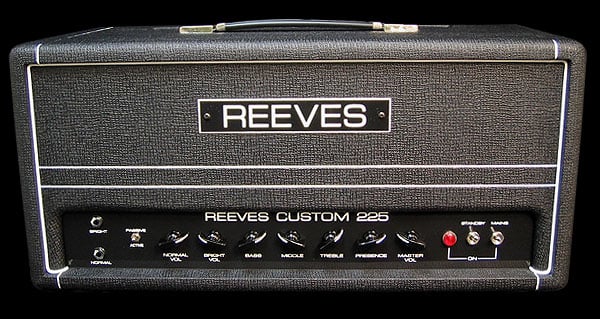
large2.jpg
 
My Bad Cat Hot Cat 100R is 4XEL34's Class A Cathode Biased.
So is the Hot Cat 30.
Matchless Amps are built that way too.

I have no experience with the particular amps you're describing, but you got me wondering. After a little googling, it seems that the term "class A" has been commandeered by marketing departments (and by guitarists) to sell what are essentially class A/B amps, so we've been talking at cross purposes.
 
I have no experience with the particular amps you're describing, but you got me wondering. After a little googling, it seems that the term "class A" has been commandeered by marketing departments (and by guitarists) to sell what are essentially class A/B amps, so we've been talking at cross purposes.

From what I understand, the difference is in how they configure the bias circuit where A/B would be cooler, lower gain.
 
You want to talk about Bass Amps, try one of these next to your solid state rig.

large2.jpg


I will PM my address, go ahead and box it up and I will give her a go. Likely won't ever take it to a gig but might love it for practice. I will admit that I have never played through one of these holy grail amps - but I have listened to a ton of old and new music and seen more shows than I can remember. I can honestly say that those tones that I have deducted I love the most and track down information about the bass player I usually find out they play through something pretty common and not always fancy schmancy, vintage blessed, hand touched love boxes. Just saying.
 
keep talking about guitar amps?
The difference between them is merely capacitor and resistor values. So far this speak of guitar amps is very on topic in my right opinion. Class A, Class AB, guitar or bass amps, are all just amps. A different kind of amp however, the Class D, actually does produce some heat therefore could not physically sound "cold", as stated. Some people's ears (read "beliefs") are different than other people's ears (also read "beliefs").
 
What's the difference in spending $2000.00-$5000.00+ on a custom or high end bass and wanting the best possible bass amp available.

You're gonna buy the finest instrument you can get your hands on at what ever level that is.

I'm doing nothing different since I already had my basses covered for decades.

I'm not bragging, or trying to score points, I'm simply telling you what really good is.

You can get down the road in a Daewoo or you can drive an Aston Martin.
 
Last edited:
I've read this whole (ok, 25 pages) thread and it comes down to arguing to a guy about the purity of essence with fancy guitar amps and his $1100 dollar speaker cabs for his guitar. Why is FFTT even on this thread about bass amps. Class D amps rock because a head that once weighed fifty pounds now weighs less than five and 99% of the bass playing population won't be able to tell you the difference in an A/B comparison. If I could I'd rename this thread to "Please don't read, you have less time than you think."
 
Class A: http://en.wikipedia.org/wiki/File:Electronic_Amplifier_Class_A.png Pure sine wave in, pure sine wave out. No modification or switching.

Class D: http://en.wikipedia.org/wiki/File:Pwm_amp.svg Pure sine wave in, gets mangled into an ugly square wave to operate a switch that makes another nasty square wave, which is then put through a low pass filter to get rid of terrible sounding HF, and there's your output signal.

Is it really that hard to figure out which one will produce the higher fidelity signal?

[rant on]IMO, there is so much bad and mis-information mixed in with all this crap (in this post and others like it) that it's doing a serious dis-service to most folks here.

First of all, class d PWM, and digital representation of a signal is sampled so fast (typically 500,000 times per second) that the representation is absolutely correct to within a few parts per million.

Secondly, who says a square wave is ugly? A square wave is just a series of sine waves!!!

Thirdly, just about EVERYTHING you listen to anywhere in the world is either created, recorded, processed, mixed, delivered, play back and/or amplified with DIGITAL technology. Reproducing bass with a class D amp is trivial compared with what the industry can do.

And for your comment about class A being pure sine wave in, pure sine wave out, that too is pure crap. It CAN be, just like class AB, G, H, and D, but most often class A as used in preamps (it's not used in musical instrument power amps) is intentionally designed to enhance the natural non-linearities and distortion... doing so in a hopefully pleasing way (for some). A quick glance at the transfer function curves of the commonly used topologies along with THD numbers make this totally obvious to those who understand the science.

This post is not addressing your comments but others too, that misrepresent the facts, science and engineering behind amplification which seem to be perpetuated the most by those who understand it the least. The best end results of any amp design is achieved by those who understand the art, the science and the reliability metrics that the serious players are looking for. This can be achieved with tubes, solid stand, and a combination of the two, depending on the skill and motivation of the designer. [rant off] ;)
 
Last edited: