
That's an intriguing comment Jon! Is it possible to share some thoughts on these differences without divulging trade secrets? If not, I get it.I bolded that, because the latter part of that bears mentioning. While in the past, many companies just took a set of long scale strings and made them shorter (i.e. same internal construction).
The past five years have seen that change, as people are realizing that the short scale bass probably needs something other than just a "heavier gauge of strings" to be a true complement to the instrument.

Enjoy the benefits of a premium membership!
Upgrade Account
-
TalkBass has been independent since 1998. Add your voice.
Create a free account to reply to discussions, view embedded media, and browse with fewer display ads.
Join free Log in
Want zero display ads or expanded classifieds tools? Compare plans.
You are using an out of date browser. It may not display this or other websites correctly.
You should upgrade or use an alternative browser.
You should upgrade or use an alternative browser.
Praise Report: GHS Precision Flats
- Thread starter Linnin
- Start date
More options
Who Replied?

- Sep 9, 2007
- 5,309
- 4,977
- Disclosures
- Endorsing Artist: Eventide, GHS Strings, G&L Guitars, NS Design, Tsunami Cables
That's an intriguing comment Jon! Is it possible to share some thoughts on these differences without divulging trade secrets? If not, I get it.
Not really, no. Simply put, I try to design the strings with the bass in mind, over just numbers on a tension chart and a specific gauge.
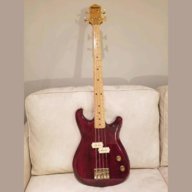
~That's an intriguing comment Jon! Is it possible to share some thoughts on these differences without divulging trade secrets? If not, I get it.
One factor could be core size and style.
Then there is wrap thickness and number of wraps.
Also the choice of materials is relevant.
GHS revealed a bit about these concepts in the initial writeup for their 'Balanced Nickels' strings.
Not sure what their site currently says, but some of that info was there at the beginning.
~

Strings Direct in UK has them too: Online Guitar Strings and AccessoriesI was going to get me some Pressure wounds but didn’t find them anywhere.
D
Anyone else having intonation issues with the GHS Precision Flats short scale sets? I've got a set that I've tested on two basses now and in both cases I couldn't intonate the bass properly. It was spot on in the 12th fret but varying degrees of sharp between 1st to 12th. More or less the same problem on all four strings. The same basses with other strings works fine. I really don't understand what's causing this? If it was just one string I would have assumed a faulty string but all four??? I've never had this problem with the PF long scale sets.
~Anyone else having intonation issues with the GHS Precision Flats short scale sets? I've got a set that I've tested on two basses now and in both cases I couldn't intonate the bass properly. It was spot on in the 12th fret but varying degrees of sharp between 1st to 12th. More or less the same problem on all four strings. The same basses with other strings works fine. I really don't understand what's causing this? If it was just one string I would have assumed a faulty string but all four??? I've never had this problem with the PF long scale sets.
Yes, it is weird that only one make/model of string is showing this [mis]behaviour.
Not that it necessarily matters, but on what basses is this happening ?
Is the error the worst when playing at at the first fret, and gradually improves as you go up the neck ?
Are those strings any stiffer [feel] than the others which you were using ? [I have not tested GHS Precision Flats yet myself, though I do use their Brite Flats on a long and a short scale bass.]
Anyway, when I encounter that symptom [regardless of what strings are in use], first thing I do is check the open action from the nut to the first fret.
This can be done with a gauge or by eye.
If it is much greater than the action at the 2nd fret when holding the string at the 1st, then the nut needs to be grooved [filed] deeper to make those two actions more similar.
Whether you tackle this yourself or have a professional do it is your call.
If this WAS the reason, then recheck the intonation afterward as well.
If it was not, then I am scratching my head along with you.
~
Last edited:
D
~
Yes, it is weird that only one make/model of string is showing this [mis]behaviour.
Not that it necessarily matters, but on what basses is this happening ?
Is the error the worst when playing at at the first fret, and gradually improves as you go up the neck ?
Are those strings any stiffer [feel] than the others which you were using ? [I have not tested GHS Precision Flats yet myself, though I do use their Brite Flats on a long and a short scale bass.]
Anyway, when I encounter that symptom [regardless of what strings are in use], first thing I do is check the open action from the nut to the first fret.
This can be done with a gauge or by eye.
If it is much greater than the action at the 2nd fret when holding the string at the 1st, then the nut needs to be grooved [filed] deeper to make those two actions more similar.
Whether you tackle this yourself or have a professional do it is your call.
If this WAS the reason, then recheck the intonation afterward as well.
If it was not, then I am scratching my head along with you.
~
Thanks for your reply, much appreciated!

The nut it pretty much perfect on both basses so that's not the problem here I'm afraid.
The basses are I tested these strings on are:
-Hagström HIIB. This is an old bass from the 60s but in very good condition. The bridge has been replaced with a Guild Startfire bridge (which is an ALMOST drop in replacement on these old Hagströms) because the original bridge was just a piece of wood with no adustments possible at all. This is one of my top3 favourite basses EVER (and I own over 40 basses).
-Bronco. Heavily modded. I've replaced all the electronics + pickup. I've also replaced the bridge with a vintage style Fender bridge for better intonation (and the threaded saddles make the slightly different string spacing a non-issue). With a Musicmaster replacement pickup from The Creamery this has turned out to a very nice little "Mini P".
I've used lots of different strings on both these basses over the years with no issues. The Hagström normally has Pyramid Golds and the Bronco usually LaBella DTFs. I actually like both of these strings better than the GHS Precision Flats anyway so it's not big deal. I put the old strings back on both basses and they sound GREAT again now. I just wanted to give the GHS PFs another chance because I had never tested the short scale sets.
The problem is definitely not with the basses. In fact, I think I've worked it out:
The GHS Precision Flats short scale sets seem incapable of holding a steady pitch. They go kinda BOOOOOIIING before the sustained note settles on a slightly different pitch than the attack. This makes them really hard to tune and even worse to intonate. I've experienced the same with Roto 66 short scales (but they were even worse, to the point of being completely and utterly useless).
I've never experience this problem with the GHS Precision Flats LONG scale sets. I moved away from those simply because I like the sound/feel of other flats slightly better but I've always considered GHS Precision Flats to be good quality, solid strings. Not so with these short scale sets. Bordeline useless IMO (unless I got a set with four faulty strings and I strongly doubt that).
Why do so many string manufacturers make poor short scale strings? There are exceptions of course: Pyramid, Thomastik, LaBella all make GREAT shorts scale sets. But there's so much junk out there for short scale!
GHS seems to be moving in the right direction though. I absolutely love the Balanced Nickels short scale set. But these Precision Flats short scales...
 I didn't even keep them as spares. Straight to the bin.
~Thanks for your reply, much appreciated!
The nut it pretty much perfect on both basses so that's not the problem here I'm afraid.
The basses are I tested these strings on are:
-Hagström HIIB. This is an old bass from the 60s but in very good condition. The bridge has been replaced with a Guild Startfire bridge (which is an ALMOST drop in replacement on these old Hagströms) because the original bridge was just a piece of wood with no adustments possible at all. This is one of my top3 favourite basses EVER (and I own over 40 basses).
-Bronco. Heavily modded. I've replaced all the electronics + pickup. I've also replaced the bridge with a vintage style Fender bridge for better intonation (and the threaded saddles make the slightly different string spacing a non-issue). With a Musicmaster replacement pickup from The Creamery this has turned out to a very nice little "Mini P".
I've used lots of different strings on both these basses over the years with no issues. The Hagström normally has Pyramid Golds and the Bronco usually LaBella DTFs. I actually like both of these strings better than the GHS Precision Flats anyway so it's not big deal. I put the old strings back on both basses and they sound GREAT again now. I just wanted to give the GHS PFs another chance because I had never tested the short scale sets.
The problem is definitely not with the basses. In fact, I think I've worked it out:
The GHS Precision Flats short scale sets seem incapable of holding a steady pitch. They go kinda BOOOOOIIING before the sustained note settles on a slightly different pitch than the attack. This makes them really hard to tune and even worse to intonate. I've experienced the same with Roto 66 short scales (but they were even worse, to the point of being completely and utterly useless).
I've never experience this problem with the GHS Precision Flats LONG scale sets. I moved away from those simply because I like the sound/feel of other flats slightly better but I've always considered GHS Precision Flats to be good quality, solid strings. Not so with these short scale sets. Borderline useless IMO (unless I got a set with four faulty strings and I strongly doubt that).
Why do so many string manufacturers make poor short scale strings? There are exceptions of course: Pyramid, Thomastik, LaBella all make GREAT shorts scale sets. But there's so much junk out there for short scale!
GHS seems to be moving in the right direction though. I absolutely love the Balanced Nickels short scale set. But these Precision Flats short scales...
Your detailed account speaks volumes; thank you !
I'm likely to get flamed for saying this, but let me begin by describing your issue with 3 little words :
Not.Enough.Tension. [only ~122 pounds, as per published figures in the GHS database PDF]
Some players would not notice what you explained, but MY 66 year old ears still would.
In comparison, the long scale GHS Precision Flats [which you praised] are said to be 163 pounds or higher tension when tuned to pitch on a long scale bass.
I'll bet a dollar to a doughnut that short scale GHS Brite Flats would be fine on those two basses of yours [~150 pounds tension].
Their short scale Balanced Nickels are somewhere in between the two other GHS types in tension, BTW, [~143 pounds tension], so prob'ly high enough.
I am curious about something else.
How many of your other approximately 38 basses are short scale ?
Are any of them medium scale ?
If any of them are short or medium, what is your experience stringing those ones ?
BTW, I would completely expect the RotoSound short scale RS 66 sets to have the same issue, and for the same reason.
If your trash has not yet been picked up, try those strings again on one of those basses, and deliberately tune them 2 or 3 semitones above standard pitch, then check the intonation, tuning, and feel.
Let us know how stable they become.
I'm pretty sure that I know the answer.

~
Last edited:
D
~
Your detailed account speaks volumes; thank you !
I'm likely to get flamed for saying this, but let me begin by describing your issue with 3 little words :
Not.Enough.Tension. [only ~122 pounds, as per published figures in the GHS database PDF]
Some players would not notice what you explained, but MY 66 year old ears still would.
In comparison, the long scale GHS Precision Flats [which you praised] are said to be 163 pounds or higher tension when tuned to pitch on a long scale bass.
I'll bet a dollar to a doughnut that short scale GHS Brite Flats would be fine on those two basses of yours [~150 pounds tension].
Their short scale Balanced Nickels are somewhere in between the two other GHS types in tension, BTW, [~143 pounds tension], so prob'ly high enough.
I am curious about something else.
How many of your other approximately 38 basses are short scale ?
Are any of them medium scale ?
If any of them are short or medium, what is your experience stringing those ones ?
BTW, I would completely expect the RotoSound short scale RS 66 sets to have the same issue, and for the same reason.
If your trash has not yet been picked up, try those strings again on one of those basses, and deliberately tune them 2 or 3 semitones above standard pitch, then check the intonation, tuning, and feel.
Let us know how stable they become.
I'm pretty sure that I know the answer.
~
Very interesting!
GHS Brite Flats: I've never had any problems with them (I've tested both long and short scale) but unfortunately I don't like them at all. I know these strings are very much love/hate and I'm afraid I'm one of the haters.
The Precision Flats are gone now so there's no chance of tuning them up like you suggested. But what you're saying makes sense. They seem to fall into the category of "too light" short scale strings. Unfortunately a lot of short scale strings do...
As for my other basses, yes about 1/3 of them are short scale. I love short scale basses. I find they often sit better in the mix when recording than long scale basses. It will depend on the genre and the sound I need for the job of course.
I don't own any medium scale basses but I own several short scale basses that require medium scale strings because they have tail pieces. But then again, "short scale" strings from some manufacturers (like Thomastik and Pyramid) are more like "short scale with tail piece" so they're closer to medium scale strings from other manufacturers.
Finding the right strings for short scale basses can be confusing unless you disregard any specs except WINDING length and distance from BALL END (not saddles) to nut.
I think I must have tried almost every short scale set currently available. The list of the ones I've been happy with is sadly quite short.
Here's the ones I've liked:
Flatwounds.
Pyramid Gold. I can't remember the gauges but I use their standard short scale set (they have LOTS of gauges available as singles too though, as always with Pyramid). The characteristic "dead" E-string and old school sound of the Golds may not be for everyone but these are probably my favourite short scale strings. I think they're closer to "medium" than "short" winding length though. In other words: Designed for short scale basses with a tail piece. But they're only JUST long enough for say a Höfner so they also fit some "regular" short scale basses nicely, like Gibson SG. With a Fender headstock you will probably get the fully wound part of the E-strings around the tuning peg though, which isn't something I would do with flatwounds.
LaBella Deep Talking Flats 760FS-S (45-105). Nice solid tension. These are really great strings for a classic old school thumpy tone and they don't take nearly as long to break in as some people seem to think (nowhere near as long as the GHS Precision Flats!). These are regular short scale so they won't fit basses with tail pieces. LaBella have specific "Beatle bass" sets for basses with tail pieces and "Mustang" sets for through body. Come to think of it, I've got one of their Mustang sets (with slightly lighter gauges) on my Mustang(!) too. Also very nice!
Thomastik Jazz Flats: The long scale sets are one of my favourite strings EVER. The short scale sets... can be VERY "hit or miss". They always SOUND amazing but there's a HUGE difference in tension between E and A. On some basses they are almost unplayable because of this jump in tension IMO. On other basses they feel great. I've never really understood why they feel so completely different on different basses. I guess it must be caused by small differences in scale length. I absolutely HATED them on a Mustang but I've loved them on several other short scale basses. These are very much "medium" winding length though and designed for short scale basses with a tail piece (they were also a nice fit for through body on a Mustang but like I said, I didn't like them on my Mustang AT ALL).
Roundwounds:
Pyramid Pure Nickel 45-105. These have LOTS of different gauges available (as with all Pyramid strings) but I like the tight tension of this "heavy" set on a short scale. These strings take a LOT time to "break in" and they sound a bit clanky&nasty during the break in period. But once they get there they have this incredible, fat warmth that is totally unique for a roundwound. No other strings I've tried sound even remotely similar. I absolutely love them (and the longs scale sets too)! They're one of my absolute favourite roundwounds. Like the Pyramid Golds these also seem to have slightly longer winding length than "standard short scale" but I've used them on standard short scales with no issues, including Fender headstocks there the fully wound part WILL extend past the tuning peg on the E.
GHS Balanced Nickels. Lovely sounding strings. Completely different from the Pyramid Pure Nickels I mentioned above though. The Pyramids are more extreme in their fatness and warmth but take a LOT of time to get there. The GHS BNs are kinda halfway between the Pyramids and a more standard nickle plated sound and reach their broken in tone really fast. The GHS BNs also have a much looser/flexible feel than the Pyramid PNs at similar gauges. I personally prefer the slightly tighter feel (and even warmer sound) of the Pyramids but both are really great strings and the GHS BNs will get you there faster. And the GHS BNs seem to be more "standard short scale" winding lenght.
These are pretty much the only short scale sets I've been happy with. The rest has either been FAR too low tension or they don't have the tone I'm looking for.
YMMV of course. It may also be worth mentioning that I generally prefer flats or very warm sounding, broken in rounds.
Last edited:
D
I might also add to my previous post that I don't think it's just about gauge. Some of the short scale flats I like are actually quite light gauge. But they feel like they're designed to be that way. The GHS Precision Flats kinda feel like a slimmed down version of strings that were designed to be heavier gauge. I dunno, there's something about them that just doesn't work. At least not for me. And they're far from alone to fall into this category. A LOT of short scale sets seem to be slimmed down gauges of long scale strings, rather than actually designed for short scale. And many of them are absolutely HORRIBLE. No wonder short scale basses still have a bad reputation. With the right strings they can be as good, or in many situations BETTER, than long scale IMO.
And another thing that keeps bugging me... When string manufacturers just take a long scale string and shortens it for short scale... Why do they so often go for ULTRA light gauges for the short scale sets? I mean, these are usually strings where a standard 45-105 is available for long scale. And then the only short scale set may be 40-95 or something similar. That's just ridiculous. Short scale needs HEAVIER gauge IMO. Not lighter!!! Even if they won't manufacture unique designs/gauges for short string, why can't they just use a regular 45-105 or similar? Rather than the utterly useless ultra-light, floppy gauges that can't even be tuned properly? (This isn't directed specifically at GHS only by the way, unlike some other strings manufacturers they seem to at least be moving in the right direction with short scale sets, although there is still room for improvement...).
And another thing that keeps bugging me... When string manufacturers just take a long scale string and shortens it for short scale... Why do they so often go for ULTRA light gauges for the short scale sets? I mean, these are usually strings where a standard 45-105 is available for long scale. And then the only short scale set may be 40-95 or something similar. That's just ridiculous. Short scale needs HEAVIER gauge IMO. Not lighter!!! Even if they won't manufacture unique designs/gauges for short string, why can't they just use a regular 45-105 or similar? Rather than the utterly useless ultra-light, floppy gauges that can't even be tuned properly? (This isn't directed specifically at GHS only by the way, unlike some other strings manufacturers they seem to at least be moving in the right direction with short scale sets, although there is still room for improvement...).
Last edited:
I only pop in here infrequently, but just wanted to throw a few things out about my experience and also ask an off the wall question.
First off, I really like the GHS PF's...so much so that I have them on 5 instruments. Which include:
What I am really curious about is the guitar strings - I would assume they'll change over time also...but I can't really find anything online suggesting what their sound will morph into, not like what I find about the bass strings. Guitarists tend to not keep them on long enough to find out, I suppose. Well, I guess I'll find out! If anyone knows? Would love to hear more.
First off, I really like the GHS PF's...so much so that I have them on 5 instruments. Which include:
- Jazz Bass (34" scale)
- Custom hollow body (34" scale)
- Heavily Modded Bronco Bass (30" scale)
- An old archtop guitar with a P90 in it (25" scale - the 13's set of electric strings)
- A strat (currently trying the 9's set of electric strings)
- On the two long scales, I am using the 3025's (light gauge)
- On the short scale Bronco, using the short scales
What I am really curious about is the guitar strings - I would assume they'll change over time also...but I can't really find anything online suggesting what their sound will morph into, not like what I find about the bass strings. Guitarists tend to not keep them on long enough to find out, I suppose. Well, I guess I'll find out! If anyone knows? Would love to hear more.

Very interesting!
GHS Brite Flats: I've never had any problems with them (I've tested both long and short scale) but unfortunately I don't like them at all. I know these strings are very much love/hate and I'm afraid I'm one of the haters.
The Precision Flats are gone now so there's no chance of tuning them up like you suggested. But what you're saying makes sense. They seem to fall into the category of "too light" short scale strings. Unfortunately a lot of short scale strings do...
As for my other basses, yes about 1/3 of them are short scale. I love short scale basses. I find they often sit better in the mix when recording than long scale basses. It will depend on the genre and the sound I need for the job of course.
I don't own any medium scale basses but I own several short scale basses that require medium scale strings because they have tail pieces. But then again, "short scale" strings from some manufacturers (like Thomastik and Pyramid) are more like "short scale with tail piece" so they're closer to medium scale strings from other manufacturers.
Finding the right strings for short scale basses can be confusing unless you disregard any specs except WINDING length and distance from BALL END (not saddles) to nut.
I think I must have tried almost every short scale set currently available. The list of the ones I've been happy with is sadly quite short.
Here's the ones I've liked:
Flatwounds.
Pyramid Gold. I can't remember the gauges but I use their standard short scale set (they have LOTS of gauges available as singles too though, as always with Pyramid). The characteristic "dead" E-string and old school sound of the Golds may not be for everyone but these are probably my favourite short scale strings. I think they're closer to "medium" than "short" winding length though. In other words: Designed for short scale basses with a tail piece. But they're only JUST long enough for say a Höfner so they also fit some "regular" short scale basses nicely, like Gibson SG. With a Fender headstock you will probably get the fully wound part of the E-strings around the tuning peg though, which isn't something I would do with flatwounds.
LaBella Deep Talking Flats 760FS-S (45-105). Nice solid tension. These are really great strings for a classic old school thumpy tone and they don't take nearly as long to break in as some people seem to think (nowhere near as long as the GHS Precision Flats!). These are regular short scale so they won't fit basses with tail pieces. LaBella have specific "Beatle bass" sets for basses with tail pieces and "Mustang" sets for through body. Come to think of it, I've got one of their Mustang sets (with slightly lighter gauges) on my Mustang(!) too. Also very nice!
Thomastik Jazz Flats: The long scale sets are one of my favourite strings EVER. The short scale sets... can be VERY "hit or miss". They always SOUND amazing but there's a HUGE difference in tension between E and A. On some basses they are almost unplayable because of this jump in tension IMO. On other basses they feel great. I've never really understood why they feel so completely different on different basses. I guess it must be caused by small differences in scale length. I absolutely HATED them on a Mustang but I've loved them on several other short scale basses. These are very much "medium" winding length though and designed for short scale basses with a tail piece (they were also a nice fit for through body on a Mustang but like I said, I didn't like them on my Mustang AT ALL).
Roundwounds:
Pyramid Pure Nickel 45-105. These have LOTS of different gauges available (as with all Pyramid strings) but I like the tight tension of this "heavy" set on a short scale. These strings take a LOT time to "break in" and they sound a bit clanky&nasty during the break in period. But once they get there they have this incredible, fat warmth that is totally unique for a roundwound. No other strings I've tried sound even remotely similar. I absolutely love them (and the longs scale sets too)! They're one of my absolute favourite roundwounds. Like the Pyramid Golds these also seem to have slightly longer winding length than "standard short scale" but I've used them on standard short scales with no issues, including Fender headstocks there the fully wound part WILL extend past the tuning peg on the E.
GHS Balanced Nickels. Lovely sounding strings. Completely different from the Pyramid Pure Nickels I mentioned above though. The Pyramids are more extreme in their fatness and warmth but take a LOT of time to get there. The GHS BNs are kinda halfway between the Pyramids and a more standard nickle plated sound and reach their broken in tone really fast. The GHS BNs also have a much looser/flexible feel than the Pyramid PNs at similar gauges. I personally prefer the slightly tighter feel (and even warmer sound) of the Pyramids but both are really great strings and the GHS BNs will get you there faster. And the GHS BNs seem to be more "standard short scale" winding lenght.
These are pretty much the only short scale sets I've been happy with. The rest has either been FAR too low tension or they don't have the tone I'm looking for.
YMMV of course. It may also be worth mentioning that I generally prefer flats or very warm sounding, broken in rounds.
I feel your short scale pain!! I have also tried a plethora of short scale strings (flats and tapewounds) and basses. Have your tried the La Bella Low Tension Flats? -- I did recently and like the results, there is a short review and sound sample at the Talkbass thread:
New from La Bella: Low Tension Flexible Flat Series Bass Strings post #374
D
I feel your short scale pain!! I have also tried a plethora of short scale strings (flats and tapewounds) and basses. Have your tried the La Bella Low Tension Flats? -- I did recently and like the results, there is a short review and sound sample at the Talkbass thread:
New from La Bella: Low Tension Flexible Flat Series Bass Strings post #374
These are actually one of very few short scale sets I haven't tried. I've wanted too but I've never seen a dealer in my part of the world (Europe) EVER have these in stock. Shipping from the US + VAT + customs fees would probably cost more than the strings...
Sorry to hear that, could maybe check direct from La Bella web site as I have bought directly from them before (in addition to other retailers), but I am in the USA and not sure how it would work for you. Good luck!These are actually one of very few short scale sets I haven't tried. I've wanted too but I've never seen a dealer in my part of the world (Europe) EVER have these in stock. Shipping from the US + VAT + customs fees would probably cost more than the strings...
~I feel your short scale pain!! I have also tried a plethora of short scale strings (flats and tapewounds) and basses. Have your tried the La Bella Low Tension Flats? -- I did recently and like the results, there is a short review and sound sample at the Talkbass thread:
New from La Bella: Low Tension Flexible Flat Series Bass Strings, post #374
After some research about wrap length, I bought those LaBellas [in short scale] for my Hofner Ignition Club bass last year, and so far, so good - very smooth to the touch, and tuning is stable.
I almost ordered GHS Brite Flats, which are fine on 2 of my other basses [one long, one short], but decided to try something different, and a lot of Hofner bass users seem to like LaBella.
Although those are not supposed to fit trapeze-bridged Hofners, they fit mine.
Gauges are 42 thru 100, which is lighter than some short scale bass strings, but heavier than others.
Published wrap length is 32.25", which was just enough to clear the nut, and I measured my bass before ordering them.
In that regard, OTHER models of LaBella short scale flats [which come in several gauges, BTW] ought to fit Hofner basses too, if they are wrapped the same length.
BUT MEASURE YOUR BASS TO BE SURE, in case the spec varies.
Strings with exactly 32" of wrap [such as D'Addario shorts, IIRC] would be too short, and any GHS shorts at 32.75" of wrap would fit most Hofners for sure.
~
Last edited:

That was brought up last week, and as far as I know, has been taken care of; I spoke with our production manager personally.
Hi Jon, is the "long scale plus" length of the ghs Precision Flats compatible with a typical Am. Std. Fender Pbass? I'm interested in the CM3050 Custom Medium set, which, by the way, has been so far impossible to find in Europe. And if ordered online from the US there will be quite a lot of customs charges but I might as well do so. Thanks in advance for your reply
Last edited:
- Sep 9, 2007
- 5,309
- 4,977
- Disclosures
- Endorsing Artist: Eventide, GHS Strings, G&L Guitars, NS Design, Tsunami Cables
Hi Jon, is the "long scale plus" length of the ghs Precision Flats compatible with a typical Am. Std. Fender Pbass? I'm interested in the CM3050 Custom Medium set, which, by the way, has been so far impossible to find in Europe. And if ordered online from the US there will be quite a lot of customs charges but I might as well do so. Thanks in advance for your reply
Short answer: Yes.
Long answer: The E string will wrap the full diameter around the tuning post. However, due to the construction of the string (and the tuners that Fender uses), this will not affect the string in any way. You will be fine.

Nearly 2 months without any activity - not acceptable.
Rise from your slumber, thread, RISE!!!
Rise from your slumber, thread, RISE!!!

 Still all I use... on my Jack Casadys, 1983 Ibanez Musician, Fretted Tony Franklin, 1989 Alembic Mark King, 5 String Jazz bass Warmouth rosewood/ebony neck and even my 5 string Steinberger Spirit w/ string adaptor.
Last edited:

and even my 5 string Steinberger Spirit w/ string adaptor.
Now that’s what I like to hear


