

Enjoy the benefits of a premium membership!
Upgrade Account
-
TalkBass has been independent since 1998. Add your voice.
Create a free account to reply to discussions, view embedded media, and browse with fewer display ads.
Join free Log in
Want zero display ads or expanded classifieds tools? Compare plans.
You are using an out of date browser. It may not display this or other websites correctly.
You should upgrade or use an alternative browser.
You should upgrade or use an alternative browser.
Stingray 5 Club!
- Thread starter armybass
- Start date
More options
Who Replied?

Not really, just fact-finding. Although I think if I could only have one axe for the rest of my life, a classic StingRay 5 as a neckthrough would do it: Everything you need, nothing you don't.
But at this point, I don't want one anything for however long the rest of my life is going to be.
But at this point, I don't want one anything for however long the rest of my life is going to be.
Out of curiosity, what is it about neck thru that appeals to you? Ive never owned one . I'm asking to find out what they offer that is different.Not really, just fact-finding. Although I think if I could only have one axe for the rest of my life, a classic StingRay 5 as a neckthrough would do it: Everything you need, nothing you don't.
But at this point, I don't want one anything for however long the rest of my life is going to be.
And yes, if you dont have one, a StingRay5 is a must have in my book. If I ever reduce down to one bass, that will be it.
I owned all three Yamaha BB5000's and two Alembics, all five-strings.
I prefer neck through basses as first of all, it gets rid of that damn block where the neck screws on, a real pain for playing up the neck. The BB's and Alembics were 24 fret with deep cutaways, so while I never got up to the very last frets, let's say the first five notes above the octave were far easier to reach with the deeper cutaways, and that smooth, tapered heel at the neck body joint.
And though it's subtle and not often noticed by most people, the 'continuous neck/center section' (i.e., no 'break' between the body and neck, either screw on or set/glued neck) affects the tone in a subtle way: It varies with the axe and the woods involved, but broadly, a neck through instrument tends to carry through more of the fundamental and first several harmonics to the pickups. Separate necks can negate that, which is why they have that punch in the low mids at the expense of the very deepest parts of a given note. These things can and will vary from bass to bass and wood to wood, and this is a subtle difference that not everbody can hear, not a night and day difference by any means.
Usually cats trot out that neck throughs have more sustain, which to me is the least of it, although maybe the quality of the sustain might be slightly different (see above). I've got Squiers that sustain just as long as the neck through Yamahas and Alembics did, and on a fairly loud stage, anything will have plenty sustain, so this is way over-rated in terms of assigning it to some advantage of neck through, aside from possibly the quality of the sustain.
The other thing is it's often pointed out that since the neck goes all the way through the body, action, setup, etc., maybe a problem as there's no way to reset a set neck or just unscrew and shim a Fender-style neck. I'm sure this is possible, but I've never seen one or even heard of one doing this, probably for the simple reason that it would be impossible to string and setup a new one if the neck was 'wrong' at the factory or by the builder, so it would never get shipped. Both of my Alembics could have easily been set up for dead straight with cigarette paper fret clearance like John Entwistle's axes. The Yamahas weren't capable of that, but were plenty adjustable for most any action, so like I say, I've never seen those kinds of problems.
I spent probably 15 years playing neck through, 24-fret five strings, and loved every minute of it. I love my little Squiers, but the block heel and 21 frets does seem like the cheap seats at times.
These would be the things from my experience I'd tell you about neck throughs. Maybe it was just down to considering a classic StingRay Five with that smooth neck heel and slightly different tone and sustain. Again, I'd not expect some huge difference, but just the right seasoning to the entree for JW.
I prefer neck through basses as first of all, it gets rid of that damn block where the neck screws on, a real pain for playing up the neck. The BB's and Alembics were 24 fret with deep cutaways, so while I never got up to the very last frets, let's say the first five notes above the octave were far easier to reach with the deeper cutaways, and that smooth, tapered heel at the neck body joint.
And though it's subtle and not often noticed by most people, the 'continuous neck/center section' (i.e., no 'break' between the body and neck, either screw on or set/glued neck) affects the tone in a subtle way: It varies with the axe and the woods involved, but broadly, a neck through instrument tends to carry through more of the fundamental and first several harmonics to the pickups. Separate necks can negate that, which is why they have that punch in the low mids at the expense of the very deepest parts of a given note. These things can and will vary from bass to bass and wood to wood, and this is a subtle difference that not everbody can hear, not a night and day difference by any means.
Usually cats trot out that neck throughs have more sustain, which to me is the least of it, although maybe the quality of the sustain might be slightly different (see above). I've got Squiers that sustain just as long as the neck through Yamahas and Alembics did, and on a fairly loud stage, anything will have plenty sustain, so this is way over-rated in terms of assigning it to some advantage of neck through, aside from possibly the quality of the sustain.
The other thing is it's often pointed out that since the neck goes all the way through the body, action, setup, etc., maybe a problem as there's no way to reset a set neck or just unscrew and shim a Fender-style neck. I'm sure this is possible, but I've never seen one or even heard of one doing this, probably for the simple reason that it would be impossible to string and setup a new one if the neck was 'wrong' at the factory or by the builder, so it would never get shipped. Both of my Alembics could have easily been set up for dead straight with cigarette paper fret clearance like John Entwistle's axes. The Yamahas weren't capable of that, but were plenty adjustable for most any action, so like I say, I've never seen those kinds of problems.
I spent probably 15 years playing neck through, 24-fret five strings, and loved every minute of it. I love my little Squiers, but the block heel and 21 frets does seem like the cheap seats at times.
These would be the things from my experience I'd tell you about neck throughs. Maybe it was just down to considering a classic StingRay Five with that smooth neck heel and slightly different tone and sustain. Again, I'd not expect some huge difference, but just the right seasoning to the entree for JW.
Very informative. Thank you for taking the time to give such a thorough response.I owned all three Yamaha BB5000's and two Alembics, all five-strings.
I prefer neck through basses as first of all, it gets rid of that damn block where the neck screws on, a real pain for playing up the neck. The BB's and Alembics were 24 fret with deep cutaways, so while I never got up to the very last frets, let's say the first five notes above the octave were far easier to reach with the deeper cutaways, and that smooth, tapered heel at the neck body joint.
And though it's subtle and not often noticed by most people, the 'continuous neck/center section' (i.e., no 'break' between the body and neck, either screw on or set/glued neck) affects the tone in a subtle way: It varies with the axe and the woods involved, but broadly, a neck through instrument tends to carry through more of the fundamental and first several harmonics to the pickups. Separate necks can negate that, which is why they have that punch in the low mids at the expense of the very deepest parts of a given note. These things can and will vary from bass to bass and wood to wood, and this is a subtle difference that not everbody can hear, not a night and day difference by any means.
Usually cats trot out that neck throughs have more sustain, which to me is the least of it, although maybe the quality of the sustain might be slightly different (see above). I've got Squiers that sustain just as long as the neck through Yamahas and Alembics did, and on a fairly loud stage, anything will have plenty sustain, so this is way over-rated in terms of assigning it to some advantage of neck through, aside from possibly the quality of the sustain.
The other thing is it's often pointed out that since the neck goes all the way through the body, action, setup, etc., maybe a problem as there's no way to reset a set neck or just unscrew and shim a Fender-style neck. I'm sure this is possible, but I've never seen one or even heard of one doing this, probably for the simple reason that it would be impossible to string and setup a new one if the neck was 'wrong' at the factory or by the builder, so it would never get shipped. Both of my Alembics could have easily been set up for dead straight with cigarette paper fret clearance like John Entwistle's axes. The Yamahas weren't capable of that, but were plenty adjustable for most any action, so like I say, I've never seen those kinds of problems.
I spent probably 15 years playing neck through, 24-fret five strings, and loved every minute of it. I love my little Squiers, but the block heel and 21 frets does seem like the cheap seats at times.
These would be the things from my experience I'd tell you about neck throughs. Maybe it was just down to considering a classic StingRay Five with that smooth neck heel and slightly different tone and sustain. Again, I'd not expect some huge difference, but just the right seasoning to the entree for JW.
You're welcome.Very informative. Thank you for taking the time to give such a thorough response.
JW

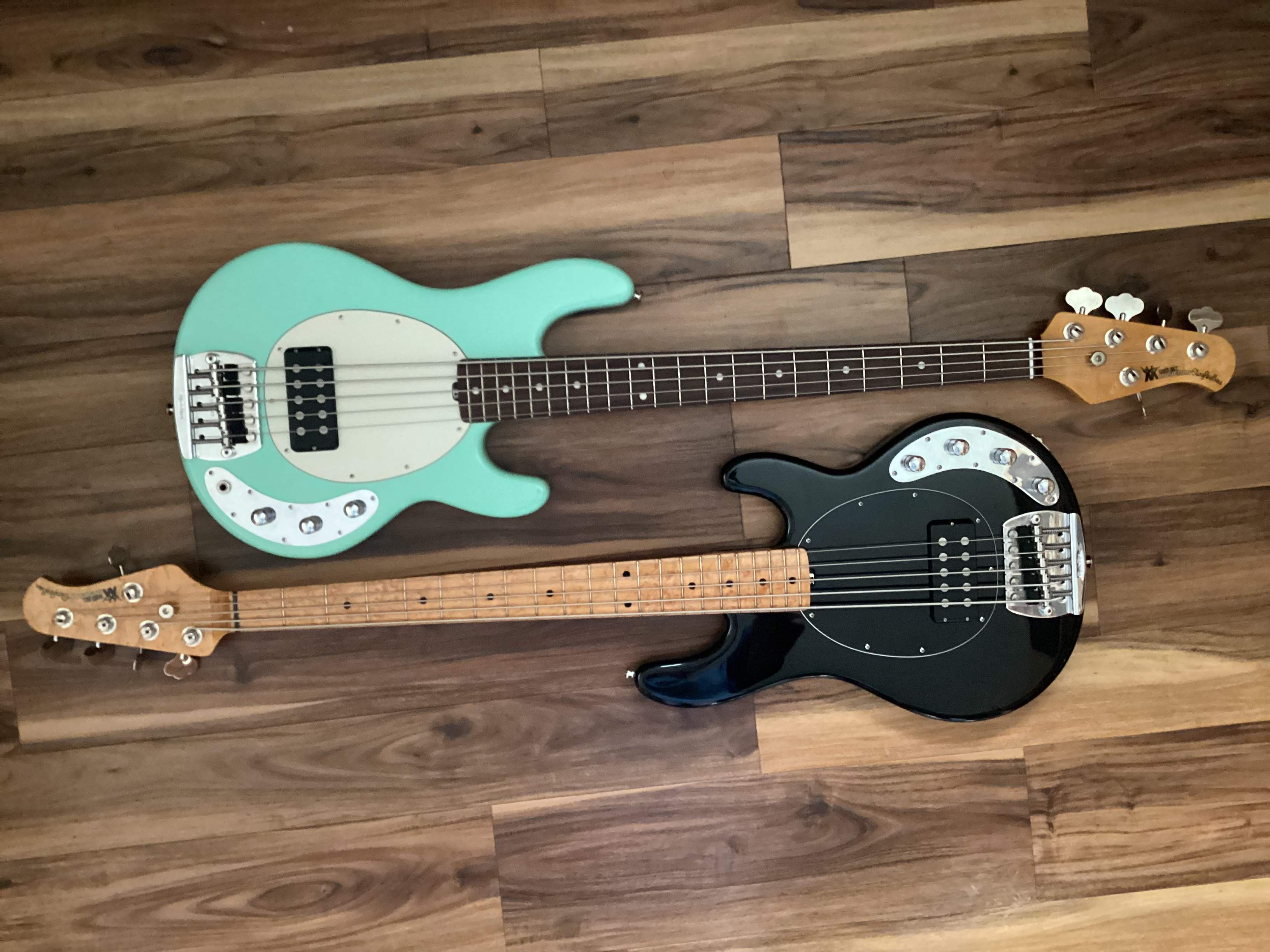
These are my Classics. 2010 mint green with a rosewood fingerboard and 2012 active/passive with a birds-eye maple neck and fingerboard.
Last edited:
My 05 with a superb flamed maple neck that plays like a dream. Never played any other bass that feels like this one.
Yep, my first MIA bass was a 90's Sray 5, sunburst/rosewood. I bought it new at the defunked MARS music store chain in Meyerland/Houston. Really loved playing that bass. Not even sure why I sold it a few years later.
Then in mid 2000's decided to try another single MM pup, U.S.Sray 5, this one red/rosewood. Played that for about a year then sold it too. I felt I just could not get along with the single pup setup. All my other basses had 2 pups, Jazz, dbl HH, J/P, etc. They just worked better for me.
So I was a member of the famous U.S. Stringray 5 a couple times.
NOW! Hoping not to disgrace this group by mentioning this but I just took delivery of a new Sterling/MM Sub Ray 5-HH couple weeks ago. Yeah, those cheapy, $440 Indonesian made models. The names on some of those are so long I doubt I'm saying it here in the correct order. It arrived very well packed but with quite some fret ring. So after abit of truss rod and bridge saddle adjusts, it actually played quite well. Maybe I should have bought a U.S. made, MM or Sterling double pupped bass to see if that's what I needed all along.
And again, sorry for mentioning my cheapy copy in this thread with some very awesome looking U.S. Ray 5's I'm seeing here. And y'all can delete this post if need be.
But I recall my U.S. made and now this Indo made one at last weeks' gig showed that same tendency for the D string to get totally lost in the mix. Sounds great at home practice alone. At the gig, the D string just couldn't be heard in a band mix. And our drummer is a cajon-ist!
I did search and can't narrow down to the D string issue. Is this always going to be the case with MM/Sterling/Cheapy-SterlingSubRay-5 basses? Or did someone find a fix. Thanks for tolerating me here. ;>) peace y'all, e.
Then in mid 2000's decided to try another single MM pup, U.S.Sray 5, this one red/rosewood. Played that for about a year then sold it too. I felt I just could not get along with the single pup setup. All my other basses had 2 pups, Jazz, dbl HH, J/P, etc. They just worked better for me.
So I was a member of the famous U.S. Stringray 5 a couple times.
NOW! Hoping not to disgrace this group by mentioning this but I just took delivery of a new Sterling/MM Sub Ray 5-HH couple weeks ago. Yeah, those cheapy, $440 Indonesian made models. The names on some of those are so long I doubt I'm saying it here in the correct order. It arrived very well packed but with quite some fret ring. So after abit of truss rod and bridge saddle adjusts, it actually played quite well. Maybe I should have bought a U.S. made, MM or Sterling double pupped bass to see if that's what I needed all along.
And again, sorry for mentioning my cheapy copy in this thread with some very awesome looking U.S. Ray 5's I'm seeing here. And y'all can delete this post if need be.
But I recall my U.S. made and now this Indo made one at last weeks' gig showed that same tendency for the D string to get totally lost in the mix. Sounds great at home practice alone. At the gig, the D string just couldn't be heard in a band mix. And our drummer is a cajon-ist!
I did search and can't narrow down to the D string issue. Is this always going to be the case with MM/Sterling/Cheapy-SterlingSubRay-5 basses? Or did someone find a fix. Thanks for tolerating me here. ;>) peace y'all, e.
Last edited:

Sweet bass. I prefer the larger bridge on the standard SR5 too, seems to have better string alignment on the fretboard than the new smaller one on the specials.My 05 with a superb flamed maple neck that plays like a dream. Never played any other bass that feels like this one.View attachment 4765949
Last edited:
I can't find EBMM in the title of the club..... It's a Ray5Thanks for tolerating me here.


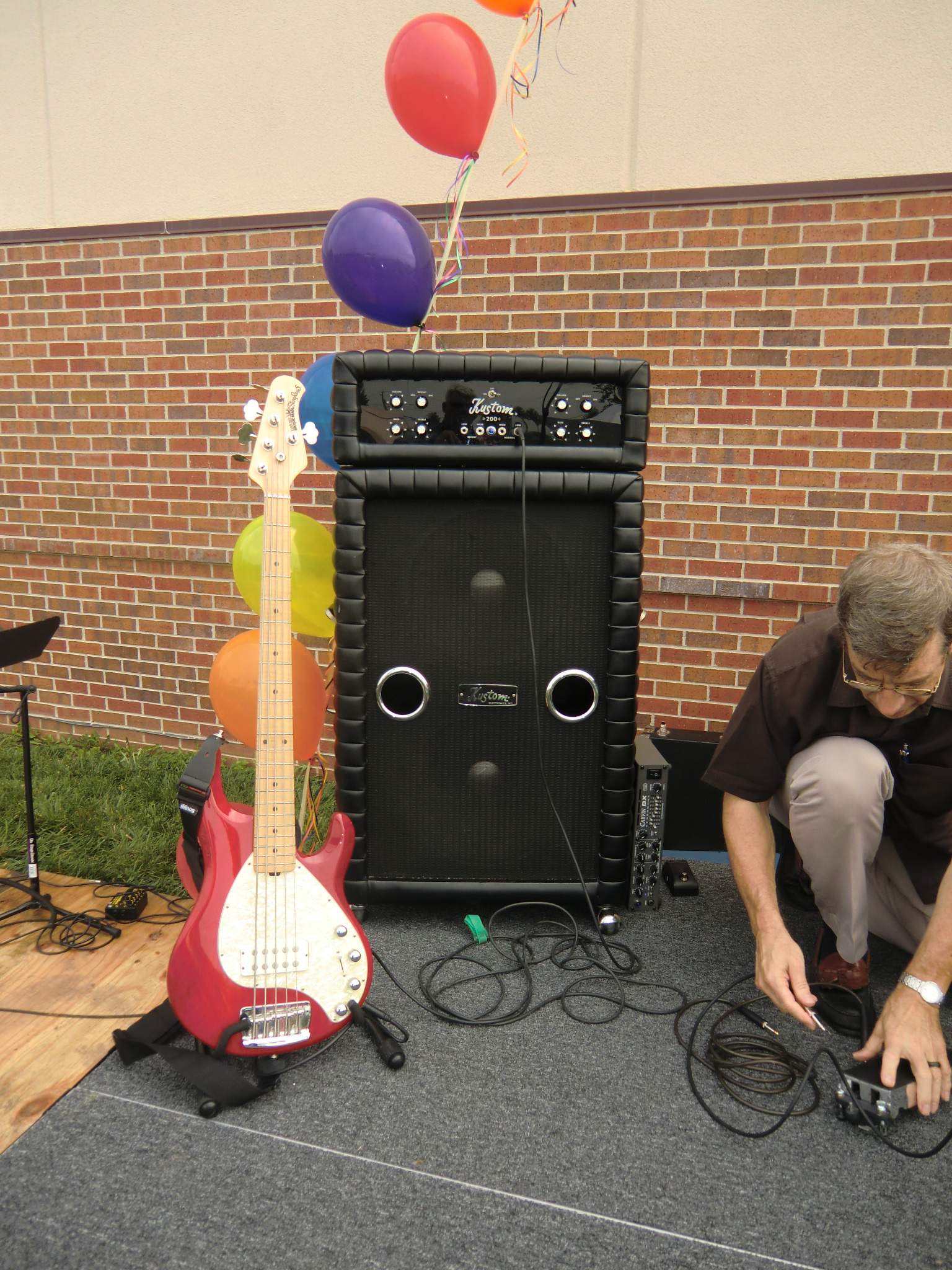
Played four sets, well, 3 1/2 sets anyway, with my recently purchased 2019 Stingray Special 5HH this past Thursday night. It was at an outdoor festival and ended up getting shut down 1/2 a set early because of lightning in the area. We scrambled to get everything packed up and got half of the gear loaded into our cars before getting hit with a torrential downpour that flooded the streets in just a few minutes. I had the most stuff that was still outside when the rain started coming down, but all the important stuff (basses, amps, speaker cabinets) stayed dry in the cases, bags, and covers. And, thankfully, nothing seemed to have suffered any damage other than having to dry out the cases, bags, and covers. I could have looked at it as a miserable experience but everything stayed safe and we now have gig story that we can laugh about, so all's well that ends well, right?
Despite the sudden ending, the crowd seemed to have a great time and they gave us great feedback. The festival organizer from the township and the councilperson who chairs their Parks commission also said they were very happy with us and will have us back next summer, too. Again, despite the bad ending, we had a lot of fun and were really happy with how we played.
It's not the best picture I found of me from that night, but it was the best picture of the bass. I also took an L-2500 and actually intended to play both, but I ended up giving the entire gig to the Stingray. Not sure it will replace my 2007 ceramic Stingray 5HH as my #1, but I see them sharing the top spot. I really like this bass - a lot!

Not sure I'm able to justify getting a THIRD Stingray, but lately I've been having a tough time controlling this growing urge for a Stingray Classic 5 or a post ceramic, pre-Special alnico Stingray 5HH. Nothing's going to happen in the near future, that's for sure, but looking a little farther out, who knows ...
Despite the sudden ending, the crowd seemed to have a great time and they gave us great feedback. The festival organizer from the township and the councilperson who chairs their Parks commission also said they were very happy with us and will have us back next summer, too. Again, despite the bad ending, we had a lot of fun and were really happy with how we played.
It's not the best picture I found of me from that night, but it was the best picture of the bass. I also took an L-2500 and actually intended to play both, but I ended up giving the entire gig to the Stingray. Not sure it will replace my 2007 ceramic Stingray 5HH as my #1, but I see them sharing the top spot. I really like this bass - a lot!
Not sure I'm able to justify getting a THIRD Stingray, but lately I've been having a tough time controlling this growing urge for a Stingray Classic 5 or a post ceramic, pre-Special alnico Stingray 5HH. Nothing's going to happen in the near future, that's for sure, but looking a little farther out, who knows ...
Just added another to the fold. BFR Fuego StingRay5 Special Fretless aka HOT STUFF!!!
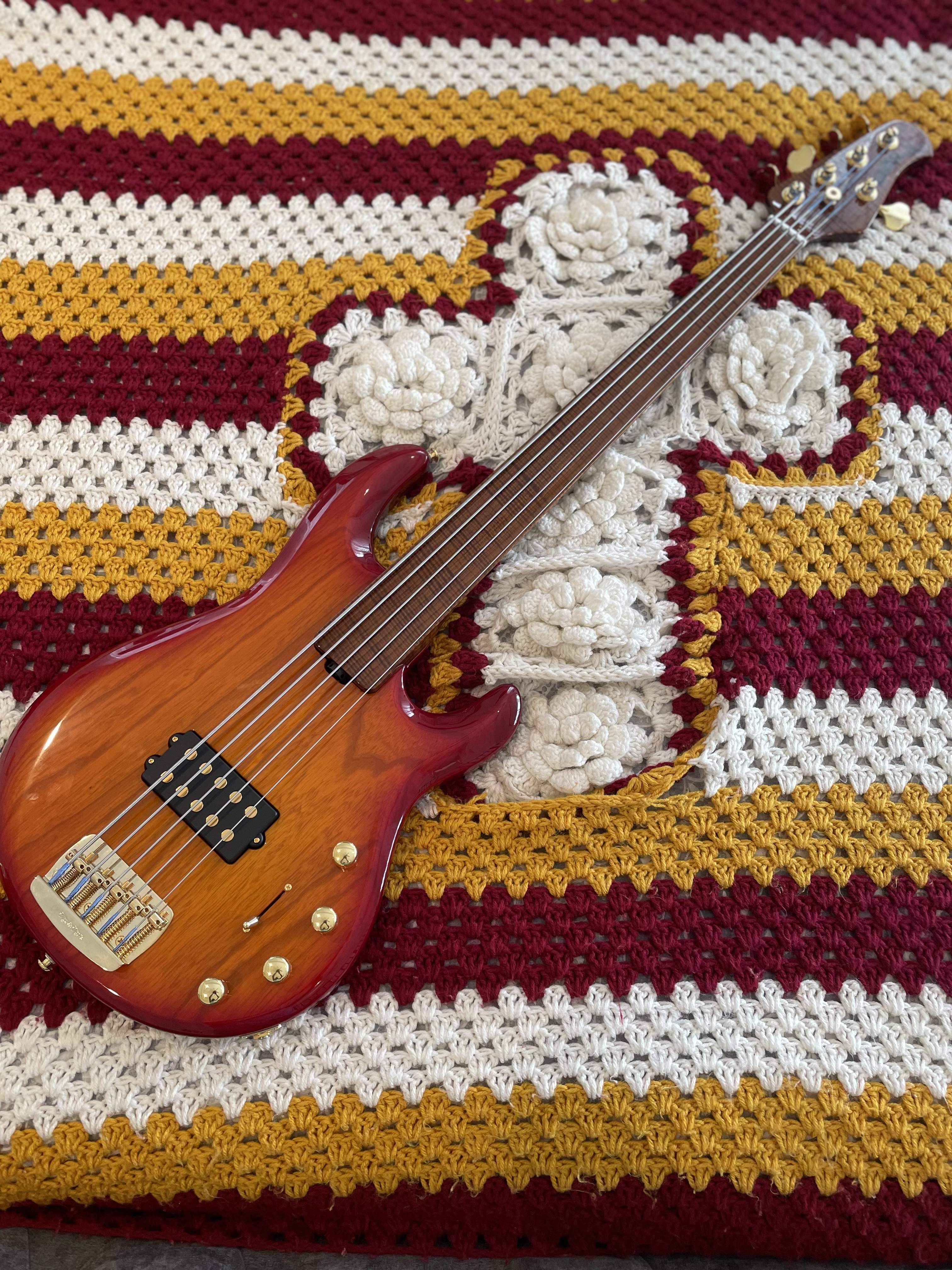

Just added another to the fold. BFR Fuego StingRay5 Special Fretless aka HOT STUFF!!!
View attachment 4779991
EBMM certainly does do it right when it come to the BFRs. What a gorgeous pair of basses!
EDIT:
 Not to imply that the bass pictured before those two isn’t stunningly beautiful as well.
Last edited:
Man, I really want those blacked-out pickup. That headstock is off the charts, too.
Man, I really want those blacked-out pickup. That headstock is off the charts, too.
The whole neck is flamed just as fantastically as the headstock, too. I’ve gotten several, “whoa, what is THAT bass?!?!” at shows - it’s quite the looker.
I think the only thing I might change on it is having the binding be black instead of white to keep with the whole blacked-out pickups and hardware vibe its got going. Not 100% sure, but I do wonder what that’d look like.


