I have found that my Mini-P facilitates upper register wankery given my arthritis and carpal tunnel syndrome with short fat fingers. I really enjoy how this neck playsMuscle memory? Pshaw! I switch between 20.5", 28.5", 29.5", 30", & 34" scales with no issues. I'll soon be adding a 19.6" scale mini "Bass VI" to the mix, as well.
To be fair, I pretty much only play 1-5, walks, root thumps, and boxes. In the money. None of this upper register wankery, or 7 fret stretches to impress the other bassists. By keeping it K.I.S.S., scale changes are not an issue.
Also, practice more..

Enjoy the benefits of a premium membership!
Upgrade Account
-
TalkBass has been independent since 1998. Add your voice.
Create a free account to reply to discussions, view embedded media, and browse with fewer display ads.
Join free Log in
Want zero display ads or expanded classifieds tools? Compare plans.
You are using an out of date browser. It may not display this or other websites correctly.
You should upgrade or use an alternative browser.
You should upgrade or use an alternative browser.
The Squier Mini Precision Bass Club
- Thread starter sabre79
- Start date
More options
Who Replied?
Controller Twister#52okay, folks - whether mods okay this thread to become the official squier mini precision club thread or whether we start one, let's get some membership numbers going. who wants a number?
Volker Kirstein - #1
SBassman - #13
i'll decide on my number after the people who owned one before i did get their numbers.
Ummm.... you forgot #9...
You assigned #9 to me on page 43.
and here you go, lucky number 9!
Volker Kirstein - #1
G19Tony - #2
hangnail - # 3
pcake - # 4
MakoMan - #5
Diver - #6
Bassylocks - #7
FinialBassist - #8
WildWes - #9
SBassman - #13
Have you ever considered gets a US Postal Service PO Box in the US just across the border or a mail, pickup box from one of the UPS stores just across the border in the US~
FYI, I checked further in to this [by giving the checkout cart one in NY state], and if you have a USA address, these kits only cost about $17 USD to ship by UPS Ground service, which while it does not necessarily help ME, many US readers here might find it attractive.
At their website, there are also tutorials for assembly of their various models.
The site looks more professional than most.
~
that bass is really beautifulHere is a little progress pic of my heavily modded Squier Mini P Bass. Got my Zebra Wood pickguard in today so I wired up everything with the Nordstrand Power Blade pickups, Best Bass Gear wiring harnesses and Hipshot vintage bridge with Graphtech saddles.
View attachment 4008359

it's a tradition on all the talkbass clubs.
you are now turned up all the way to 11!
Volker Kirstein - #1
G19Tony - #2
hangnail - # 3
pcake - # 4
MakoMan - #5
Diver - #6
Bassylocks - #7
FinialBassist - #8
pistonrod8 - #11
SBassman - #13
Could you give me Controller Twister #52. If that does not work then Frank Vozak#52
Back in 1967 my first bass a 67 Fender Mustang Bass came standard with flat wounds as did my 67 Gibson EB-O These two were sold off long long ago~
I think that it is at least partially due them costing more to make, so they do not sell as well to players.
Of course we could argue 'chicken and egg' on that observation, but the process to make flats IS more complicated and takes longer, so I would suggest it to be somewhat true.
The economies of scale [of making rounds vs flats] may not as much be a factor, because as I understand it, it is harder if not impossible to get a machine to make the final wrap on a flatwound string and to polish it, without at least some human interaction, according to multiple string makers which brag about their flats being hand-polished.
Then, makers of basses exacerbate matters by choosing the lowest priced string which they can for almost all new basses [so roundwounds], and rock players have grown to like rounds anyway over the years.
So everything which I have mentioned contributes to your initial thought.
BTW, add to this that there are fewer players of short and medium scale basses [let alone extra-short scales like the Squier Mini-P], and it yields a perfect storm' as to why players of those basses can find fewer choices of bass strings in general.
It all comes back to money, at some level.
~
Yes. But the post @pcake quoted to give out #11 did not include your #9, and I wanted to make sure a duplicate 9 isn't issued.You assigned #9 to me on page 43.
and here you go, lucky number 9!
Volker Kirstein - #1
G19Tony - #2
hangnail - # 3
pcake - # 4
MakoMan - #5
Diver - #6
Bassylocks - #7
FinialBassist - #8
WildWes - #9
SBassman - #13
 Anyway, I'm not the captain. She is.
~Have you ever considered gets a US Postal Service PO Box in the US just across the border or a mail, pickup box from one of the UPS stores just across the border in the US
Excellent idea !
I have such a box, but remember that they are not letting us cross the border these days.
Unfortunately, pickup of items from the box is not considered to be 'essential', by the powers that be.
Mine is run by a customs broker firm, and they have always offered a service to bring such items into Canada from the box location, for a fee, of course.

I have been thinking about investigating it further.
It might not pay to use it unless the value of the shipment reaches a certain figure, and/or if the normally offered shipping by the seller directly from the US to here is a stupid enough price, of which the second part was certainly true for the particular purchase which I was checking upthread.
~
Last edited:
~Back in 1967 my first bass a 67 Fender Mustang Bass came standard with flat wounds as did my 67 Gibson EB-O These two were sold off long long ago
I too used flats before trying rounds, and even tried black nylon covered strings before rounds.
Back then, IIRC, most new basses came with flats, and the first rounds which I encountered were the original RotoSound RS66 long scale edition, which I ended up trying and liking on my 2nd Fender P, which is also long gone.
I guess that guitar maker companies had not risked shipping rounds yet on new basses, even though they likely cost less to make, even in those days.
~

Controller Twister#52
we're doing board usernames with numbers, so voila! you are
Frank Vozak - #52
You assigned #9 to me on page 43.
and here you go, lucky number 9!
Volker Kirstein - #1
G19Tony - #2
hangnail - # 3
pcake - # 4
MakoMan - #5
Diver - #6
Bassylocks - #7
FinialBassist - #8
WildWes - #9
SBassman - #13
apologies to WildWes! i was rushing and didn't find the most recent post
pistonrod8 - #1
Frank Vozak - #2
Volker Kirstein - # 3
G19Tony - # 4
hangnail - #5
pcake - #6
MakoMan - #7
Diver - #8
Bassylocks - #9
FinialBassist - #11
WildWes - #13
SBassman - #52
and my notifications for this thread aren't showing up.


Here are the neck pocket measurements @DavesnothereCA 
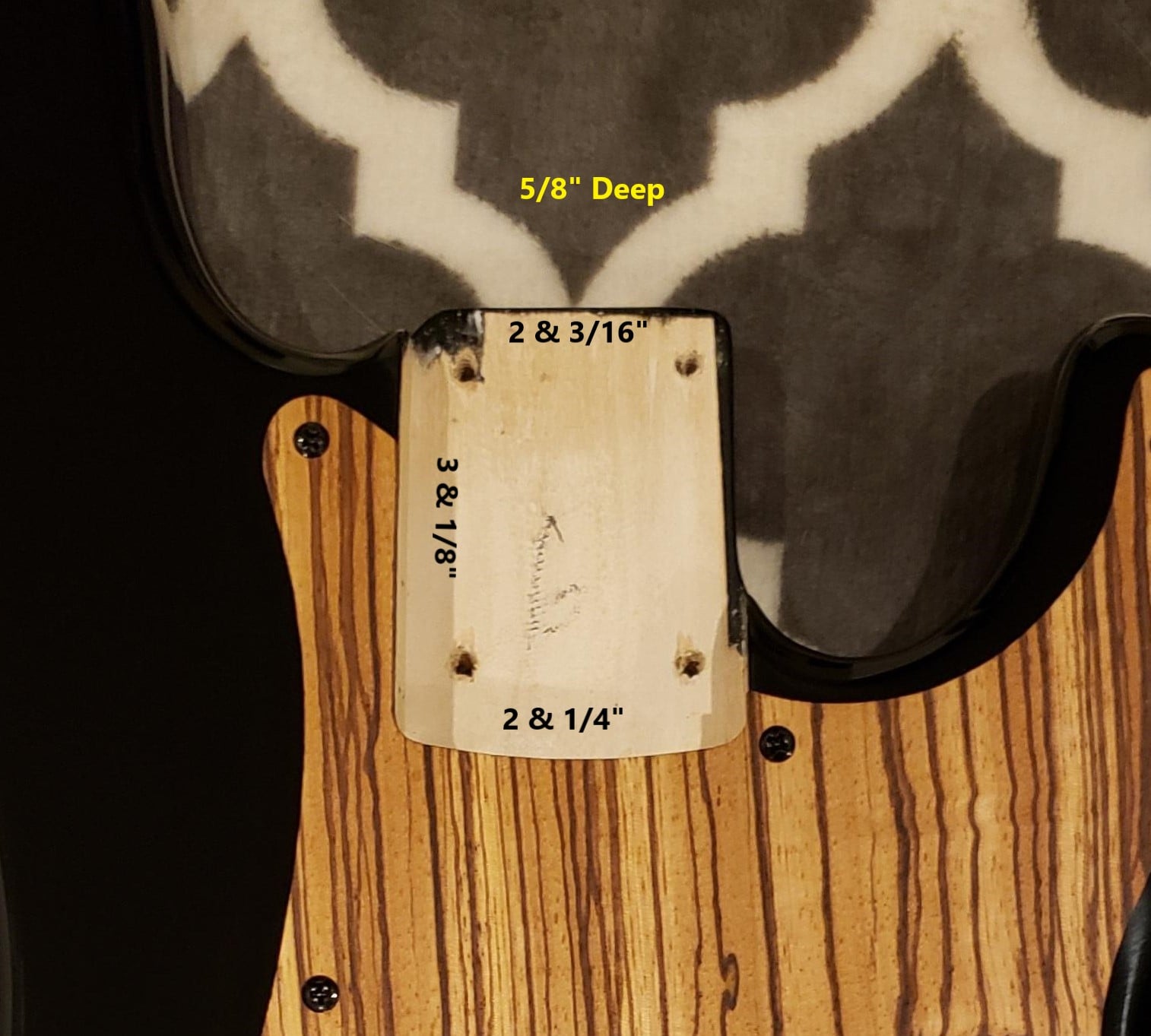
Can I get a number also please even though the Squier branding is non existent on mine now? 
Wow, you are a trooper! Dave, just to save you the trouble of asking... if you want me to take the neck of my Bronco to show you the measurements, the answer is 'No'

Hmm - I wonder if we can get the same dimensions of the neck of that kit surfaced in this thread recently.
Imagine if we could Swap in a maple fretboard neck without mods. I'd be all over that.
Imagine if we could Swap in a maple fretboard neck without mods. I'd be all over that.
Volker Kirstein - #1
G19Tony - #2
hangnail - # 3
pcake - # 4
MakoMan - #5
Diver - #6
Bassylocks - #7
FinialBassist - #8
WildWes - #9
TK4261 - #10
pistonrod8 - #11
SBassman - #13
Frank Vozak - #52
but at heart, it's still a squier
and voila - you are number 10!
G19Tony - #2
hangnail - # 3
pcake - # 4
MakoMan - #5
Diver - #6
Bassylocks - #7
FinialBassist - #8
WildWes - #9
TK4261 - #10
pistonrod8 - #11
SBassman - #13
Frank Vozak - #52
Can I get a number also please even though the Squier branding is non existent on mine now?
but at heart, it's still a squier
and voila - you are number 10!
Well! It would appear the Mini P neck pockets are virtually identical to a Strat or Tele. Hmm...
I cannot find info on the Bronco pocket size.

The neck is probably the same one they’re putting on the new Baritone Cabronita Tele with a different tuner layout and headstock shape. It also just makes sense to shrink it down to guitar dimensions.Well! It would appear the Mini P neck pockets are virtually identical to a Strat or Tele. Hmm...
View attachment 4009970
I cannot find info on the Bronco pocket size.
I was thinking about doing a fill 'n' drill on a maple Strat neck, pop it onto the Mini P, and test this pocket theory. Used Strat clones are cheap enough...The neck is probably the same one they’re putting on the new Baritone Cabronita Tele with a different tuner layout and headstock shape. It also just makes sense to shrink it down to guitar dimensions.
BUT!!! After some more thought, this is not practical. A Strat has a 25.5" scale, 3" shorter than the Mini P. Intonation would be way off.


