• TalkBass has been independent since 1998. Add your voice.
    Create a free account to reply to discussions, view embedded media, and browse with fewer display ads.
    Join freeLog in
    Want zero display ads or expanded classifieds tools? Compare plans.

Thunderbird Club

If you have FoH and IEMs, do you even need an amp on stage? I see so many bands now go ampless these days.

I use IEMs whenever I can but would 't want to go ampless. I have tried it a few times and even if I could get a good sound for monitors the amp behind you just feels better. Drummers agree too.
Even more so if you have the cab mic'ed.
 
@KaraQ might need to add this to the collection:

[Invalid or Expired Link Removed]


Great catch! Yes, she should.


Looks very interesting, if a bit pricey.....the 784 miles X2 drive to pick it up might be prohibitively expensive though.....


So we have SS and tube watts, but now old school watts to factor in as well? :laugh:

My oldest amp, the Acoustic 150b, at 100? watts, seems to be the loudest one I have, in my small apartment living room test :unsure:
 
Last edited:
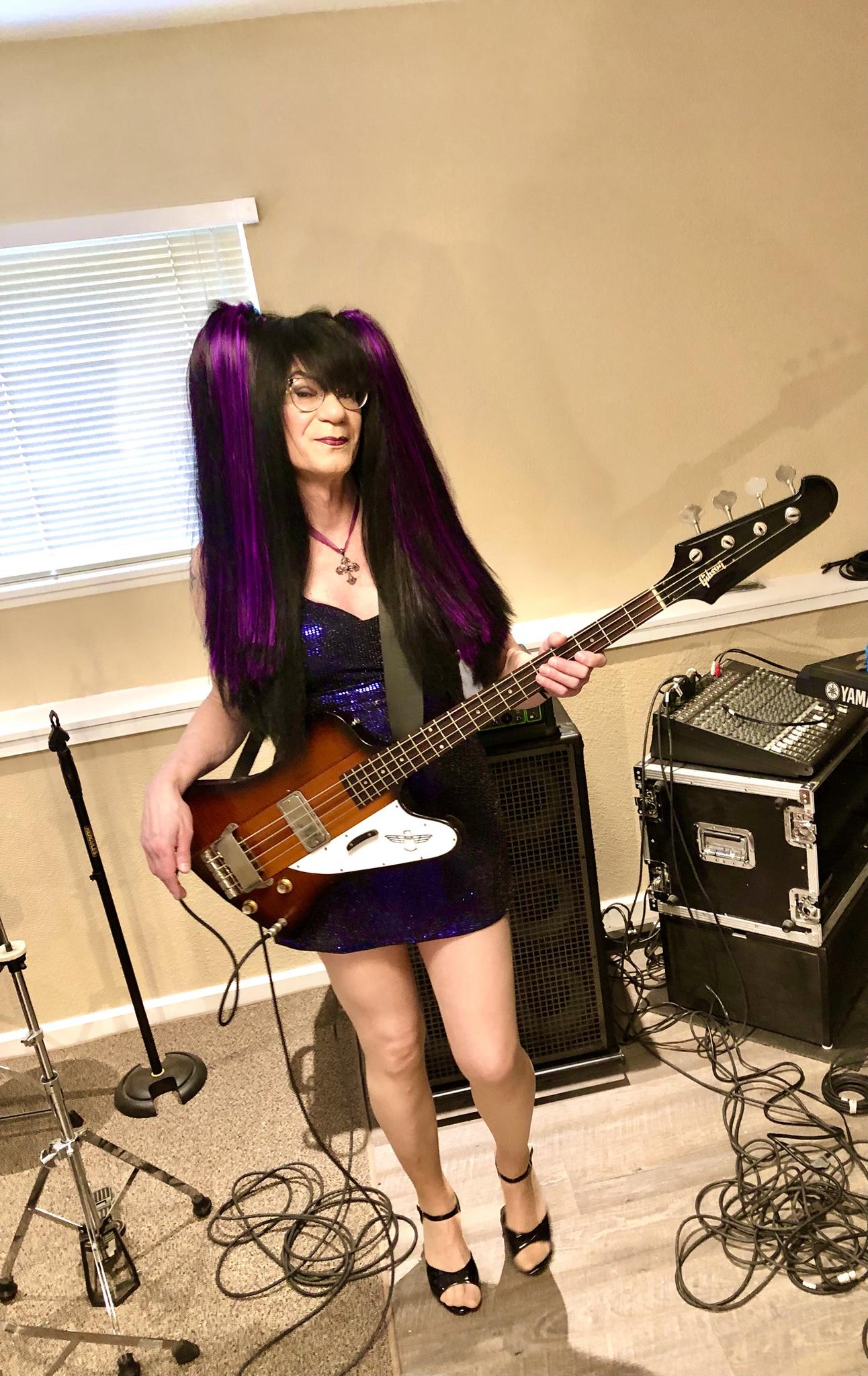
Our keyboard player was out of town (SWSX or whatever is going on in Austin just now) so there was plenty of room to spread out and play as a four piece in the rehearsal room last night. This bass just sounds so ^&%$#*( good! The Trace Elliott/SWR/Thunderbird = perfect!
Ears are ringing a little this AM.

fKumqx2.jpg
This is called "Having it all together".
 
250 watts, according to the old Trace Elliott ethic, is enough to be present on any stage, in any venue, long as you have a proper speaker array. You can probably play anywhere with that head. And you don't have to reach a particular dB level to get what it's got sonically.
I've still got an old MK-IV that needs a plywood sleeve... Getting over to my friend's panel saw this week for that...
and that’s the crux right there…..250, tube, ss, Class D or whatever is still the same power into a speaker. traditionally, audio power measurements were/are done into a resistor (2, 4, 8, 16 or whatever amount of Ohm) which is not truly representative of how a speaker really behaves. for example, a 4 Ohm speaker may go up to over 20 Ohm at higher frequencies making the “pure resistor” test/characterization method lack in real world terms. the reason the Audio Engineering Society (AES) chose this way is because it’s quiet and cheap (no need for audio chanbers to test purely electrical performance of the amp), and gives you unbiased amp data.
now, you add speakers and those earlier measurements remain purely a benchmark reference that doesn’t really tell you much about how the particular amp/speaker combo will perform…..add to that the variable of the signal (type of instrument for example) to be used and the complexity just keep growing…..
magnetic materials have come a long way and the recent NEO type magnets, although making everything MUCH lighter and portable are also MUCH more inefficient necessitating substantially more power to attain the same Sound Pressure Levels (SPl) adding to the confusion…..now 800 Watts is commonplace but you have to be very careful when you use an amp like this with traditional non NEO speakers or you’ll quickly fry them……apologies for the verbosity, the issues can become pretty involved…..
 
and that’s the crux right there…..250, tube, ss, Class D or whatever is still the same power into a speaker. traditionally, audio power measurements were/are done into a resistor (2, 4, 8, 16 or whatever amount of Ohm) which is not truly representative of how a speaker really behaves. for example, a 4 Ohm speaker may go up to over 20 Ohm at higher frequencies making the “pure resistor” test/characterization method lack in real world terms. the reason the Audio Engineering Society (AES) chose this way is because it’s quiet and cheap (no need for audio chanbers to test purely electrical performance of the amp), and gives you unbiased amp data.
now, you add speakers and those earlier measurements remain purely a benchmark reference that doesn’t really tell you much about how the particular amp/speaker combo will perform…..add to that the variable of the signal (type of instrument for example) to be used and the complexity just keep growing…..
magnetic materials have come a long way and the recent NEO type magnets, although making everything MUCH lighter and portable are also MUCH more inefficient necessitating substantially more power to attain the same Sound Pressure Levels (SPl) adding to the confusion…..now 800 Watts is commonplace but you have to be very careful when you use an amp like this with traditional non NEO speakers or you’ll quickly fry them……apologies for the verbosity, the issues can become pretty involved…..
So, quick reality reference here: to get the most out of my Peavey MK-III, I should probably be running into a non-neo speaker?
Here I go, painting in black and white again... But I've got a pair of Kappalite 3015s in TL-606 cabs under the Peavey. Those are said to be very efficient. And it's loud. But would I get more headroom out of, say, a pair of Eminence Legends?
 
So, quick reality reference here: to get the most out of my Peavey MK-III, I should probably be running into a non-neo speaker?
Here I go, painting in black and white again... But I've got a pair of Kappalite 3015s in TL-606 cabs under the Peavey. Those are said to be very efficient. And it's loud. But would I get more headroom out of, say, a pair of Eminence Legends?
definitely worth trying, you won’t hurt stuff, if anything, (I could be wrong) you may be unimpressed with the outcome..
 
No doubt, insurance was a part. I think there were a number of factors.
True.

If more people would just play Thunderbirds. Look at us. None of us need psychological help.


OK, maybe that's not a real strong point.:laugh:
I think psychiatrists have bad days every day. Or at least the one I know who deals with the criminally insane certainly does.


Yes, resources are stretched very thin, most of the large hospitals which used to house those and chronically ill mental patients got closed during the 80's because of privatization and that's all I'm going to say about thay, well besides the fact that it was a colossal failure and dumped thousands of people into the street and shelters. I would hazard a guess and say that at any given time 90% of mentally ill patients are out on the street and have stopped taking their meds and that is another kettle of fish.
 
Yes, resources are stretched very thin, most of the large hospitals which used to house those and chronically ill mental patients got closed during the 80's because of privatization and that's all I'm going to say about thay, well besides the fact that it was a colossal failure and dumped thousands of people into the street and shelters. I would hazard a guess and say that at any given time 90% of mentally ill patients are out on the street and have stopped taking their meds and that is another kettle of fish.
I thought we called them Guitarists hehe
 
and that’s the crux right there…..250, tube, ss, Class D or whatever is still the same power into a speaker. traditionally, audio power measurements were/are done into a resistor (2, 4, 8, 16 or whatever amount of Ohm) which is not truly representative of how a speaker really behaves. for example, a 4 Ohm speaker may go up to over 20 Ohm at higher frequencies making the “pure resistor” test/characterization method lack in real world terms. the reason the Audio Engineering Society (AES) chose this way is because it’s quiet and cheap (no need for audio chanbers to test purely electrical performance of the amp), and gives you unbiased amp data.
now, you add speakers and those earlier measurements remain purely a benchmark reference that doesn’t really tell you much about how the particular amp/speaker combo will perform…..add to that the variable of the signal (type of instrument for example) to be used and the complexity just keep growing…..
magnetic materials have come a long way and the recent NEO type magnets, although making everything MUCH lighter and portable are also MUCH more inefficient necessitating substantially more power to attain the same Sound Pressure Levels (SPl) adding to the confusion…..now 800 Watts is commonplace but you have to be very careful when you use an amp like this with traditional non NEO speakers or you’ll quickly fry them……apologies for the verbosity, the issues can become pretty involved…..


So, in general terms, neo drivers are better with SS/class D higher wattage amps, and standard (ferrite, ceramic?) drivers tend to match better with lower wattage tube amps?

I’ve been finding that my lower wattage tube amps definitely benefit when being used with ported/vented cabinet(s).