
Enjoy the benefits of a premium membership!
Upgrade Account
-
TalkBass has been independent since 1998. Add your voice.
Create a free account to reply to discussions, view embedded media, and browse with fewer display ads.
Join free Log in
Want zero display ads or expanded classifieds tools? Compare plans.
You are using an out of date browser. It may not display this or other websites correctly.
You should upgrade or use an alternative browser.
You should upgrade or use an alternative browser.
Winter Build-Off 2023: Twin Tigers!!!
- Thread starter Lonnybass
- Start date
More options
Who Replied?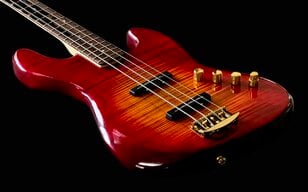

In fairness, the boy is working on an un-WBO-related body so seems to be on the up & upNo fair, you never said this build was a collab!

I'll soon need to finish a flame maple top so I'm watching with particular interest

You are now!I'm not familiar with the child labor laws in California.

Because I am big fan of forced, uncompensated child labor, and also because mommy was engrossed in Netflix, I made the executive decision tonight to say to hell with bedtime, we're gonna pick up where we left off, and shoot some color on the bass body. Because...Thursday.
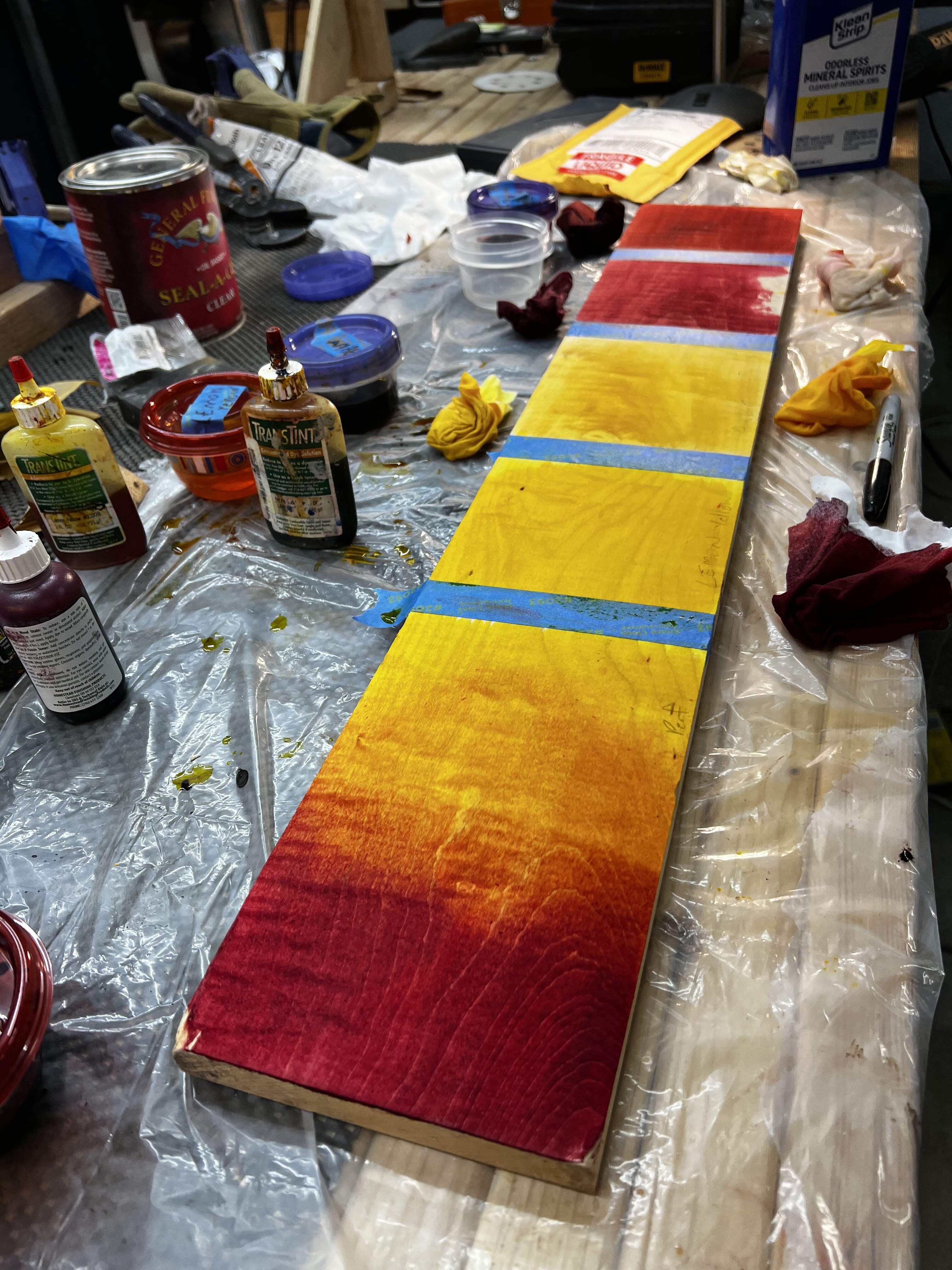
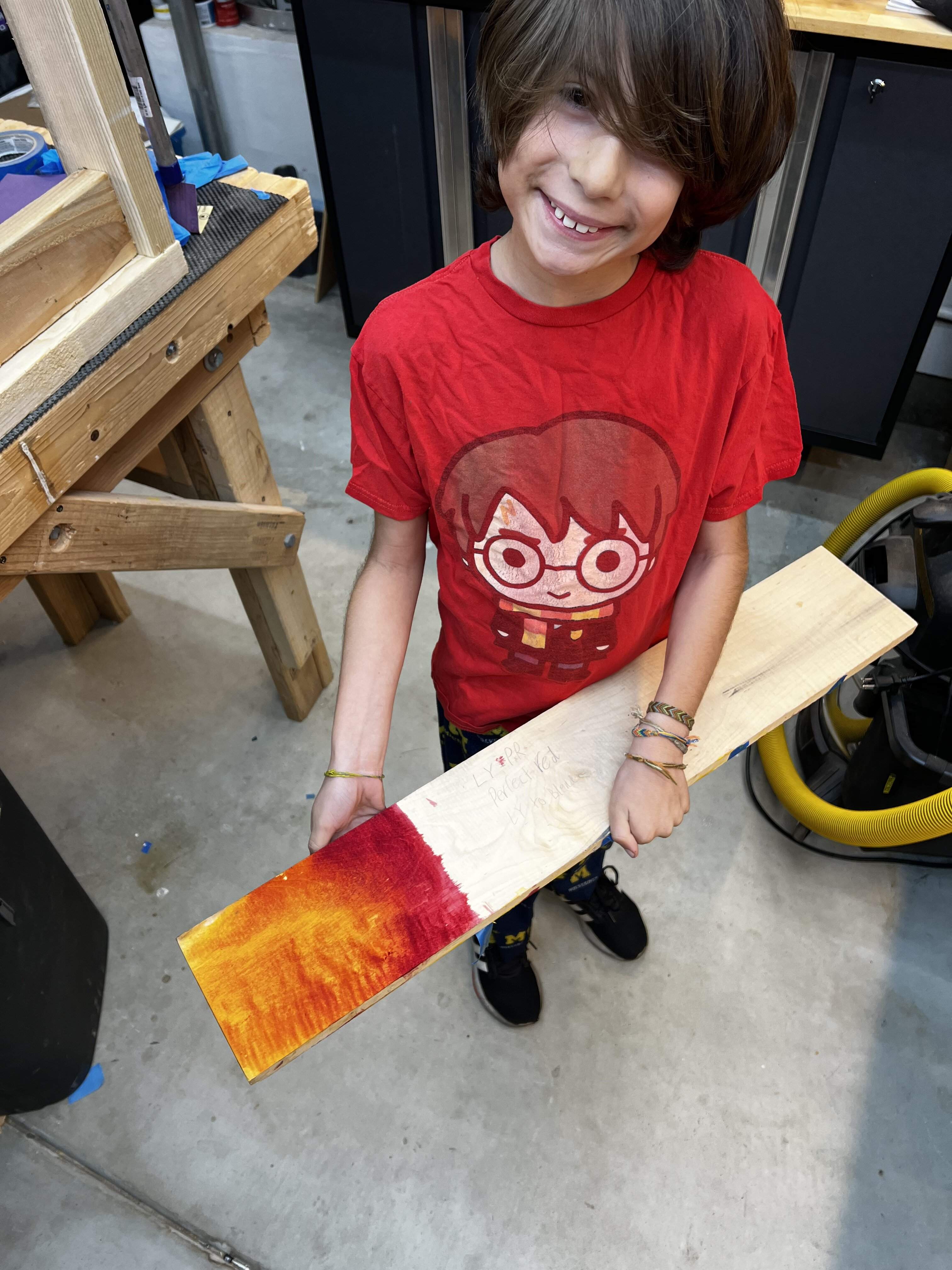
First step is to mix up some sample colors and see what we like. We've got two types of reds and two types of yellows to experiment with.
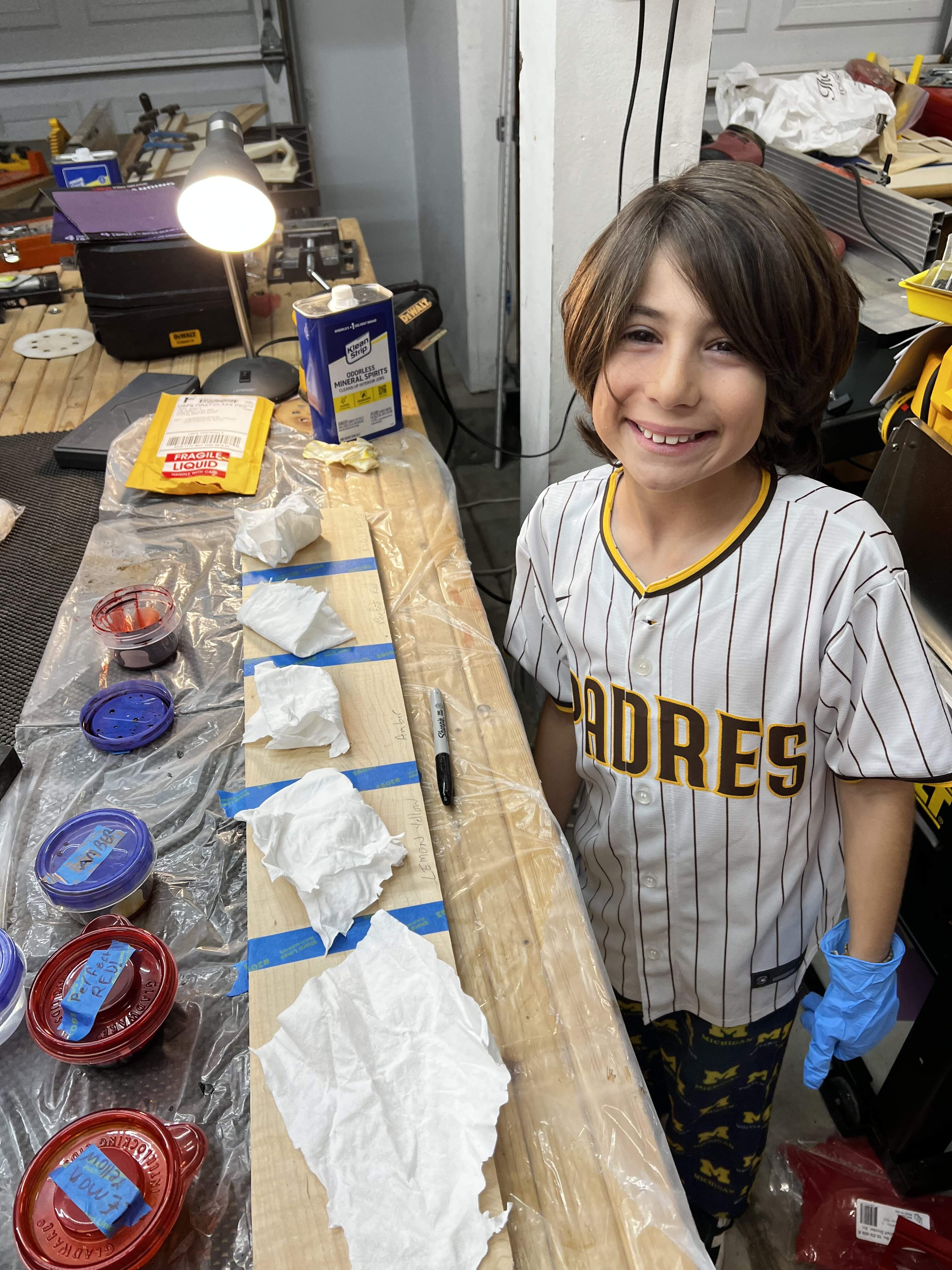
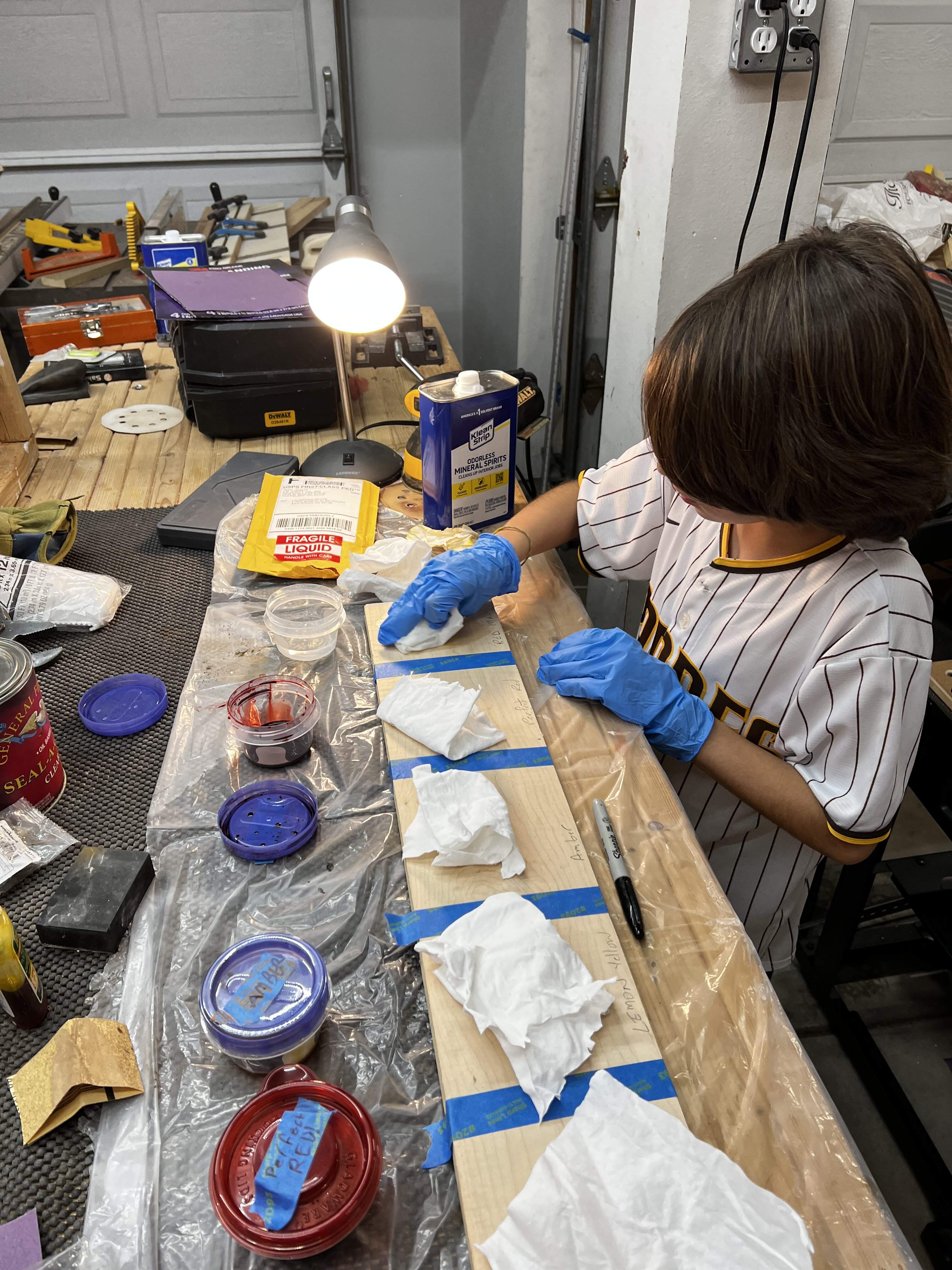
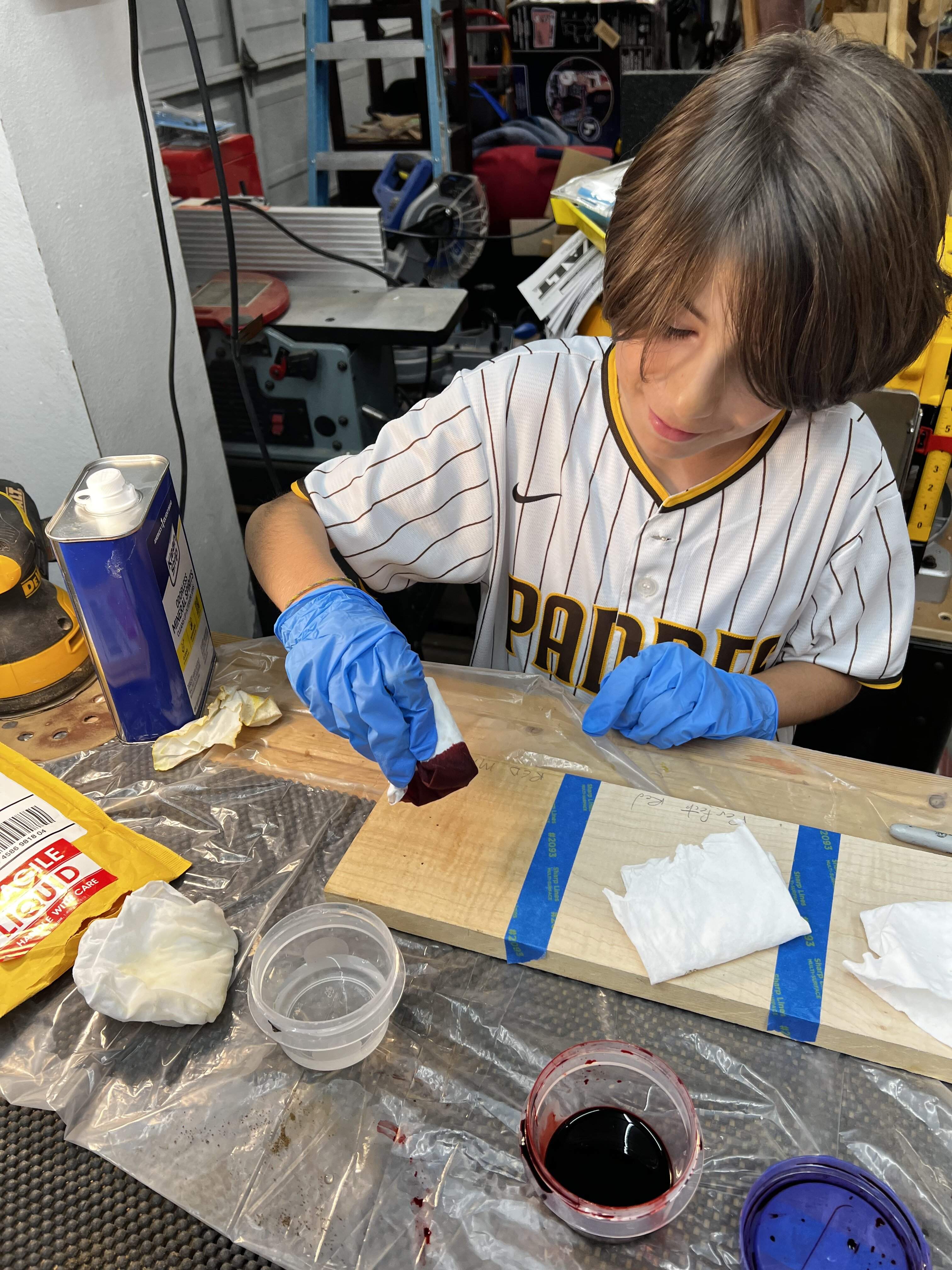
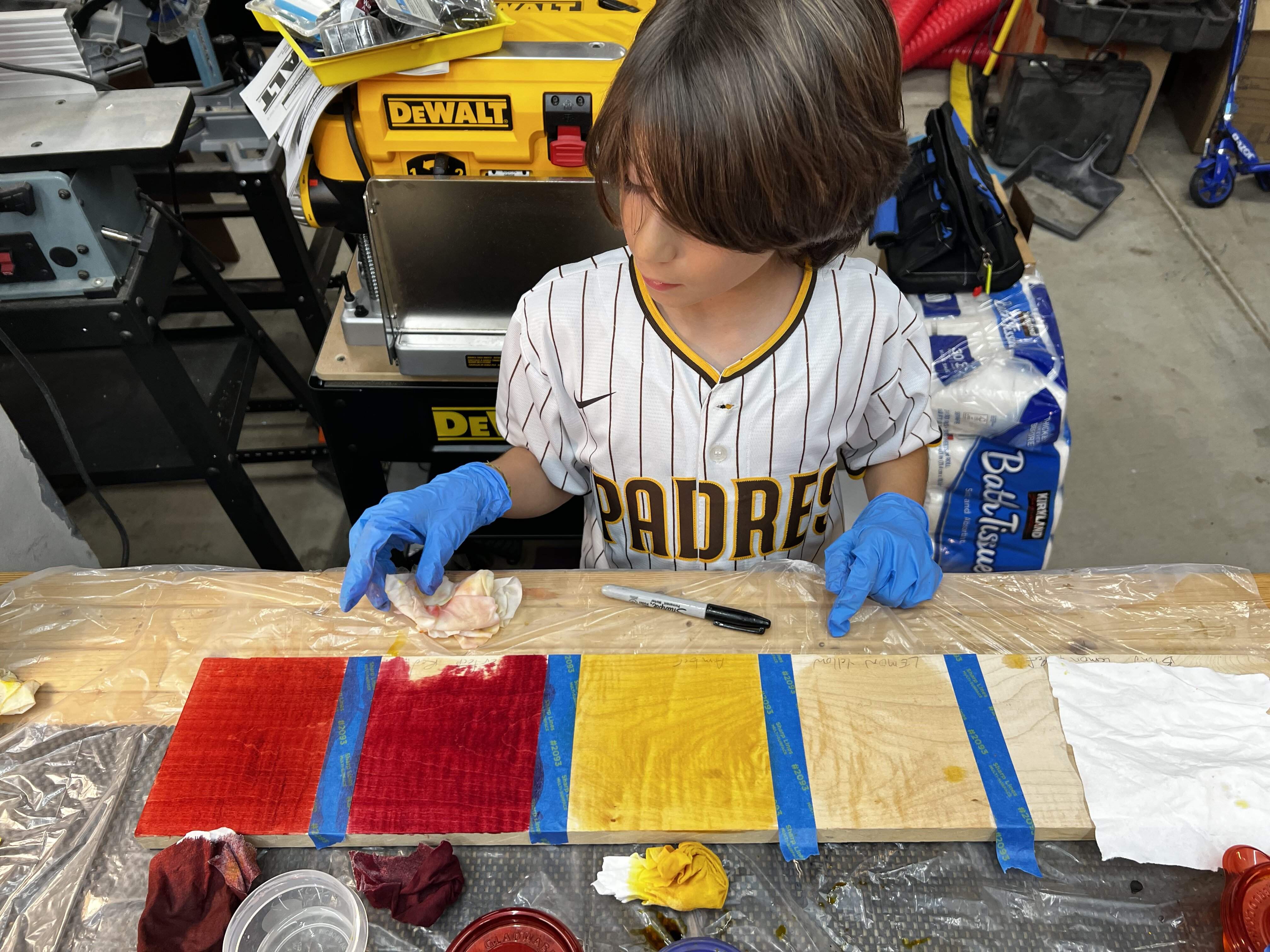
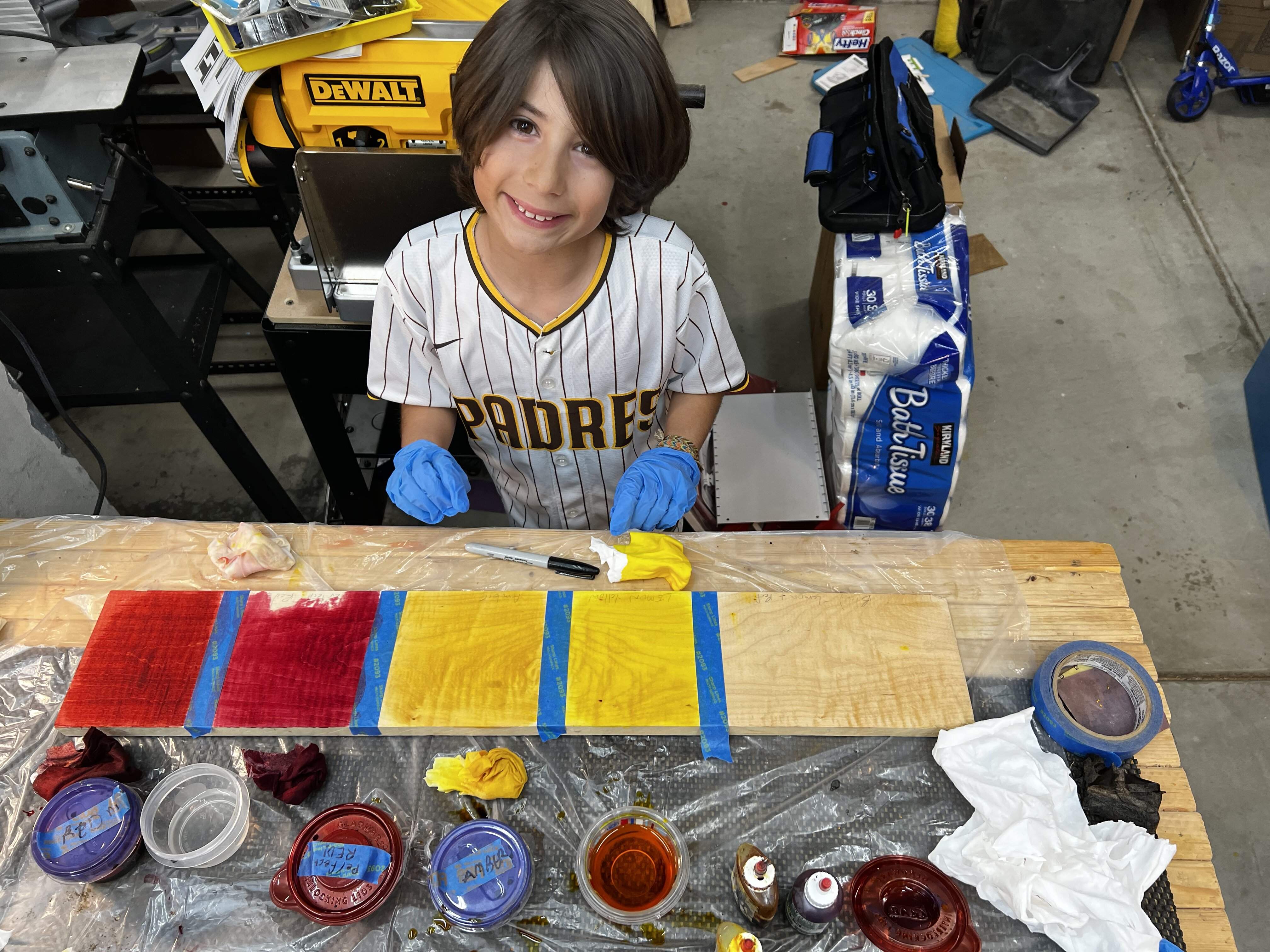
We noticed right at the end that he was wearing a brand new Padres jersey, so I had him change before we went any further!
We noticed right at the end that he was wearing a brand new Padres jersey, so I had him change before we went any further!
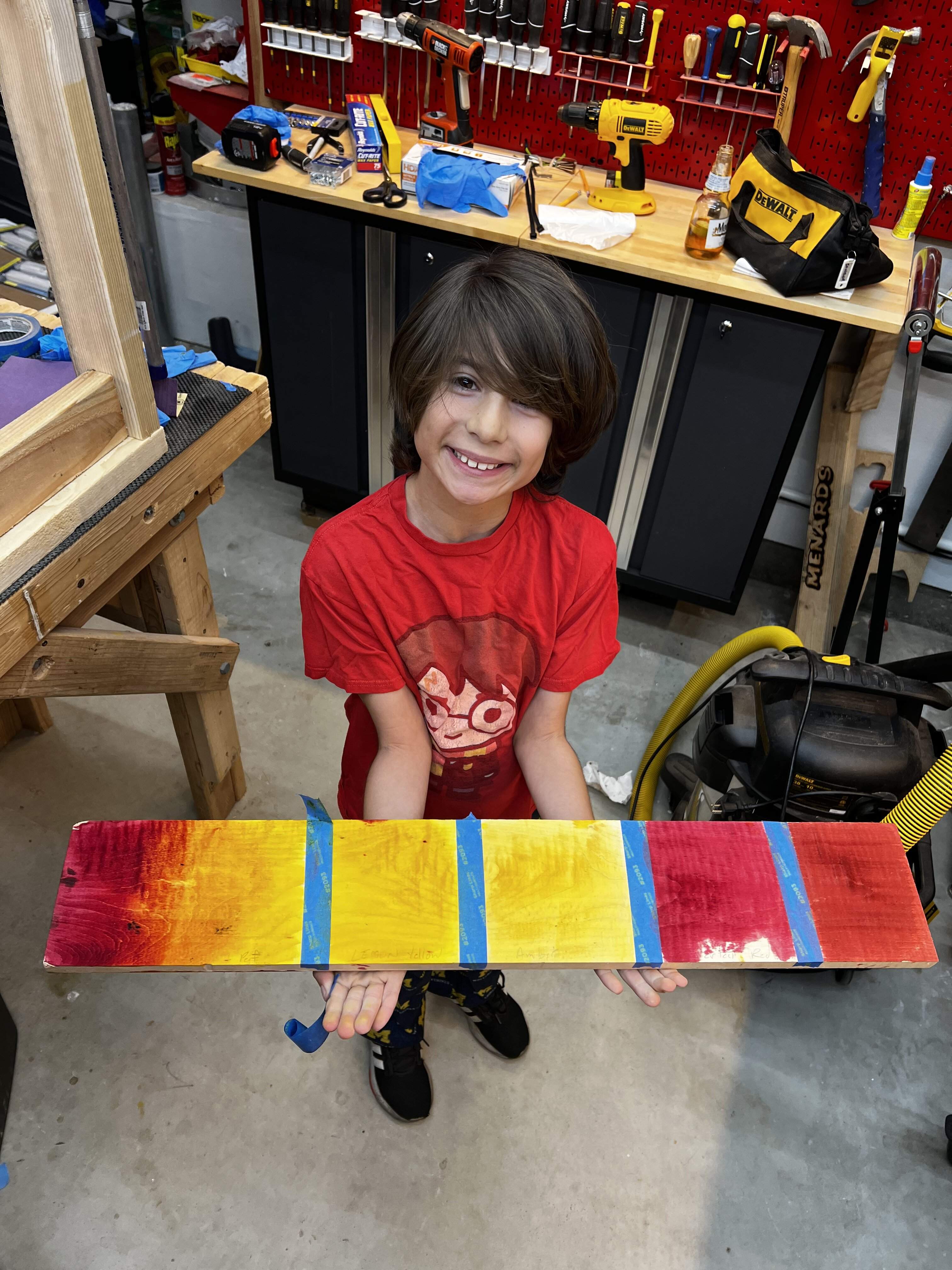
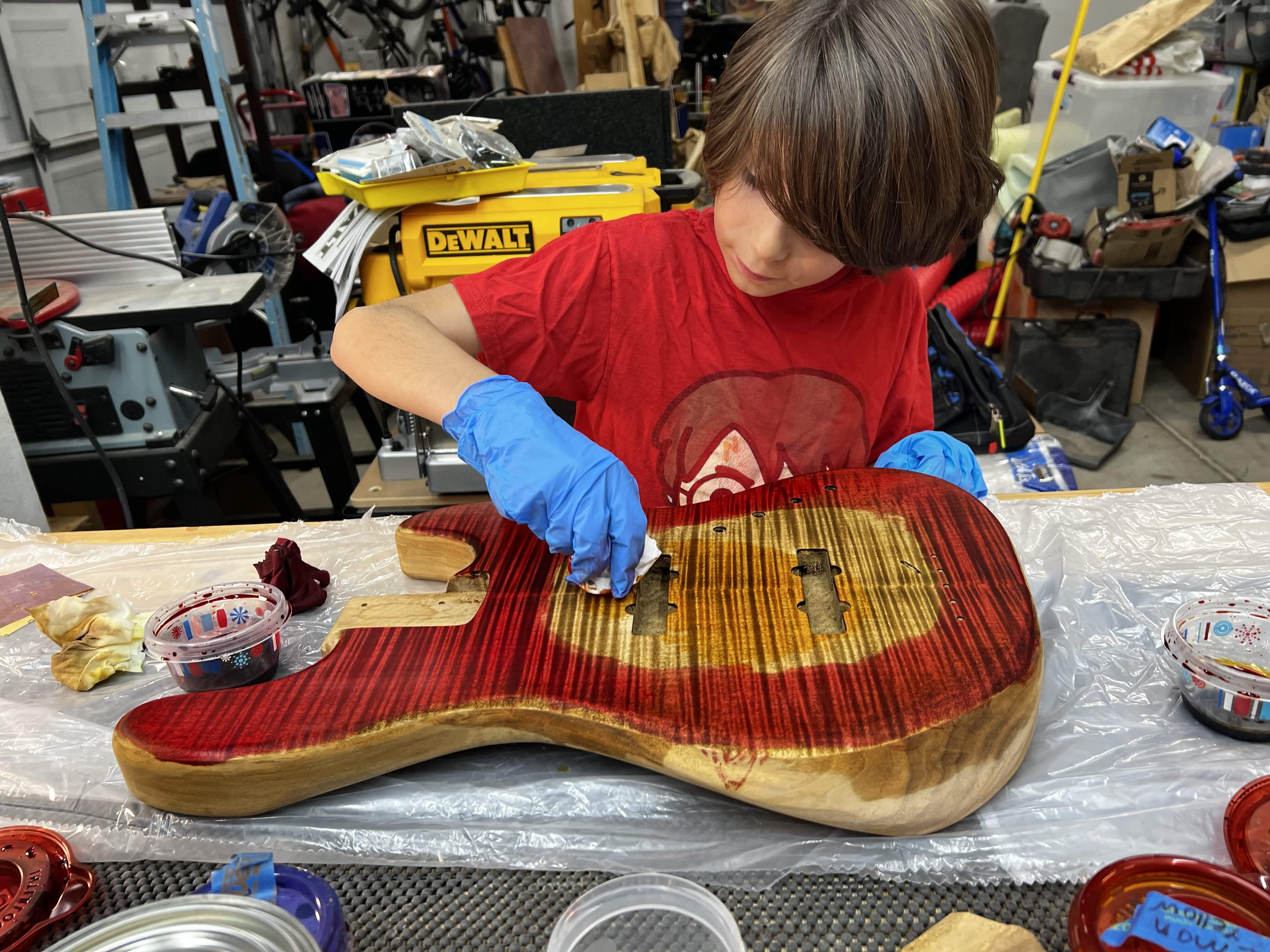
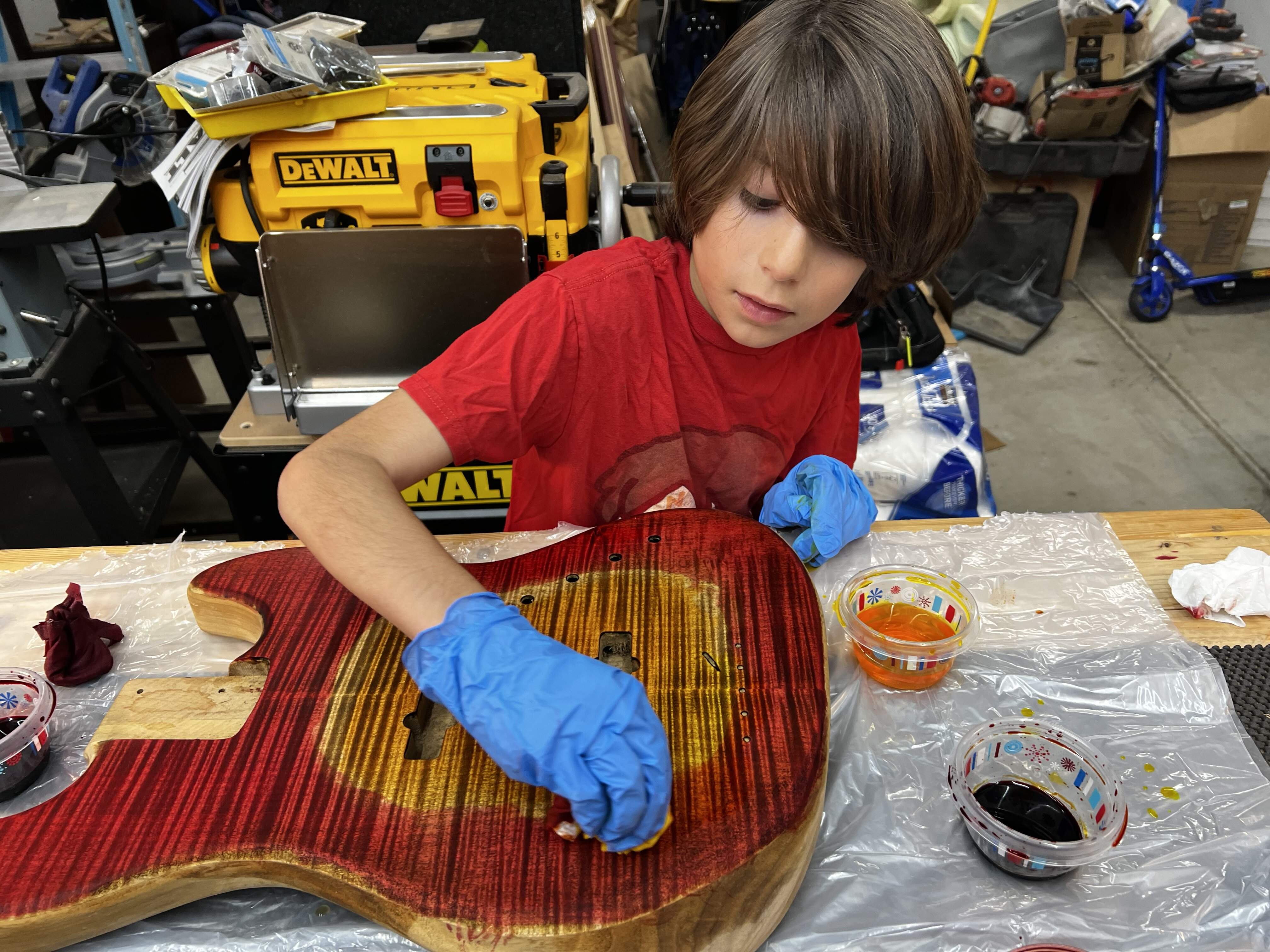
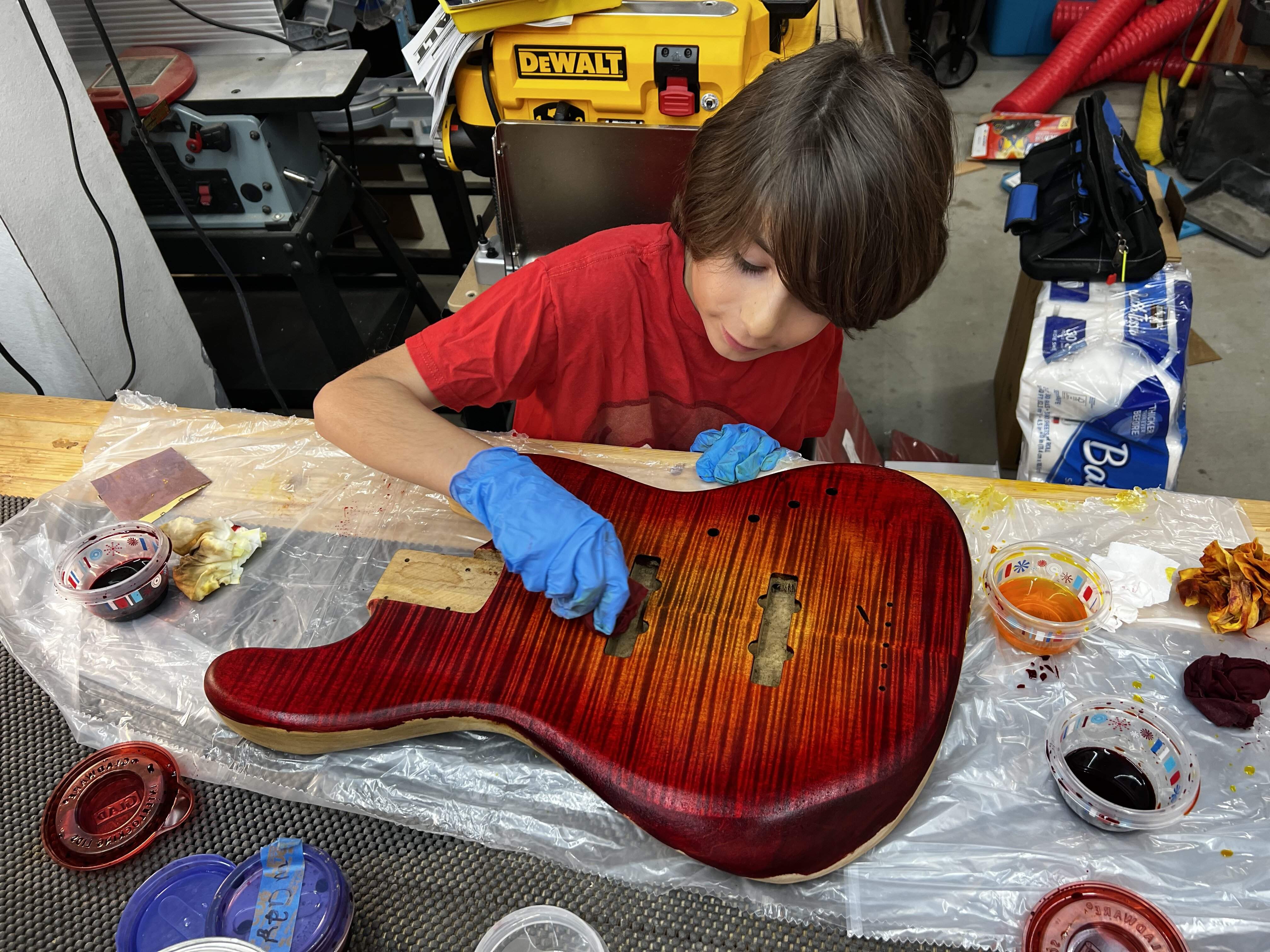
We've picked out shades we like and did some experimenting with the blend for the sunburst.
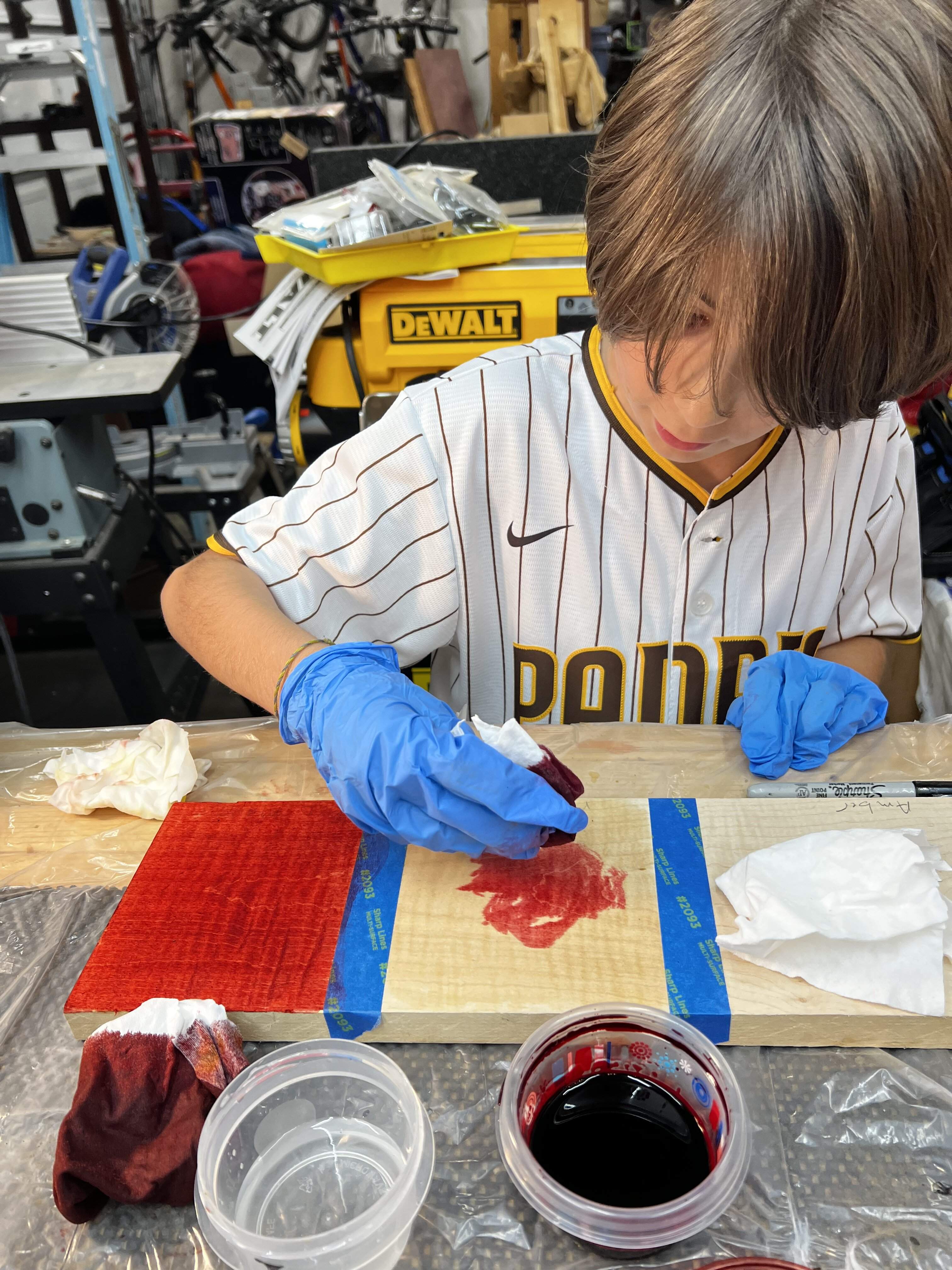
First, the entire top is wetted down to help make the dyes more workable on the surface and red is applied around the outside.

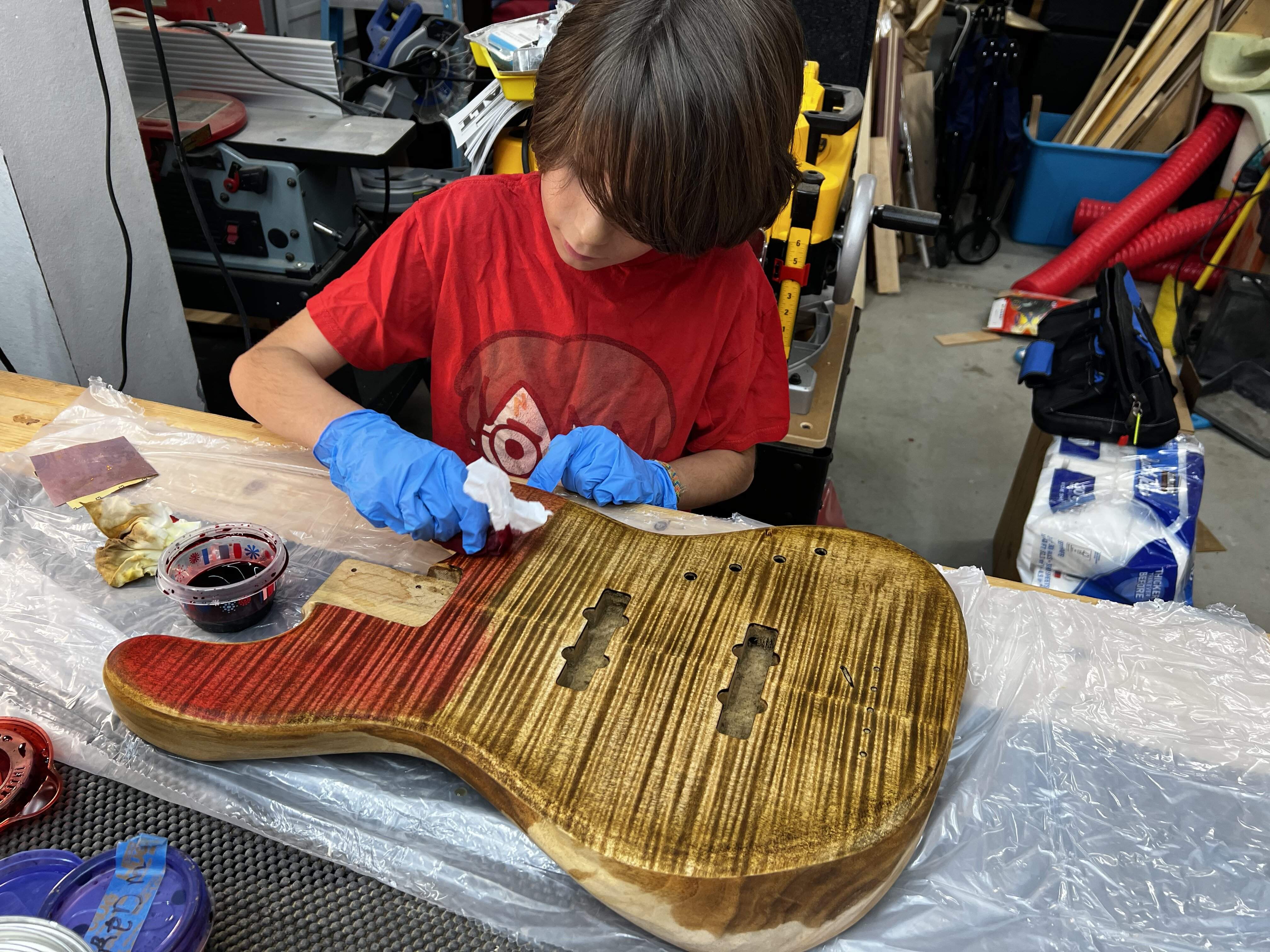
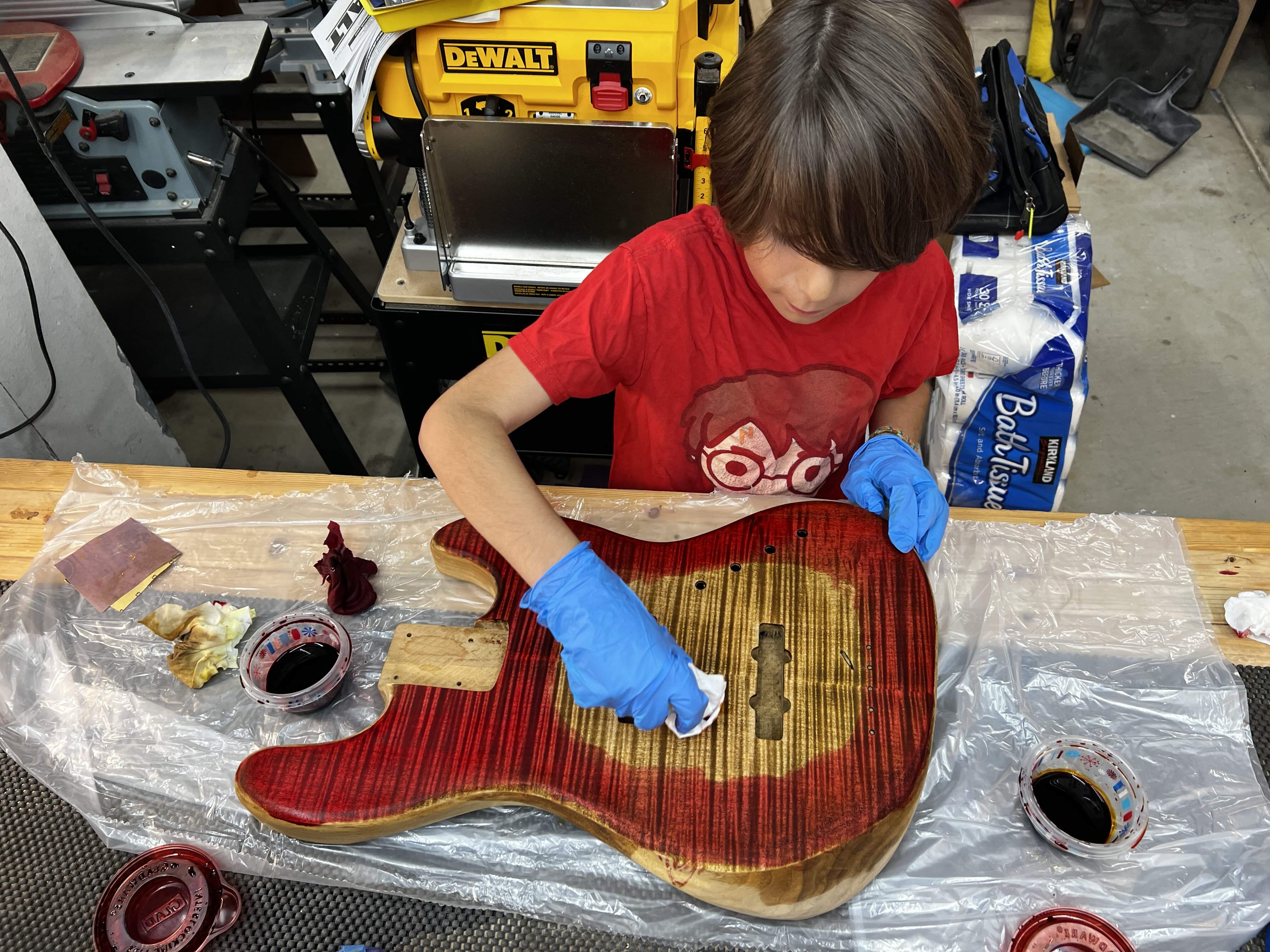
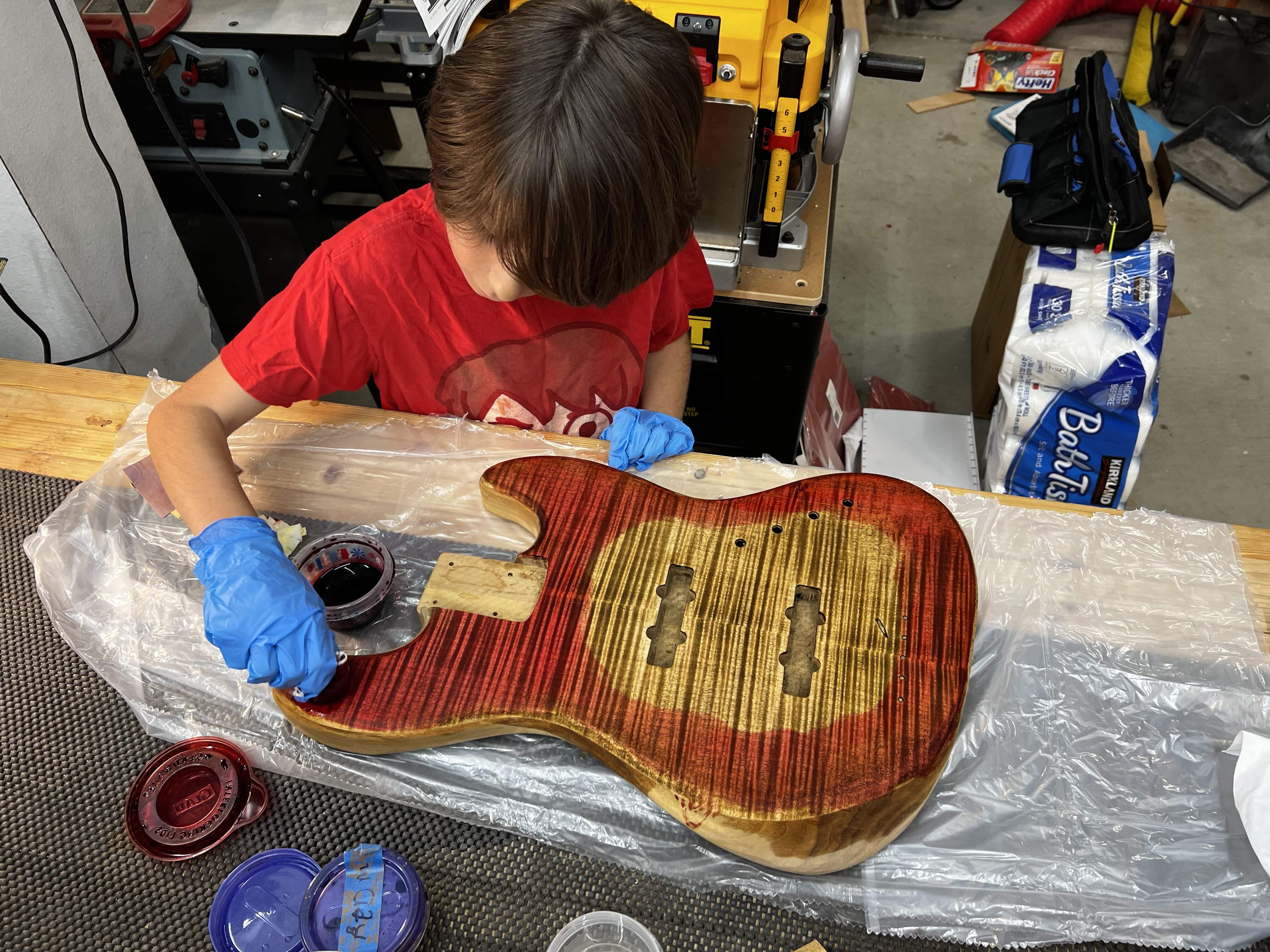
We then begin to add amber to the center, and begin vignetting the colors to a natural fiery burst.



That looks so good! I definitely need to give this technique a try!
Is the initial brown stain necessary or is it an aesthetic choice?
Is the initial brown stain necessary or is it an aesthetic choice?
That looks so good! I definitely need to give this technique a try!
Is the initial brown stain necessary or is it an aesthetic choice?
I think that's to accentuate the grain


That looks so good! I definitely need to give this technique a try!
Is the initial brown stain necessary or is it an aesthetic choice?
So a dark brown stain is the key to making the grain really come alive. You can use black too, but it tends to make yellows and oranges look kind of muddy at times. What happens is the dye absorbs deeper into the open grain, so when you do the sandback, you're left with a really nice contrast of dark and light.
If you compare the bass to the sample color board we did - you may actually see that the sample board is also flamed maple - without the dark brown application. The result is much, much more subtle. You may be going for this kind of look...but I see lots of flame maple tops that don't have this contrast and they always seem lacking somehow.
Compare our bass above to this figured maple-topped Fender and you'll see what I mean:
2004 Fender American Deluxe J-Bass V QMT 5-String Bass - Bing Cherry Transparent | Reverb
Both are red. Both are highly figured maple. I owned a bass that was identical to the one in the link above, and returned it after about five minutes because it was lacking in many ways, including the topwood finishing approach. (Notably, this particular jazz bass build is my "revenge" for that instrument!). You can see what a difference that extra step to enhance the grain really makes.
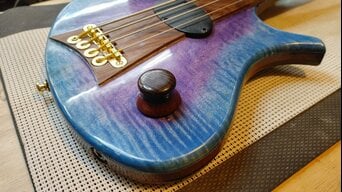
There is a downside to be aware of when you do this dark brown or black contrasting step - you lose much of the natural chatoyance of the wood when you jack the contrast because you're essentially "locking" in the grain pattern. It's a tradeoff to be aware of. On the other bass - the Tiger Twin that is featured in this build thread - I'm actually NOT going to do the dark contrast step because I don't want to compromise the natural movement found in that particular slab of tiger maple. Between the two figured maple bass bodies I'm finishing right now, it's a really good example of matching the best possible finish method to each particular instrument.
Conscripting a nine year old?!?I definitely need to give this technique a try!
Latest posts
-
 Uber Eats class action lawsuit alleges their priority delivery is a scam
- Latest: 5StringBlues
-

-

-

-
