Boss Katana 500 he likes doesn't seem to fit that
 View attachment 7516800
Maybe you can explain what this 'Cab Resonance' calibration is doing; Here is explanation by Designers at Bass Gear Review; I had powered cab that had Tech claimed to match Amp to that speakers characteristics this claims any Cab review also mentions their proprietary Class D fixes all of Class D Amps problems
From Bass Gear Mag
I had the pleasure of being in contact with the Katana designers directly, and we are lucky in that they gave me some fascinating and exclusive insights into the amp’s design to share with you! Here is some feedback directly from the “BOSS Team:”
“The impedance of a cabinet speaker is frequency-dependent. In other words, impedance changes value with frequency. This is sometimes referred to as the “impedance curve.” Typical class-D amplifiers reduce output power/wattage at frequencies with high electrical impedance.
On the other hand, traditional vacuum tube amplifiers (typically classes A, AB, and B) have been favoured for their ability to maintain a consistent power output (measured in watts/W) despite variations in electrical impedance. Furthermore, depending on the design, sound pressure can be increased at the lowest resonant frequency. However, vacuum tube amps are relatively heavy, not as portable, and often require maintenance. These problems, specifically, and others, have been solved with the Katana-500 Bass Head.
…getting the optimum sound from a head and cabinet setup requires understanding the characteristics of the many different cabinet speakers players freely choose to connect. While building a speaker cabinet fully allows you to understand its characteristics, it is time-consuming. Imagine, therefore, the value of a system that eliminates this barrier; that was the starting point for developing our Cabinet Resonance function…
…Overcoming significant challenges, a power amplifier with special electrical sensing circuitry that analyses connected speakers/cabinets was developed. This unique design allows the power amplifier to sense cabinet characteristics … while the cab is connected. Informed by our analysis results, we determined ideally how to drive the power amplifier for different cabinets. Subsequently, a new class-D power amp circuit design was developed based on feedback from professional bassists.”
TL/DR, In layman’s terms, the Katana-500’s Cabinet Resonance function optimises the interaction between amp and speaker/cabinet through a sophisticated sensing system and reactive class-D circuit. It’s designed to overcome the limitations of typical class-D amplifiers, which tend to reduce output at frequencies with high electrical impedance, causing a loss in sound pressure, particularly in the basement-dwelling frequencies.
The Cabinet Resonance function offers two selectable modes: Green and Orange. Green is tuned for a tight, fat low-end modern bass sound, while Orange produces a thicker, warmer bass tone for that vintage, laid-back feel. These modes were
developed with input from professional bassists, ensuring they’re practical for a variety of musical styles and cabinet types.
Further amplifier behaviour “modelling” comes courtesy of the Amp Feel function offering “Vintage” and “Modern” tonal flavours.
“The Katana-500 Bass Head’s reactive drive class-D circuit is unique. It differs significantly from other companies’ typical class-D designs, like popular modeller/FRFR setups or modelling combos. Those designs tend to suffer from an extremely high damping factor, resulting in excessive speaker braking. This translates as an overly harsh, tight feel for the player.”
Some class-D amplifiers can be very low, but seem to lack girth in the sound.
“Using innovative DSP and hardware design, the Katana-500 Bass Head captures a wider range of damping factor characteristics, bridging the gap between the classic feel of tube amps and the modern precision of class-D. The Amp Feel control (Modern, Vintage, or off) comes into play here, working in tandem with the Cab Resonance function to achieve a variety of sounds and responses with connected speakers. With Amp Feel off, you get a flat response, but when Cab Resonance is added (Green setting), you get a great balance between dynamics and tightness. The Modern Amp Feel option provides more pronounced tightness, especially with the Green Cab Resonance setting added. Naturally, Vintage Amp Feel mode gives a warmer response, and with the Green Cab Resonance applied is the best balance between dynamics and low-end clarity.”


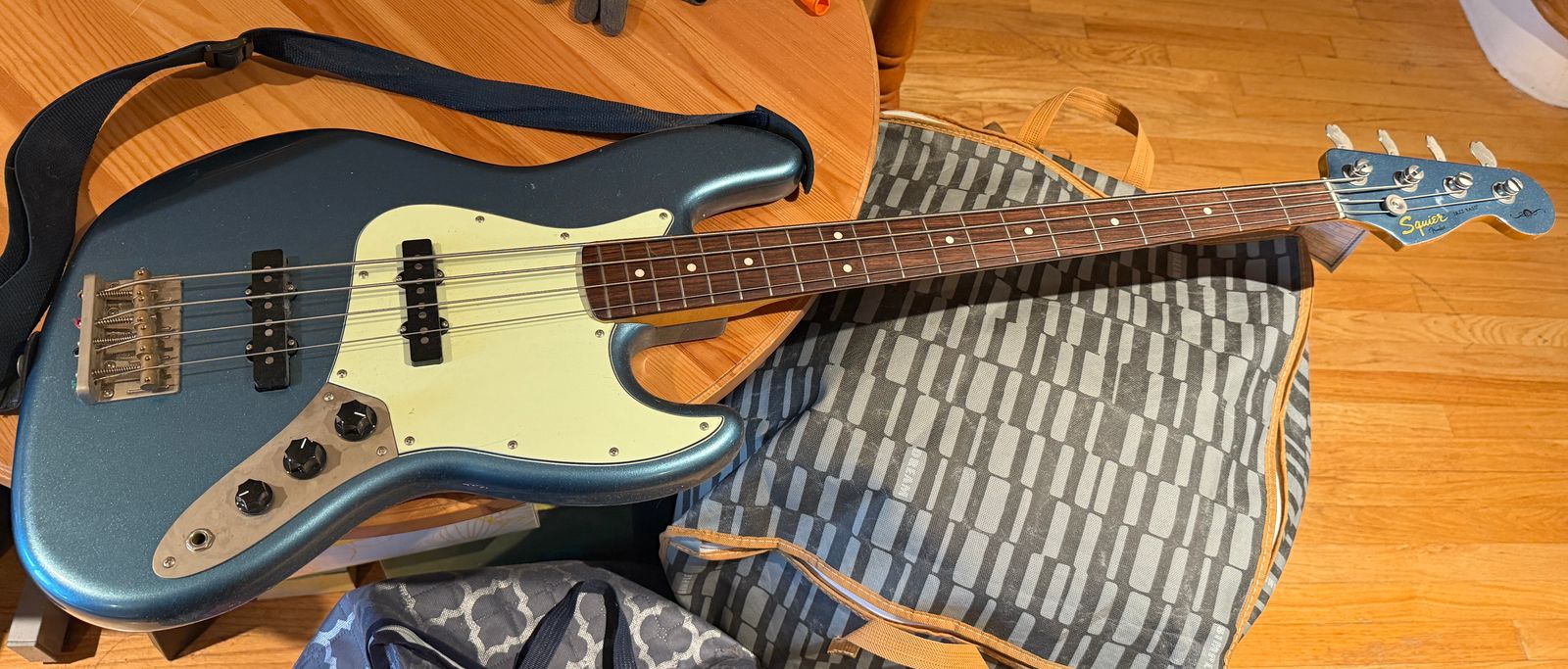

 I grabbed a pipe for leverage and prayed I wouldn't hear a crack. It did loosen though, somebody had just tightened it to an absurd degree. After that, it looks nice and straight.


