
Yeah, I wouldn't spend money to record bass I don't like.

Enjoy the benefits of a premium membership!
Upgrade Account
-
TalkBass has been independent since 1998. Add your voice.
Create a free account to reply to discussions, view embedded media, and browse with fewer display ads.
Join free Log in
Want zero display ads or expanded classifieds tools? Compare plans.
You are using an out of date browser. It may not display this or other websites correctly.
You should upgrade or use an alternative browser.
You should upgrade or use an alternative browser.
NBD: Kiesel IC5 :-(
- Thread starter Bliff Curton
- Start date
More options
Who Replied?
I owned a Carvin B4 and there wasn't anything awful about it.Carvin/Keisel has always had a talent for building really good looking instruments that, with rare exceptions, sound awful. Sorry.
The sound that I've dealt with is exceptional...and I think they are very nice looking.To me Carvin/Kiesel basses are aethetically very unpleasing. I cannot comment on their sound.

- Dec 21, 2007
- 15,222
- 45,003
- Disclosures
- Lark in the Morning Instructional Videos; Audix Microphones
I take you at your word, FWIW.More judgement of character.
Im done.
I’ll post any updates but no need to revisit this thread for me just to have people that never met me or know anything about me question my integrity.
I will leave this thread intact so other potential Kiesel buyers can be better informed.

I was going to suggest a cell phone video (everyone’s got a cell phone) but it might not have the sound quality needed.Yeah, I wouldn't spend money to record bass I don't like.
I’ve owned several Carvins and none of them sounded awful. But what do I know, I’m just a Carvin/Kiesel shill!I owned a Carvin B4 and there wasn't anything awful about it.


I have a PB4 that sounds excellent.I owned a Carvin B4 and there wasn't anything awful about it.
I also have a guitar that sounds and plays great.
Joe Walsh plays a Carvin as well as Timorhy B, Schmidt. There must be something about them.

I owned a Carvin B4 and there wasn't anything awful about it.
Splendid. You're a rarity. Exception, not the rule. Do you still own it?
I grew up only a few miles from them and got to try plenty of their instruments and amps, particularly at my first music store job, where the store had a very firm policy of not buying any Carvin gear under any circumstances. People would bring them in to try to sell or trade them. I, having been raised on a diet of their awesome catalogs, wondered what could be so terrible about these instruments that my store had a blanket policy of not buying them.
(Turns out most stores in San Diego wouldn't buy them and that is still the case today)
Well, after about trying ten or so I had my answer. They all sounded awful. Some less so than others, but to this day I still haven't heard a good one. And I know what the problem is: poor wood choices. They use very "bonky" sounding maple which is all high-mids, no openness or bottom end at all. You put that into an instrument and there's no fixing it. You can change out pickups and bridges and hardware and it won't matter a bit, because the foundation of what you want tonally isn't there. It never will be.
The OP has been led down a garden path of futile fixes by a bunch of ill-informed blundering posters blaming the pickups, the strings, the pots, the hardware, the season of the blood moon, the fret material...everything save the obvious, and the one thing no one can fix: the bass is made from crap sounding wood. The end. Sadly, no fixing that.
Not to mention the inexplicable fanboys demanding notarized proof, a trial by jury, recorded and videoed proof of the bass' tonal qualities, and other such ludicrous proofs that the instrument does, in fact suck. A loser's game, because those demanding such proof will never believe it. To the OP's credit, he's not having any of it and has left the thread.
Now, I will say this, and it's my only criticism of the OP: I am utterly mystified as to why anyone would buy anything that couldn't be returned. Hell, I buy my socks from a place with a return policy. Why on earth you would spend over two grand on an unseen, untried, unplayed instrument is beyond my comprehension. I will never understand that decision by the OP and feel really bad for him, because it has cost him money that I'm sure he can't afford and that I know I would not be able to afford. That's a hard and brutal way to learn a lesson.
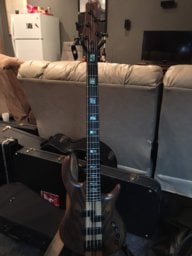
Splendid. You're a rarity. Exception, not the rule. Do you still own it?
I grew up only a few miles from them and got to try plenty of their instruments and amps, particularly at my first music store job, where the store had a very firm policy of not buying any Carvin gear under any circumstances. People would bring them in to try to sell or trade them. I, having been raised on a diet of their awesome catalogs, wondered what could be so terrible about these instruments that my store had a blanket policy of not buying them.
(Turns out most stores in San Diego wouldn't buy them and that is still the case today)
Well, after about trying ten or so I had my answer. They all sounded awful. Some less so than others, but to this day I still haven't heard a good one. And I know what the problem is: poor wood choices. They use very "bonky" sounding maple which is all high-mids, no openness or bottom end at all. You put that into an instrument and there's no fixing it. You can change out pickups and bridges and hardware and it won't matter a bit, because the foundation of what you want tonally isn't there. It never will be.
The OP has been led down a garden path of futile fixes by a bunch of ill-informed blundering posters blaming the pickups, the strings, the pots, the hardware, the season of the blood moon, the fret material...everything save the obvious, and the one thing no one can fix: the bass is made from crap sounding wood. The end. Sadly, no fixing that.
Not to mention the inexplicable fanboys demanding notarized proof, a trial by jury, recorded and videoed proof of the bass' tonal qualities, and other such ludicrous proofs that the instrument does, in fact suck. A loser's game, because those demanding such proof will never believe it. To the OP's credit, he's not having any of it and has left the thread.
Now, I will say this, and it's my only criticism of the OP: I am utterly mystified as to why anyone would buy anything that couldn't be returned. Hell, I buy my socks from a place with a return policy. Why on earth you would spend over two grand on an unseen, untried, unplayed instrument is beyond my comprehension. I will never understand that decision by the OP and feel really bad for him, because it has cost him money that I'm sure he can't afford and that I know I would not be able to afford. That's a hard and brutal way to learn a lesson.
I agree with your last paragraph. I have thought the same thing. The way I see it with sound is that it is so subjective, can there really be an answer here? Some people like them (including me and my Icon 5) and it works well as a tool that I personally need. However, they may not be for everyone, hence why i think most would never purchase a $2000 no return bass from a website. Like I said earlier, I fee bad for the OP.
Some basses don't sound great. I believe wood makes a difference. But I think it's kind of a bollocks proposition to say this particular bass which no one else has played, has crap wood. It is light weight, which we do know.Splendid. You're a rarity. Exception, not the rule. Do you still own it?
I grew up only a few miles from them and got to try plenty of their instruments and amps, particularly at my first music store job, where the store had a very firm policy of not buying any Carvin gear under any circumstances. People would bring them in to try to sell or trade them. I, having been raised on a diet of their awesome catalogs, wondered what could be so terrible about these instruments that my store had a blanket policy of not buying them.
(Turns out most stores in San Diego wouldn't buy them and that is still the case today)
Well, after about trying ten or so I had my answer. They all sounded awful. Some less so than others, but to this day I still haven't heard a good one. And I know what the problem is: poor wood choices. They use very "bonky" sounding maple which is all high-mids, no openness or bottom end at all. You put that into an instrument and there's no fixing it. You can change out pickups and bridges and hardware and it won't matter a bit, because the foundation of what you want tonally isn't there. It never will be.
The OP has been led down a garden path of futile fixes by a bunch of ill-informed blundering posters blaming the pickups, the strings, the pots, the hardware, the season of the blood moon, the fret material...everything save the obvious, and the one thing no one can fix: the bass is made from crap sounding wood. The end. Sadly, no fixing that.
Not to mention the inexplicable fanboys demanding notarized proof, a trial by jury, recorded and videoed proof of the bass' tonal qualities, and other such ludicrous proofs that the instrument does, in fact suck. A loser's game, because those demanding such proof will never believe it. To the OP's credit, he's not having any of it and has left the thread.
Now, I will say this, and it's my only criticism of the OP: I am utterly mystified as to why anyone would buy anything that couldn't be returned. Hell, I buy my socks from a place with a return policy. Why on earth you would spend over two grand on an unseen, untried, unplayed instrument is beyond my comprehension. I will never understand that decision by the OP and feel really bad for him, because it has cost him money that I'm sure he can't afford and that I know I would not be able to afford. That's a hard and brutal way to learn a lesson.
Also bollocks to claim Kiesel uses only crap wood. Kiesel has plenty of good wood. I keep up with their stuff. And while I can't claim their core woods are any better or worse than anyone else: I can say that they have some of the best figured wood I have seen. The likes of which have absolutely inspired some other brands.
And they only do two piece bodies. With the split in the center line. You can also request single piece for some bodies and tops. Such as swamp ash or flamed maple. They aren't using scrap.
I grew up only a few miles from them and got to try plenty of their instruments and amps, particularly at my first music store job, where the store had a very firm policy of not buying any Carvin gear under any circumstances. People would bring them in to try to sell or trade them. I, having been raised on a diet of their awesome catalogs, wondered what could be so terrible about these instruments that my store had a blanket policy of not buying them.
(Turns out most stores in San Diego wouldn't buy them and that is still the case today)
Well, after about trying ten or so I had my answer. They all sounded awful.
You sure that`s the reason? Years ago Bass Central used to carry them (they were listed among the brands they sell). I doubt BC would carry them if they were crap.
Splendid. You're a rarity. Exception, not the rule. Do you still own it?
I grew up only a few miles from them and got to try plenty of their instruments and amps, particularly at my first music store job, where the store had a very firm policy of not buying any Carvin gear under any circumstances. People would bring them in to try to sell or trade them. I, having been raised on a diet of their awesome catalogs, wondered what could be so terrible about these instruments that my store had a blanket policy of not buying them.
(Turns out most stores in San Diego wouldn't buy them and that is still the case today)
Well, after about trying ten or so I had my answer. They all sounded awful. Some less so than others, but to this day I still haven't heard a good one. And I know what the problem is: poor wood choices. They use very "bonky" sounding maple which is all high-mids, no openness or bottom end at all. You put that into an instrument and there's no fixing it. You can change out pickups and bridges and hardware and it won't matter a bit, because the foundation of what you want tonally isn't there. It never will be.
The OP has been led down a garden path of futile fixes by a bunch of ill-informed blundering posters blaming the pickups, the strings, the pots, the hardware, the season of the blood moon, the fret material...everything save the obvious, and the one thing no one can fix: the bass is made from crap sounding wood. The end. Sadly, no fixing that.
Not to mention the inexplicable fanboys demanding notarized proof, a trial by jury, recorded and videoed proof of the bass' tonal qualities, and other such ludicrous proofs that the instrument does, in fact suck. A loser's game, because those demanding such proof will never believe it. To the OP's credit, he's not having any of it and has left the thread.
Now, I will say this, and it's my only criticism of the OP: I am utterly mystified as to why anyone would buy anything that couldn't be returned. Hell, I buy my socks from a place with a return policy. Why on earth you would spend over two grand on an unseen, untried, unplayed instrument is beyond my comprehension. I will never understand that decision by the OP and feel really bad for him, because it has cost him money that I'm sure he can't afford and that I know I would not be able to afford. That's a hard and brutal way to learn a lesson.
I'm not trying to argue with you, since you definitely seem to have made up your mind, but this whole debate needs some sanity.
I have owned a b4 for almost 20 years. It was my first bass that was all mine. It is not awful. It has some shortcomings, like the preamp being useless to me, but it plays great, has solid workmanship, and sounds how I need it to. Objectively, it is a better bass than a lot in its price range. It doesn't have a "wow" factor, but few basses really do for me. I usually sound like me regardless of what I pick up, and I dont have much "wow" in me.
I think a lot of the reason people hate on carvin/kiesel is because they expect them to sound like a Fender, or an Ernie Ball, or whatever. They don't. They sound like what they sound like. If you don't like it, fine. But don't condemn the entire company as bad because you don't like the sound or because of a few bad product reviews.
Using the proof that certain stores in the CA area won't buy their used instruments is also an argument that doesn't really stand up. Carvin/Kiesel have always had pretty poor resale value because if you want one, you can order one the way you like for a pretty affordable price. So, being very close to the source, music stores no doubt have found it very difficult to unload used examples of their instruments.
I could be wrong. Maybe all their basses and guitars aren't worth the wood they're made of, but I tend to like them.
I think a lot of the reason people hate on carvin/kiesel is because they expect them to sound like a Fender, or an Ernie Ball, or whatever. They don't. They sound like what they sound like. If you don't like it, fine. But don't condemn the entire company as bad because you don't like the sound or because of a few bad product reviews.
Yes, Carvin doesn’t have a signature sound unlike the 2 brands you mentioned. This is neither a good nor a bad thing (Fodera doesn’t have a signature tone and they are amazing!).
Hey Mordbass, I was looking at the guitar section of the Kiesel forum and noticed this recent thread about a visit to the showroom. The OP mentions playing a Johnny Hiland model guitar with a trans white raw finish. I checked the Guitar In Stock page but it's not listed there. He also mentions a couple of other guitars, a Zeus acoustic and a red CS3M, which show up on the in stock page. The CS3M doesn't mention anything about being a demo model. Hope this helps.You raise a very interesting point... so please, correct me if I'm wrong.
Kiesel does have a showroom for those that are in the area, the in-stock basses are there, and available for play, correct?
People play them, and then can order that model with custom options for themselves?
Soooo if this bass was allegedly not returnable due to the finish... does that mean that it wasnt put out in their showroom? Because a bunch of people randomly taking it off the wall and testing it would certainly put more wear on the instrument than one owner receiving it in a case, and then testing it.
Also, do they have any distinction on their site of what is a demo model vs what is actually a brand new instrument?
Here is the thread: Invalid Link Removed
Last edited:

Splendid. You're a rarity. Exception, not the rule. Do you still own it?
I grew up only a few miles from them and got to try plenty of their instruments and amps, particularly at my first music store job, where the store had a very firm policy of not buying any Carvin gear under any circumstances. People would bring them in to try to sell or trade them. I, having been raised on a diet of their awesome catalogs, wondered what could be so terrible about these instruments that my store had a blanket policy of not buying them.
(Turns out most stores in San Diego wouldn't buy them and that is still the case today)
Well, after about trying ten or so I had my answer. They all sounded awful. Some less so than others, but to this day I still haven't heard a good one. And I know what the problem is: poor wood choices. They use very "bonky" sounding maple which is all high-mids, no openness or bottom end at all. You put that into an instrument and there's no fixing it. You can change out pickups and bridges and hardware and it won't matter a bit, because the foundation of what you want tonally isn't there. It never will be.
The OP has been led down a garden path of futile fixes by a bunch of ill-informed blundering posters blaming the pickups, the strings, the pots, the hardware, the season of the blood moon, the fret material...everything save the obvious, and the one thing no one can fix: the bass is made from crap sounding wood. The end. Sadly, no fixing that.
Not to mention the inexplicable fanboys demanding notarized proof, a trial by jury, recorded and videoed proof of the bass' tonal qualities, and other such ludicrous proofs that the instrument does, in fact suck. A loser's game, because those demanding such proof will never believe it. To the OP's credit, he's not having any of it and has left the thread.
Now, I will say this, and it's my only criticism of the OP: I am utterly mystified as to why anyone would buy anything that couldn't be returned. Hell, I buy my socks from a place with a return policy. Why on earth you would spend over two grand on an unseen, untried, unplayed instrument is beyond my comprehension. I will never understand that decision by the OP and feel really bad for him, because it has cost him money that I'm sure he can't afford and that I know I would not be able to afford. That's a hard and brutal way to learn a lesson.
To start, I am an "inexplicable" Carvin fanboy. I've not tried a Kiesel. They are out of my price range for spending on any instrument now at this point in life. I own five Carvins. I got the first one in 1996. I dont know when you worked at the store that wouldnt accept any Carvin instruments, but for most of the time, actually, probably all of the time that I've been buying their guitars and basses, maple was not a wood choice for a body. Top wood, yes. Body wood, not. Default body wood now is alder. On the Icon series, alder is the default choice. In the 70s and part of the 80s, maple was the main body wood. At the very least, the bass in question in all likelyhood isnt constructed of maple. If it was, then it would probably be an option 50 order, also not returnable. So that alone settles your "crappy tone wood" argument then and there.
Hate on Kiesel all you want. Its ok. I feel for the original poster since he is unhappy with his purchase. Not because it's a Carvin/Kiesel and I happen to love their stuff. If it was an Ibanez, whose basses I hate personally, I would still hate it for him. You spend money on a bass, you want a bass that you love. Two grand or two bucks.
I do however agree with the last paragraph of you post. Although if he was offered warranty service, he should take advantage of it.
But the first line in your post...I'm still snickering at that.
BnB
I wouldn't buy a non-returnable bass from Kiesel, why would I buy one from the OP that would be out of warranty as well?Maybe one of these Kiesel Fan Boys will buy the bass from Bliff with a no return policy?
You sure that`s the reason? Years ago Bass Central used to carry them (they were listed among the brands they sell). I doubt BC would carry them if they were crap.
I know this is older than dirt, but, I want to be clear. I dont feel Kiesel has anything to apologize for regarding the bass sale. I agree with you completely. It's clear he doesn't like the sound. No one else can hear it, so all we have is the OP's word. I said he is owed an apology for being hung up on, IF he was hung up on. Thus the reason I would like to hear Carvins side. The more I read in this thread, the more I understand why he was hung up on. He sounds like any other person pissed off about something they bought and they feel it should feel different, sound different, taste, etc. I spoke in haste. I like my Carvin. I like my SS frets. I even like the pickups and POTs. I guess I must be one of ignorant shills. Oh well, I happy!Well so far, I'm not sure what Keisel needs to explain.
They sold a non returnable bass to someone. It was on the website, and the buyer acknowledged that it was not returnable or refundable before the ourchase.
Buyer doesn't like the bass for whatever reason, writes an email and calls asking to return a bass and get a refund.
Keisel restates their no return no refund policy that the buyer agreed to before purchase, but will take the bass back for warranty work for the next 5 years, per the terms agreed to before purchase.
Buyer writes another email direct to the owner of the company threatening to reverse payment with his credit card company if no refund is given (I'm assuming refund is the only resolution, because the sales manager offered to take the bass and make repairs covered by warranty work, and the buyer was not satisfied.).
The return email again restates the no refund no return policy that the buyer agreed to, and again offered warranty work for 5 years.
Meanwhile,
Folks in an internet thread, including a few who have a dislike for Carvin as a whole, agree that a bass that they've never heard or played is defective on the whole, and demand the company refund the purchase price of the bass.
In fact, 3 or 4 decide they will never purchase a Carvin bass because they will not refund a bass that was sold as non refundable.
1 guy even feels he is owed an apology because some other guy got hung up on.
To be clear, if someone from Keisel were to read this thread (and it was suggested that they had already done so, and we're unaccommodating as a result, even though the person had not even read the 1st email of complaint until on the phone with the buyer) here is what they would find:
Suggestions that Keisel only do direct sales because they know they have inferior product.
In stock instruments listed as non returnable are knowingly defective.
Accused of "questionable integrity" for unspecified "business practices."
And my personal favorite
Step by step advice about how to defraud the credit card company and keisel, by lying about what was said during a phone conversation, despite having emails and sales receipts to the contrary.
Keisel is doing what they said they would do.
PS: I'm probably gonna guy a few more Carvins before i die!
I find it interesting, yet also sad, to see how the Kiesel shills alter the narrative of this thread to be “its just that ge doesn't like the sound.”
If that were true, I wouldn not have made this thread and I would be able to fix the problem with a simple pickup swap.
I guess the tendonitis in my wrist and elbow from this bass are from the sound and not the horrible ergonomics.
I guess the sound of the bass is who hung up on me when I called customer service.
I guess the sound is what keeps this bass from achieving 2mm action without buzz.
Or maybe shills can’t read and just junp to a conclussion after scanning a few sentences.
Arbiterusa touches on an excellent point of bad construction materials that Kiesel selects. They sure look pretty, but the sound like crap.
As to everyone critisizing me for purchasing a no-return intrument....Kiesel does have a guarantee of quality and this is where the issue lies.
If that were true, I wouldn not have made this thread and I would be able to fix the problem with a simple pickup swap.
I guess the tendonitis in my wrist and elbow from this bass are from the sound and not the horrible ergonomics.
I guess the sound of the bass is who hung up on me when I called customer service.
I guess the sound is what keeps this bass from achieving 2mm action without buzz.
Or maybe shills can’t read and just junp to a conclussion after scanning a few sentences.
Arbiterusa touches on an excellent point of bad construction materials that Kiesel selects. They sure look pretty, but the sound like crap.
I grew up only a few miles from them and got to try plenty of their instruments and amps, particularly at my first music store job, where the store had a very firm policy of not buying any Carvin gear under any circumstances. People would bring them in to try to sell or trade them. I, having been raised on a diet of their awesome catalogs, wondered what could be so terrible about these instruments that my store had a blanket policy of not buying them.
(Turns out most stores in San Diego wouldn't buy them and that is still the case today)
Well, after about trying ten or so I had my answer. They all sounded awful. Some less so than others, but to this day I still haven't heard a good one. And I know what the problem is: poor wood choices. They use very "bonky" sounding maple which is all high-mids, no openness or bottom end at all. You put that into an instrument and there's no fixing it. You can change out pickups and bridges and hardware and it won't matter a bit, because the foundation of what you want tonally isn't there. It never will be.
The OP has been led down a garden path of futile fixes by a bunch of ill-informed blundering posters blaming the pickups, the strings, the pots, the hardware, the season of the blood moon, the fret material...everything save the obvious, and the one thing no one can fix: the bass is made from crap sounding wood. The end. Sadly, no fixing that.
Not to mention the inexplicable fanboys demanding notarized proof, a trial by jury, recorded and videoed proof of the bass' tonal qualities, and other such ludicrous proofs that the instrument does, in fact suck. A loser's game, because those demanding such proof will never believe it. To the OP's credit, he's not having any of it and has left the thread.
Now, I will say this, and it's my only criticism of the OP: I am utterly mystified as to why anyone would buy anything that couldn't be returned. Hell, I buy my socks from a place with a return policy. Why on earth you would spend over two grand on an unseen, untried, unplayed instrument is beyond my comprehension. I will never understand that decision by the OP and feel really bad for him, because it has cost him money that I'm sure he can't afford and that I know I would not be able to afford. That's a hard and brutal way to learn a lesson.
As to everyone critisizing me for purchasing a no-return intrument....Kiesel does have a guarantee of quality and this is where the issue lies.
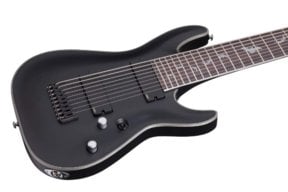
As to everyone critisizing me for purchasing a no-return intrument....Kiesel does have a guarantee of quality and this is where the issue lies.
I found it interesting that everyone forgot about this. You would expect that if they're selling a bass with a no-return policy, that it would not have any problems.
Anyway, a pickup and/or preamp swap is the solution.


