
In my mind, neck dive is a non-starter. If the bass doesn't sit at 45-degree angle on a strap without me touching it, then I don't want it.

TalkBass has been independent since 1998. Add your voice.
Create a free account to reply to discussions, view embedded media, and browse with fewer display ads.
Join free Log in
Want zero display ads or expanded classifieds tools? Compare plans.
Where is the center of gravity supposed to be? How do we test whether the bass is balanced

Like flats on a Precision Bass, it’s a TB thing.My assertion is there are far too many neck heavy basses that manufacturers put out for sale. As such, it's a blatant rip-off that takes our money for a badly designed instrument.
I'm sure there are clever engineers/designers working for manufacturers that can solve this issue before finalizing production runs. But it seems some bass makers don't care enough to do so.
I've had enough of this garbage. Recently passed up two new (not used) basses in a music store I would've liked. Settled on a third choice that wasn't neck heavy.
Anyway, to support my assertion, I need numbers as to how many of you do or don't like neck heavy basses.
I'll be pegging on neck heavy manufacturers as I find them and will need numbers as support if the numbers are overwhelmingly "don't like neck dive".
I'm aware of the multitude of workarounds suggested in this forum, and web, to correct neck dive. No need to repeat them here. My entire point is we shouldn't have to be working around and settling for deficient products that are new from the manufacturers.

Good. More Thunderbirds for the rest of us.This is one reason why I don't like Gibson Thunderbirds, Epiphone EB-3s, and similar basses.


How is it a "rip-off?" No one is forcing you to buy an instrument that you find uncomfortable.My assertion is there are far too many neck heavy basses that manufacturers put out for sale. As such, it's a blatant rip-off that takes our money for a badly designed instrument.
While your dislike of neck dive makes sense, keep in mind that engineering is all about trade-offs.I'm sure there are clever engineers/designers working for manufacturers that can solve this issue before finalizing production runs. But it seems some bass makers don't care enough to do so.

Uhhh.... Yeah, that's kind of how consumerism works.Recently passed up two new (not used) basses in a music store I would've liked. Settled on a third choice that wasn't neck heavy.

Uhhhh.... Wha?Anyway, to support my assertion, I need numbers as to how many of you do or don't like neck heavy basses.
I'll be pegging on neck heavy manufacturers as I find them and will need numbers as support if the numbers are overwhelmingly "don't like neck dive".


My assertion is there are far too many neck heavy basses that manufacturers put out for sale. As such, it's a blatant rip-off that takes our money for a badly designed instrument.
I'm sure there are clever engineers/designers working for manufacturers that can solve this issue before finalizing production runs. But it seems some bass makers don't care enough to do so.
I've had enough of this garbage. Recently passed up two new (not used) basses in a music store I would've liked. Settled on a third choice that wasn't neck heavy.
Anyway, to support my assertion, I need numbers as to how many of you do or don't like neck heavy basses.
I'll be pegging on neck heavy manufacturers as I find them and will need numbers as support if the numbers are overwhelmingly "don't like neck dive".
I'm aware of the multitude of workarounds suggested in this forum, and web, to correct neck dive. No need to repeat them here. My entire point is we shouldn't have to be working around and settling for deficient products that are new from the manufacturers.
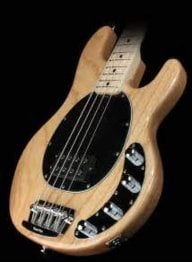



A balanced bass has its center of gravity midway between the strap attachment points. You can tolerate some shift left or right, assuming some friction in the strap. I designed products for a living, and I could set rational criteria for how much tolerance to allow within a day’s experiments if that were my job. This is very basic stuff.
Cars don't tip over as often as they did decades ago, because designers have criteria set for the location of the center of gravity of a product made up of a couple thousand parts - they can calculate if it's OK before they build a single prototype. Here we have a dozen or so parts to consider - this is not difficult stuff.
Since I'm a "booty bass player" (mostly play sitting down), neck dive is not any issue. I actually have only one bass out of many with neck dive. A Jack Casady Epiphone and it's not bad.
Booty Bass

In my mind, neck dive is a non-starter. If the bass doesn't sit at 45-degree angle on a strap without me touching it, then I don't want it.


Wow that’s pretty surprising, considering how ergonomic and playable Roscoes are.. guess that goes to show you that it really is a balancing act.
Lots of them. But the variable is the player. Because we are all shaped different, use different straps and hang the bass at different heights, they will balance differently on different people.How many do this? I’ve never had the experience of the thing just taking a walk on its own after I’ve put it on my shoulder.
So, I also had an SKB that was a great bass but let it go for neck dive. Ironically, I have a Century 5 that should be arriving today, so I am hopeful that you are correct.My theory is that the SKB body has a shorter upper horn. I probably wouldn’t have had problems with their Century body style.


Ever played a Warwick Thumb?Can you reveal what you bought, or do you feel it would sway your poll? I've been playing for 50+ years and I have owned and played dozens of basses and just never experienced neck dive so bad that I couldn't play the instrument.




