
Enjoy the benefits of a premium membership!
Upgrade Account
-
TalkBass has been independent since 1998. Add your voice.
Create a free account to reply to discussions, view embedded media, and browse with fewer display ads.
Join free Log in
Want zero display ads or expanded classifieds tools? Compare plans.
You are using an out of date browser. It may not display this or other websites correctly.
You should upgrade or use an alternative browser.
You should upgrade or use an alternative browser.
Squier Vintage Modified Precision V: who's got one?
- Thread starter Chef
- Start date
More options
Who Replied?

You have to shim the peg holes to make the Ultralites fit. After using aluminum cut from soda cans, the net difference was 6 oz.9 lbs 2 ozs, the lighter tuners reduce 7 ozs? So it would be 8 lbs 11 ozs after?
It improves the balance, as well as shaving some weight off.
If you're really obsessive about weight, you need to ditch yours, then watch Sweetwater for a really light one. Mine was 8 lb 12 oz before I did the pegs, bringing it down to 8 lb 6 oz.
I think the lightest one I saw on SW was something like 8 lb 4 oz. That would put you into a sub-8 lb bass after swapping the pegs...
You could also consider chambering the body of your existing one. But because lumber is so much lighter than metal, you would have to remove a LOT of material to get a significant weight loss.

Doug Parent
Supporting Member
If anyone is gun-shy about Scotchbriting the back of the neck to de-gloss it: don't be. Couldn't have been easier, just go slow and check it after a few passes.
Thats what she said.
I think low tens is the highest weight reported so far.Is there anyone yet with a >11lb vmp5? We finally got one into the shop, fantastic neck, but the body was waaay too light for it- dive city!
The '64 P-bass I bought in college neck-dived, unless it was on a wide, grippy strap. That's what P-basses do, and turning one into a 5-string by widening the neck and adding another tuner isn't likely to help...
Thus, the interest in lighter tuners. My Oly white is under 9 lb, but once I put the Ultralites on it, it balanced nearly perfectly. After installing a recessed Dunlop Straplok on the back of the body a la Dingwall, it now hangs slightly head-up, with no dive at all.
Here's an old post from the neck dive thread that shows how I found the right placement for the rear straplok:
"Unless you've got a slab-body bass with no forearm cut, you probably can't bring the strap button far enough around the lower bout to get the degree of shift you need. Even then, the strap button needs to be close to vertical, or the strap will simply pull off. It's also important that the new strap placement doesn't interfere with your arm.
Given those factors, you're far more likely to get what you need by using a rear-mounted flush Dunlop Straplok.
Using my Dingwall for a reference as to where to relocate the strap button on some other bass, is going to be useless. The ABZ has a short, light headstock, the body is scooped out at the butt end of the body, the scale is normal on one side and 3" oversize on the other, and the bridge is slanted...
The best thing to do, is try some balance experiments on your own basses, to determine the best placement.
The simplest method I've come up with, is to extend the back end of a strap by tying a shoelace through the hole at the end, dropping it down behind the back of the instrument, and then bringing it forward and upward so you can loop the lace around a volume or tone control, a 1/4" plug inserted in the output jack, or even a piece of bridge hardware.
With the lace looped over a suitable hang point, the weight of the bass will hang off that point as if it were suspended by a strap button somewhere on the back of the body.
Here's a test-fit session on my Squier P5:


Obviously, you want to be cautious. This is not the time to start jumping around like a jack-in-the-box, and I wouldn't do this over a hard concrete floor...
If the bass is still neck-diving, move the lace forward to the next hang point. If the headstock is trying to rise, then move the lace back to a hang point closer to the bridge.
On a P-bass, you have 3 immediately obvious balance points- Volume, Tone, and a cord stuck in the output jack. If you have an active bass, that's a bonus because you could have as many as 5 or 6 test points to hang your bass.
Once you've adjusted the lace and strap to your liking and the instrument is hanging at a suitable angle, you can mark the back of the bass anywhere along a line that the strap passes over. This will become your drilling point. I would recommend placing the hole just a little to the bass side of the center line of the instrument.
Here's a picture of my Dingwall, showing the geometry of Sheldon's Straplok placement:

Another couple of cautions:
1. The bass needs to be suitably supported while you're drilling the hole, preferably using a drill press to get good vertical alignment. Use a drill stop, to make sure that you don't drill unnecessarily deep.
2. You don't want to drill down into anything expensive inside your bass. Especially on a twin-pickup instrument, you need to be careful to avoid the wiring harness, pickups, bridge hardware, etc...
If you're not good with power tools, be SURE to farm this job out to a pro."
"Unless you've got a slab-body bass with no forearm cut, you probably can't bring the strap button far enough around the lower bout to get the degree of shift you need. Even then, the strap button needs to be close to vertical, or the strap will simply pull off. It's also important that the new strap placement doesn't interfere with your arm.
Given those factors, you're far more likely to get what you need by using a rear-mounted flush Dunlop Straplok.
Using my Dingwall for a reference as to where to relocate the strap button on some other bass, is going to be useless. The ABZ has a short, light headstock, the body is scooped out at the butt end of the body, the scale is normal on one side and 3" oversize on the other, and the bridge is slanted...
The best thing to do, is try some balance experiments on your own basses, to determine the best placement.
The simplest method I've come up with, is to extend the back end of a strap by tying a shoelace through the hole at the end, dropping it down behind the back of the instrument, and then bringing it forward and upward so you can loop the lace around a volume or tone control, a 1/4" plug inserted in the output jack, or even a piece of bridge hardware.
With the lace looped over a suitable hang point, the weight of the bass will hang off that point as if it were suspended by a strap button somewhere on the back of the body.
Here's a test-fit session on my Squier P5:
Obviously, you want to be cautious. This is not the time to start jumping around like a jack-in-the-box, and I wouldn't do this over a hard concrete floor...
If the bass is still neck-diving, move the lace forward to the next hang point. If the headstock is trying to rise, then move the lace back to a hang point closer to the bridge.
On a P-bass, you have 3 immediately obvious balance points- Volume, Tone, and a cord stuck in the output jack. If you have an active bass, that's a bonus because you could have as many as 5 or 6 test points to hang your bass.
Once you've adjusted the lace and strap to your liking and the instrument is hanging at a suitable angle, you can mark the back of the bass anywhere along a line that the strap passes over. This will become your drilling point. I would recommend placing the hole just a little to the bass side of the center line of the instrument.
Here's a picture of my Dingwall, showing the geometry of Sheldon's Straplok placement:
Another couple of cautions:
1. The bass needs to be suitably supported while you're drilling the hole, preferably using a drill press to get good vertical alignment. Use a drill stop, to make sure that you don't drill unnecessarily deep.
2. You don't want to drill down into anything expensive inside your bass. Especially on a twin-pickup instrument, you need to be careful to avoid the wiring harness, pickups, bridge hardware, etc...
If you're not good with power tools, be SURE to farm this job out to a pro."
Last edited:

And another that shows how it affects the hanging balance:
It's definitely worth it. It's not just about releasing your fretting hand from the job of holding the neck up- even if you balance things out by using a grippy strap, there's still a force constantly pulling at your neck and shoulder.
Dingwall recently started offering a fix that I'm planning to implement on my other basses. Very simple, and one $14 pair of Dunlop flush-mount straploks will take care of two basses.
Make sure that you give Sheldon the credit!
Here's a repost from another thread:
"Recently got a lightweight bass that balances perfectly and has strap buttons placed so that it can hang securely at about a 40-45 degree angle.
This allows the bridge end of the bass to ride lower (looks cooler than wearing my bass like a necktie, also uncranks my wrist on the plucking side), pulls the headstock in closer to my body (reduces stress on my neck and shoulder, lets me play a bass with a longer, better-sounding bottom string), and keeps the headstock high (reduces stress on my fingering hand).
I've gone from having chronic back and shoulder pain on longer gigs to having none, overnight. Without buying weird-looking, expensive specialty straps."

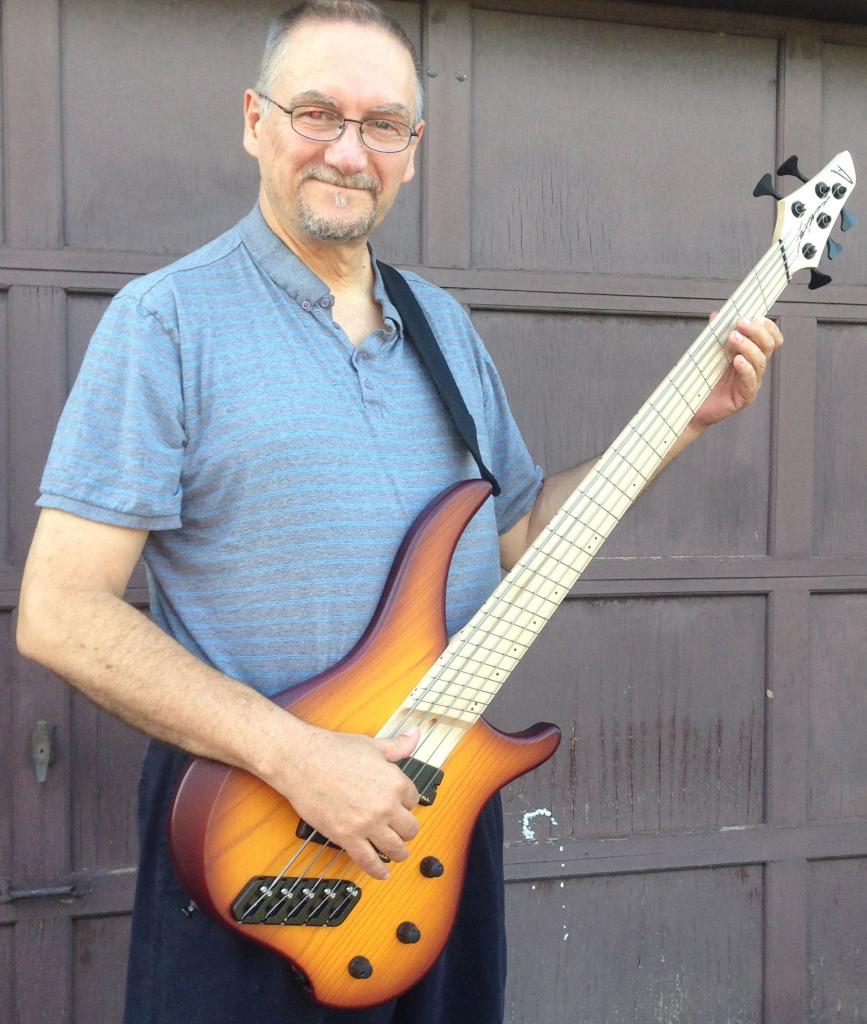
It's definitely worth it. It's not just about releasing your fretting hand from the job of holding the neck up- even if you balance things out by using a grippy strap, there's still a force constantly pulling at your neck and shoulder.
Dingwall recently started offering a fix that I'm planning to implement on my other basses. Very simple, and one $14 pair of Dunlop flush-mount straploks will take care of two basses.
Make sure that you give Sheldon the credit!
Here's a repost from another thread:
"Recently got a lightweight bass that balances perfectly and has strap buttons placed so that it can hang securely at about a 40-45 degree angle.
This allows the bridge end of the bass to ride lower (looks cooler than wearing my bass like a necktie, also uncranks my wrist on the plucking side), pulls the headstock in closer to my body (reduces stress on my neck and shoulder, lets me play a bass with a longer, better-sounding bottom string), and keeps the headstock high (reduces stress on my fingering hand).
I've gone from having chronic back and shoulder pain on longer gigs to having none, overnight. Without buying weird-looking, expensive specialty straps."
Jeez, I did that to a number of kramers and charvels way back when and considered it butchering them.. my first fender didn't need that at all. This one is stupid light and might be worth button relocation as my back won't always be able to so gladly handle a heavy bass. [Chin scratching]
The effects of advancing age...
I played a self-made singlecut for nearly 20 years. It was all rock maple, bubinga and ebony, and started out weighing nearly 13 lb.
By the time I had to retire it, I had shaved it down to 9lb 11 oz, but it was still causing shoulder and back pain on long gigs.
With the Squier and Dingwall both in the low 8's, I am able to do a 4 hour gig without pain again.
I played a self-made singlecut for nearly 20 years. It was all rock maple, bubinga and ebony, and started out weighing nearly 13 lb.
By the time I had to retire it, I had shaved it down to 9lb 11 oz, but it was still causing shoulder and back pain on long gigs.
With the Squier and Dingwall both in the low 8's, I am able to do a 4 hour gig without pain again.

I wonder how much difference 6 ozs or so would make at the bottom end of the scale? I know my body lets me know quickly when a bass is over 9.4 lbs. My P5 is 9 lbs 4 ozs, VMP5 is 9 lbs 2 ozs, and the Zon is 8 lbs 14 ozs. I don't feel much difference between them. What if we're talking say 8 lbs 2 ozs vs 8 lbs 8 ozs? Would they both feel much lighter (and easier on my bad back), or would the heavier still bother during long practices? Its easier to find 8.5 lbs than 8.125 lbs.

...I actually got more mileage out of thinning the poly finish on the back of the neck by about 50%, and switching to the 5-string D'Addario Balanced Tension sets that one of the string vendors offers (Bass Strings Online?).
Sanding the back of the neck made it a little more resonant, and sound less congested. The BT string sets served to even out the response, particularly in the low end. I ended up preferring the lighter gauge set, which is unusual for me.
I suppose that's just another indication that the Squier benefits from a little fine tuning. It makes sense that a $300 instrument made with less dense tonewoods is going to resonate a little differently than an AM Std with alder or ash, real North American rock maple, carbon fiber neck inserts, etc...
Steve, are you using the super light set (.40, .55, .70, .95) Plus a .125?
I got my sets from Bass Strings Online, back when they had 5-string sets listed as a package deal. Like so:
DADDARIO_EXL220BT_XLB130 D'Addario XL NICKEL ROUND WOUND - 5-String Balanced Tension Set
Type: Light 33lbs - .040 .055 .070 .095 .130
DADDARIO_EXL170BT_XLB145 D'Addario XL NICKEL ROUND WOUND - 5-String Balanced Tension Set
Type: Medium 42lbs - .045 .060 .080 .107 .145
They also offer the EXL160's, which have a 0.50 G string and a 0.160 B string. I would worry about the overall string tension with 50-160's on the Squire...
I believe that they have made changes to the website, and now you have to manually order the separate B string.
In the past, I have always preferred heavier gauges with a very low action on 34" Fenders. I used to use 0.50's on my '64 P-bass.
For whatever reason, I prefer the sound and feel of the 0.40 - .130 set with a medium-low action on the Squier. I found the 45-145's too thumpy.
DADDARIO_EXL220BT_XLB130 D'Addario XL NICKEL ROUND WOUND - 5-String Balanced Tension Set
Type: Light 33lbs - .040 .055 .070 .095 .130
DADDARIO_EXL170BT_XLB145 D'Addario XL NICKEL ROUND WOUND - 5-String Balanced Tension Set
Type: Medium 42lbs - .045 .060 .080 .107 .145
They also offer the EXL160's, which have a 0.50 G string and a 0.160 B string. I would worry about the overall string tension with 50-160's on the Squire...
I believe that they have made changes to the website, and now you have to manually order the separate B string.
In the past, I have always preferred heavier gauges with a very low action on 34" Fenders. I used to use 0.50's on my '64 P-bass.
For whatever reason, I prefer the sound and feel of the 0.40 - .130 set with a medium-low action on the Squier. I found the 45-145's too thumpy.

Im late to the game, but I picked up one of these today in phoenix. Im doing a motown/funk type thing, so hopefully it will work for that. Tested it through a fender rumble they had at the store, but I know it will sound different through my own stuff. For a 5 string p, the price is worth the gamble.
first P bass and first 5 string. Should be fun.
mine is pretty light compared to a MM jazz boat anchor and the 70's style parts bass anchor. the B sounds ok so far, but im not a connoisseur. I just love to play.
sunburst/tort. Not my thing but the frets seemed better over the oly white one they had. Was a good day. Now to work...
first P bass and first 5 string. Should be fun.
mine is pretty light compared to a MM jazz boat anchor and the 70's style parts bass anchor. the B sounds ok so far, but im not a connoisseur. I just love to play.
sunburst/tort. Not my thing but the frets seemed better over the oly white one they had. Was a good day. Now to work...
I got my sets from Bass Strings Online, back when they had 5-string sets listed as a package deal. Like so:
DADDARIO_EXL220BT_XLB130 D'Addario XL NICKEL ROUND WOUND - 5-String Balanced Tension Set
Type: Light 33lbs - .040 .055 .070 .095 .130
DADDARIO_EXL170BT_XLB145 D'Addario XL NICKEL ROUND WOUND - 5-String Balanced Tension Set
Type: Medium 42lbs - .045 .060 .080 .107 .145
They also offer the EXL160's, which have a 0.50 G string and a 0.160 B string. I would worry about the overall string tension with 50-160's on the Squire...
I believe that they have made changes to the website, and now you have to manually order the separate B string.
In the past, I have always preferred heavier gauges with a very low action on 34" Fenders. I used to use 0.50's on my '64 P-bass.
For whatever reason, I prefer the sound and feel of the 0.40 - .130 set with a medium-low action on the Squier. I found the 45-145's too thumpy.
Great, thanks! I'll give a try on the super light gauge, I have it right now with DR Black Beauties on .45 - .125, and for what I'm feeling the .40 - .130 set would be nice...

View attachment 577816 View attachment 577817 View attachment 577819 View attachment 577822
Here's my CAR VM P5.
Lic by Hipshot Ultralite tuners and an aluminium Hipshot A style bridge. Aluminium knobs. Fender American Standard Precision V pickup which has had a hotter scatter rewind by Bareknuckle pickups UK.
The body has been routed out under the pickguard to get the weight down further (it was 9.8lbs which made it one of the heavy ones, but the fit and finish are fantastic and it played and sounded so good with no dead spots at all that I had to keep it.
It weighs 8 1/2 lbs now, balances perfectly and is very loud acoustically which is great for unamplified couch practice.
I have Nickel Low Riders on and it sounds amazing, cuts through well with the band, although I am mostly playing with a heavy pick so that sure helps. Can get a nice fat dubby tone fingerstyle.
I love this bass, it's hard to put it down. It just begs to be played!
My band mates say it's the best sounding bass I've had. It's also the least expensive (including all mods). I say least expensive because I just can't bring myself to call it cheap.
It's a class bass, even when stock.
So went to breakfast with the bandleader/guitarist, was asking his advice about a couple of Dingwalls I've been looking at. The conversation went on for a while when he looked at me and said "I like the white one," referring to my stock VM P5. He further explained he could hear every note I played with it. So he would just as soon I played that over my P5, Zon 5/1 or buy a new bass (been looking for a lighter practice bass). The rest of the band likes it as well. So do I spend thousands more and possibly buy a bass don't care fore as well, or spend $100 on lighter tuners and just use the $299 bass?
Will lighter tuners really make that much difference? I would have thought the biggest area to save weight in would be chambering the body - but you run the risk of changing the sound I would expect.
You have to shim the peg holes to make the Ultralites fit. After using aluminum cut from soda cans, the net difference was 6 oz.
It improves the balance, as well as shaving some weight off.
If you're really obsessive about weight, you need to ditch yours, then watch Sweetwater for a really light one. Mine was 8 lb 12 oz before I did the pegs, bringing it down to 8 lb 6 oz.
I think the lightest one I saw on SW was something like 8 lb 4 oz. That would put you into a sub-8 lb bass after swapping the pegs...
You could also consider chambering the body of your existing one. But because lumber is so much lighter than metal, you would have to remove a LOT of material to get a significant weight loss.
I didn't shim the peg holes for my Ultralites (Lic by that is). Yes there was play inside but I just fixed them where I wanted them with the single small holding screw at the back, held them in place and tightened them firmly. So far no probs and they hold their tuning very very well.
Regarding chambering / routing out the body under the pickguard, as I said in my original post it made my P5 sound better if anything. It's the most resonant bass I've ever owned.
In fact I stand by everything I originally posted except my VMP5 now wears DR Fatbeams 130-45, which suit my bass even better than the nickel Lowriders did.
I'm 43 tomorrow, been actively playing bass since I was 19 and yep, after owning many good instruments down the line, this Squier is the best I've had.
It sounds ridiculous I know and yes, I've owned alot of basses that were more refined in their finishing touches let's say. But the simple brilliant playability, the dimensions of the neck etc.. this bass, for me just has the big fun factor that many of my previous basses were lacking.
I think I worked out that I've spent £400 all in on this Squier (that includes the £246 they cost new here in the UK) and it's worth every penny. Resale? Never will sell it as there's no point.
I honestly smile and shake my head a bit everytime I put it back in it's case after playing. I've owned it for well over a year now so the honeymoon is over but I'm still happily married

I should add that this is now my only electric bass (I do play upright too) so it's actually the only one I can "go to" as they say!
Miles.
I didn't shim the peg holes for my Ultralites (Lic by that is). Yes there was play inside but I just fixed them where I wanted them with the single small holding screw at the back, held them in place and tightened them firmly. So far no probs and they hold their tuning very very well.
Regarding chambering / routing out the body under the pickguard, as I said in my original post it made my P5 sound better if anything. It's the most resonant bass I've ever owned.
In fact I stand by everything I originally posted except my VMP5 now wears DR Fatbeams 130-45, which suit my bass even better than the nickel Lowriders did.
I'm 43 tomorrow, been actively playing bass since I was 19 and yep, after owning many good instruments down the line, this Squier is the best I've had.
It sounds ridiculous I know and yes, I've owned alot of basses that were more refined in their finishing touches let's say. But the simple brilliant playability, the dimensions of the neck etc.. this bass, for me just has the big fun factor that many of my previous basses were lacking.
I think I worked out that I've spent £400 all in on this Squier (that includes the £246 they cost new here in the UK) and it's worth every penny. Resale? Never will sell it as there's no point.
I honestly smile and shake my head a bit everytime I put it back in it's case after playing. I've owned it for well over a year now so the honeymoon is over but I'm still happily married
I should add that this is now my only electric bass (I do play upright too) so it's actually the only one I can "go to" as they say!
Miles.
Nice info, thanks! just one question; on a limited budget what would you upgrade: Tuners, bridge or pickups?
Nice info, thanks! just one question; on a limited budget what would you upgrade: Tuners, bridge or pickups?
Tuners.
The stock ones work fine but the Lic by Hipshot Ultralites bring such great balance to the bass. Makes it much easier to play standing up IME.
Pickups and bridge are good to go stock.
Thanks, I was thinking in the same direction... Which Ultralites do I need to buy, the 1/2 or 3/8 ones?
1/2"Thanks, I was thinking in the same direction... Which Ultralites do I need to buy, the 1/2 or 3/8 ones?
The reason I always shim for a good fit, is that in climates like ours (I'm up in Canada), the humidity swings inevitably cause threaded ferrules to loosen over time.I didn't shim the peg holes for my Ultralites (Lic by that is). Yes there was play inside but I just fixed them where I wanted them with the single small holding screw at the back, held them in place and tightened them firmly. So far no probs and they hold their tuning very very well.
Regarding chambering / routing out the body under the pickguard, as I said in my original post it made my P5 sound better if anything. It's the most resonant bass I've ever owned.
Up here, if you don't take the extra 20 minutes to cut shims to tighten up the fit of the post and ferrule in the headstock, tuning stability problems are likely to crop up further down the road.
On chambering:
I've seen numerous instruments over the years, where someone drilled and routed so much material out of the body that the sustain and tone went to heck. I'm talking basses and guitars that looked like just the outline of the instrument...
On the other hand, I've heard a ton of great-sounding chambered instruments in recent years. I suspect that the key is to keep the chambers out of the path between the neck and the bridge as much as possible.

I haven't weighed mine, but I know with my VMP5 I'm much move comfortable with my old padded leather strap than my neoprene strap that I bought for my boat anchor of a G&L. Even though the leather strap has fabric padding against my shoulder, the next dive is gone and the P5 is light enough to cause few problems.
I'm actually kinda saddened by the lack of use my other basses get since getting the Squier.
I'm actually kinda saddened by the lack of use my other basses get since getting the Squier.


