• TalkBass has been independent since 1998. Add your voice.
    Create a free account to reply to discussions, view embedded media, and browse with fewer display ads.
    Join freeLog in
    Want zero display ads or expanded classifieds tools? Compare plans.

Team Trace Elliott Pt 3

Status
Not open for further replies.
Thanks Aragorn, will drop them an e-mail.

I plan to use the (Gibson era) amp as a backup amp. The older SMX series amp sounds tighter and cleaner in the mids so that one will remain my main amp.

Here's a pic of my current Trace stack just for eyecandy's sake...

[Invalid or Expired Link Removed]


Cant go wrong with 15's! My Rig (s), Id love to find one of those 2x15 cabs (or 2 more 1153's!)

260227_4644574684990_377740383_n_zps8729dbbb.jpg
 
Tonight I opened up my 2x15 and rewired it to stereo. Basically it is now converted into two seperate 1x15" 8 ohm cabs which are tied together. I'm gonna be mainly using it with my RAH600SMX which is a stereo 2x300 watt amp.
I doubt it will go any louder like that. My 250 could easily kill my 1518 if I unleashed it. if you really want to have fun with it, put it back and use the biamp with a 2x10 vertical on top.
 
Thanks Aragorn, will drop them an e-mail.

I plan to use the (Gibson era) amp as a backup amp. The older SMX series amp sounds tighter and cleaner in the mids so that one will remain my main amp.

Here's a pic of my current Trace stack just for eyecandy's sake...

[Invalid or Expired Link Removed]

Just awesome! A lot of good looking Trace gear on here
 
That AH1000-12 is from somewhere between 1999 and 2001, aka the Gibson days. It has a built in crossover with mono sub out and stereo highpass out. The BFC cabinet that comes with it is therefore wired as 1x15 and two separate 2x10's.

Note: That cab is useless without this exact amplifier, don't expect to be able to sell it easily might you want to use smaller cabs.

The pre-amp in this series of amps is the GP12X, which has a lot in common with the earlier SMX series amps but does sound different, a little more aggressive in the mids. When I compare my AH300-12 (same pre as the ah1000 on ebay) with my RAH600SMX (which is not 600w but 2x300w stereo) I notice a couple of things:

1. The valve you can dial in colours the mids more nasal in the GP12X where it adds warmth in the SMX. I prefer the SMX. This might be caused by my valve needing to be replaced though. In both amps the valve is NOT used for overdrive but is only there to add some warmth to your tone.

2. The dualband compressor in the GP12X colours the tone quite a lot. The older SMX dualband is much more transparent and subtle.

3. There is a Harmonic Emphasis dial on the GP12X which apparently does nothing whatsoever. It is supposed to make your higher end sound more fresh.

While both the SMX range of amps and the later amps with GP12X pre sound great, I have been experiencing more technical problems with the latter.

My advice is to skip this stack and wait for a good SMX to come along. If you don't need the dualband comp an even older Mk.V or Series 6 both are excellent amps as well...

My two cents.
 
That AH1000-12 is from somewhere between 1999 and 2001, aka the Gibson days. It has a built in crossover with mono sub out and stereo highpass out. The BFC cabinet that comes with it is therefore wired as 1x15 and two separate 2x10's.

Note: That cab is useless without this exact amplifier, don't expect to be able to sell it easily might you want to use smaller cabs.

The pre-amp in this series of amps is the GP12X, which has a lot in common with the earlier SMX series amps but does sound different, a little more aggressive in the mids. When I compare my AH300-12 (same pre as the ah1000 on ebay) with my RAH600SMX (which is not 600w but 2x300w stereo) I notice a couple of things:

1. The valve you can dial in colours the mids more nasal in the GP12X where it adds warmth in the SMX. I prefer the SMX. This might be caused by my valve needing to be replaced though. In both amps the valve is NOT used for overdrive but is only there to add some warmth to your tone.

2. The dualband compressor in the GP12X colours the tone quite a lot. The older SMX dualband is much more transparent and subtle.

3. There is a Harmonic Emphasis dial on the GP12X which apparently does nothing whatsoever. It is supposed to make your higher end sound more fresh.

While both the SMX range of amps and the later amps with GP12X pre sound great, I have been experiencing more technical problems with the latter.

My advice is to skip this stack and wait for a good SMX to come along. If you don't need the dualband comp an even older Mk.V or Series 6 both are excellent amps as well...

My two cents.

Hi DiMarco, thanks for your thoughts on these. The AH1000/BFC rig was my dream rig at one point; after reading this and other posts about it my mind has changed a bit. Also, I didn't know the AH600SMX was 2x300; looks like the AH350SMX that I have been eyeing (local to me) is my best choice.

Raz
 
Can anyone direct me to some actual measurements of TE amps (like the 350)? We all know that Trace watts are far superior than <_insert_brand_name_> amps are. Is there any documentation that backs up what we know subjectively?

Just curious...
 
Raz its not really that simple and doesn't come down to just amounts of watts. Trace Elliot have always been realistic about their wattages though while other brands simply tell you lies (TC Electronic for instance are bigtime bold faced liars when it comes to watts).

The AH350 will peak to around 700-800 watts and is indeed 350 watts RMS @ 4 ohms.

There are however more important factors at work in amplifiers which manufacturers of amplifiers do not inform you about since these figures are useless for marketing purpose. Here's two important ones:

Slew Rate: This is a term used to describe how quickly the output of an amplifier can track its input. Slew Rate is usually measured in V / usec. The higher the value (up to a point), the better the amp is at potentially reproducing the subtle nuances and dynamics associated with music reproduction.

Damping Factor: This is a quantity which defines how quickly the amplifier can stop a reproduced frequency such as a bass note. The higher the damping factor, the better the amp will control the woofer and help reduce overhang distortion (again to a point). The damping factor of an amplifier is mostly dependent on the output impedance of the power amplifier and the ability of the power supply which feeds the power amp.

My (somewhat educated) guess is that in Trace Elliot amps the damping factor is superior to many other solid state bass amplifiers. This (absence of proper) damping factor is also what makes many modern lightweight class D amplifiers lack any tightness in the lower end.
 
Welcome DiMarco, member #227.

I have given more than one grizzle to mods about the misspelled title already. Maybe if we all pm'd Chef this morning he would comply. Or if we always spelled it Ampig for a couple of weeks perhaps that would get the attention.
 
Trace watts are clean RMS watts. The peak wattage is double.

I guess other makers are rating theirs with more distortion.

AFAIK a sine cranked into a square wave of same amplitude is double the wattage. I don't know how that figures into Trace ratings since a square wave is 100% clipped, not what Trace is known for.

I read of someone measuring with an oscilloscope, reporting nothing remarkable about Trace watts, just honest specs.
 
Can anyone direct me to some actual measurements of TE amps (like the 350)? We all know that Trace watts are far superior than <_insert_brand_name_> amps are. Is there any documentation that backs up what we know subjectively?

Just curious...

We Link Removed, and found it to perform very well on the bench (593w continuous, 689w burst, into 4 ohms, at 5% THD).
 
Hello everyone long time follower first time poster here and I'm glad to say that I finally joined the ranks of being a Trace owner. I've always been an a avid Trace user (thanks to friends) just never had my own until today. I'd like to request a number if I may!
 
Thank you DiMarco and Tom for your responses.

The AH350 I looked at seemed to have a pronounced bottom-end - or rather, it more faithfully reproduced the lows of my bass (it's Bart system is bottom-heavy anyway) as contrasted with the 800rb I recently sold. I hooked it up to a GK Goldline 115 and an Ampig :D SVT50HE (with the isobaric 15's) and those 15's were begging for mercy. I might work out a trade to get my Henry back but I fear for those little 8 inch drivers - would definitely have to drop the 32Hz slider down a bit.

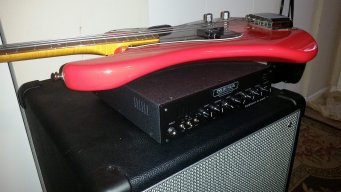
I'd like to hear it paired with a Big-E creation...

Raz
 
Status
Not open for further replies.