• TalkBass has been independent since 1998. Add your voice.
    Create a free account to reply to discussions, view embedded media, and browse with fewer display ads.
    Join freeLog in
    Want zero display ads or expanded classifieds tools? Compare plans.

Fender Rumble Club

The 10” Eminence drivers found in the Rumble 500 combo and Rumble 410 are very similar in specifications and tone qualities. The biggest difference being that of voice coil impedance. In the combo they are 16 ohms wired in parallel for a total 8 ohm load. In the 410 cab they are 8 ohms with pairs wired first in series (to get 16 ohms) and then each pair is wired parallel for a total 8 ohm load for the cabinet. Once again there has been a lot of love expressed for the tone and overall sound quality. Those who have put the Rumble 500 combo on top of a Rumble 410 cabinet have been mightily impressed.
My error is for the 4x10 ohms you mean?Could be this way i say,there is no final difference in my calculations.I thought that the 10'' of the 4x10 is 8 ohms,because there is a 10'' speaker with 8 ohms in the production line,for the other Rumbles.It's seams wird to make a 16 ohms special for the 4x10 cab.

So,we can't mix speaker from the 2x10,the combo 40w and the 10" from the 4x10.

I know you're Greek, and your English far exceeds the 10 or so ancient Greek words I just happen to know. The combo needed a pair of 16 ohm woofers wired in parallel to yield an 8 ohm total internal load.
The 410 cab needed 8 ohm woofers in order to get a similar 8 ohm total load. It's simple electronics to those who know this stuff. To simple bass players like me, it's magic. ;)
 
I know you're Greek, and your English far exceeds the 10 or so ancient Greek words I just happen to know. The combo needed a pair of 16 ohm woofers wired in parallel to yield an 8 ohm total internal load.
The 410 cab needed 8 ohm woofers in order to get a similar 8 ohm total load. It's simple electronics to those who know this stuff. To simple bass players like me, it's magic. ;)

Thanks for your kind words Linnin.;)
 
  • Like
Reactions: Linnin
Can you explain to me the reason?
Thanks
You indicated that the combo side will get more power than the ext cab side. There are no sides; The 500 - whether head or combo - is a mono amp that delivers 350 W to an 8 ohm load, and 500W to a 4 ohm load. it will deliver the greatest amount of electricity where there is the least load. If the loads are equal everywhere, as in the case of two identical 2x10 cabs - whether in a combo or not - it will deliver it's full 500W load that will be picked up equally by each speaker.

Speaker design is a really complicated thing, a lot more than simply ohm loads and power. Driver efficiency, box tuning and efficiency all play a huge role. I have an 8 ohm single 15 that will draw the same amount of juice but put out more than the combo's 10s even in it's sleep, only because it is more efficient. But for this discussion, your idea that the combo's speakers would be louder and "work harder" than the 2x10 cab is not correct.
 
Tad, would you mind telling me (us) about that bass in your avatar? (Assuming it's yours, that is!)
Link Removed

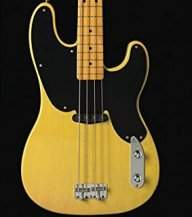
It is a 2005 CIJ '51 RI. It is bone stock except for the strings. I have it strung with DR Legends. I like it a lot.

I like it more than all of my other basses except for my '82 '57 JV. I can never decide between the two of them which one I like more. I bought them both brand new.

I usually play each of my basses a day or two in rotation and work my way through them all.
 
  • Like
Reactions: BigDBass
You indicated that the combo side will get more power than the ext cab side. There are no sides; The 500 - whether head or combo - is a mono amp that delivers 350 W to an 8 ohm load, and 500W to a 4 ohm load. it will deliver the greatest amount of electricity where there is the least load. If the loads are equal everywhere, as in the case of two identical 2x10 cabs - whether in a combo or not - it will deliver it's full 500W load that will be picked up equally by each speaker.

Speaker design is a really complicated thing, a lot more than simply ohm loads and power. Driver efficiency, box tuning and efficiency all play a huge role. I have an 8 ohm single 15 that will draw the same amount of juice but put out more than the combo's 10s even in it's sleep, only because it is more efficient. But for this discussion, your idea that the combo's speakers would be louder and "work harder" than the 2x10 cab is not correct.

I don't say that for the 2x10 cab.We talking for combo with 4x10 cab.Check again my post please.With the 2x10 everything is ok ofc.
 
Speaker design is a really complicated thing, a lot more than simply ohm loads and power. Driver efficiency, box tuning and efficiency all play a huge role.

Bingo-Zingo! This is why Fender and Eminence engineering teams work hand-in-hand to custom design cabinets and drivers. This is no small thing, and is a major reason the new V3 Rumbles sound so good.
 
  • Like
Reactions: bdplaid
Quit complaining! The entire Rumble line is cheap as chips. You can very easily spend twice as much and not get better. Different, yes. Better, no. Show me any other competitor that can surpass a Rumble 500 combo + Rumble 210 cabinet for $850!!! I mean really, com'on now!

I wasn't complaining, Linnin, I was remarking. I am excited about the cab and I am planning on getting one. I am just not excited about the price.

You can get:

Rumble 500 2x10 Combo for $499.99.

Rumble 500 Head for $399.99.

Rumble 410 Cabinet for $399.99.

Rumble 210 Cabinet for $349.99.

Definitely not a linear relationship there.
 
  • Like
Reactions: bdplaid
You got it right.But,careful with the compination of the 500 combo with the two internal 10" and the external 4x10 cab.The one side of the amp works hard with the 2x10 and the other don't.
I thought you were talking about the new 210 cab, I apologize if I'm mistaken.

On the face of it, one might think that the combo speakers, being a total of 8 ohms, would get 250W, and the entire 410 cab would get 250W. I'm not sure that's how it works; I think the juice (electricity) will find it's way to each driver based on load. Electricity acts like water: path of least resistance. But then there's another issue: speaker box design and efficiency. Clearly, the 210 and 410 are not the same design. Volumes will be different. And I'm not sure what happens in terms of ohmage at each individual speaker in a mixed-up system like that - some drivers wired in series, other parallel, some 4 ohm, some 16 ohm. I was never good in algebra.

What I do know is that we often overthink these things. The easiest way is to try it and see if it works and you like it. And as always, listen to the equipment; if it sounds like it's straining, it is, and something's gonna give.

Did I ever mention the GK 210 cab I had that always smelled like burning plastic. And those plastic voice coils it had...
 
  • Like
Reactions: TitaniumRx
My Rumble v3 500 finally shipped off of backorder yesterday. Beyond pumped to hear it. I'm going to NAMM tomorrow so I am hoping to hear it then with the new 210. I will do my best to get a video of it in action.

Also, I think Fender knows da$n well they can get the extra $50 out of us since it will be sitting pretty with our combos. (Not that I agree with that) But I will be preordering mine shortly.
 
  • Like
Reactions: Linnin
I thought you were talking about the new 210 cab, I apologize if I'm mistaken.

On the face of it, one might think that the combo speakers, being a total of 8 ohms, would get 250W, and the entire 410 cab would get 250W. I'm not sure that's how it works; I think the juice (electricity) will find it's way to each driver based on load. Electricity acts like water: path of least resistance. But then there's another issue: speaker box design and efficiency. Clearly, the 210 and 410 are not the same design. Volumes will be different. And I'm not sure what happens in terms of ohmage at each individual speaker in a mixed-up system like that - some drivers wired in series, other parallel, some 4 ohm, some 16 ohm. I was never good in algebra.

What I do know is that we often overthink these things. The easiest way is to try it and see if it works and you like it. And as always, listen to the equipment; if it sounds like it's straining, it is, and something's gonna give.

Did I ever mention the GK 210 cab I had that always smelled like burning plastic. And those plastic voice coils it had...

I explain all that in my post #3432 http://www.talkbass.com/threads/fender-rumble-club.1118826/page-172#post-16869209
You allready tell the reason yourself.The electricity digs the least of resistance.The speakers have a resistance,the ohms.The speakers in the 2x10 cab or combo have 16 ohms each,the 4x10 speakers have 8 ohms each.
 
  • Like
Reactions: bdplaid
My Rumble v3 500 finally shipped off of backorder yesterday. Beyond pumped to hear it. I'm going to NAMM tomorrow so I am hoping to hear it then with the new 210. I will do my best to get a video of it in action.

Also, I think Fender knows da$n well they can get the extra $50 out of us since it will be sitting pretty with our combos. (Not that I agree with that) But I will be preordering mine shortly.
Welcome to the Fender Rumble Club, milkman2k10! :woot: You are member #332 :hyper:
We look forward to your timely NAMM reports! :cool:
:laugh: Rumbles Rock! :smug:
 
  • Like
Reactions: milkman2k10
I thought you were talking about the new 210 cab, I apologize if I'm mistaken.

On the face of it, one might think that the combo speakers, being a total of 8 ohms, would get 250W, and the entire 410 cab would get 250W. I'm not sure that's how it works; I think the juice (electricity) will find it's way to each driver based on load. Electricity acts like water: path of least resistance. But then there's another issue: speaker box design and efficiency. Clearly, the 210 and 410 are not the same design. Volumes will be different. And I'm not sure what happens in terms of ohmage at each individual speaker in a mixed-up system like that - some drivers wired in series, other parallel, some 4 ohm, some 16 ohm. I was never good in algebra.

What I do know is that we often overthink these things. The easiest way is to try it and see if it works and you like it. And as always, listen to the equipment; if it sounds like it's straining, it is, and something's gonna give.

Did I ever mention the GK 210 cab I had that always smelled like burning plastic. And those plastic voice coils it had...

Sorry for the double reply,but i try to be more precise.

Think the amp like it's a source of water like you said.Every time the water meets spit connection divides by 2.So the first split is from the final amp stage to external connections in case of the head 500 or in case of combo 500 the external connector and the internal root to 2x10 speakers.After that split we have 50% water to internal speakers and 50% water to external speaker,in our case 250w each channel.

After that split,we have only the internal speakers so 250w/2 = 125 each.Ok?
To outside now,we have the second split in the speaker socket of the cab.Half of watts go to 1 pair of 10'' and half the watts go to second.So we have now 250/2=125w to each pair.
The next split is inside the 2 pairs.For the first pair we have 125w/2= 62.5,same for the second.
So,the 2 inside speakers takes 125w each,and the externals only 62.5.;)
 
  • Like
Reactions: jumblemind
After that split we have 50% water to internal speakers and 50% water to external speaker,in our case 250w each channel.
I don't think it's that simple. I think the entire 500W output "sees" the entire circuit and the load goes wherever it goes, based on resistance. Where I think you go wrong is viewing it as a simple 50/50 split between the internal and external speakers; I think the amp just sees it all, and the juice flows...
This is based on my experience with passive internal bass guitar systems in which you can find resistances for a pot modified by the load from another pot. In other words, it's all intertwined. I recently had a bad volume pot muck up everything, intermittently, and did so in a manner that made a pickup look bad.
Anyway, I could be wrong, I just don't think it's as simple as electricity splitting cleanly at junctions.

Cheers!
 
  • Like
Reactions: TitaniumRx
I don't think it's that simple. I think the entire 500W output "sees" the entire circuit and the load goes wherever it goes, based on resistance. Where I think you go wrong is viewing it as a simple 50/50 split between the internal and external speakers; I think the amp just sees it all, and the juice flows...
This is based on my experience with passive internal bass guitar systems in which you can find resistances for a pot modified by the load from another pot. In other words, it's all intertwined. I recently had a bad volume pot muck up everything, intermittently, and did so in a manner that made a pickup look bad.
Anyway, I could be wrong, I just don't think it's as simple as electricity splitting cleanly at junctions.

Cheers!

In my previews post i said the same think,the amp see everything as all,like water.The water flow change,but the resistance is stable.I can't express with my poor english what i know.Maybe someone with more good English tell us.Sorry for that.

Cheers mate;)
 
Titanium RX was closest to being correct.

At least as I understood him, his original point was that when you connect an 8 ohm 2x10 and an 8 ohm 4x10 to a 500 watt head (the speaker jacks are in parallel), the drivers in the 2x10 will be working harder.

Dave is thinking of this as a simple parallel circuit, like two pickups in parallel in his bass.

But it's not. This is actually series-parallel math, and all the important variables are known:
- Each cab is wired to present an 8 ohm load.
- There are two drivers in the 2x10, and four in the 4x10.
- While each cab may be loaded with a different driver model, within each cab, all of the drivers are matched. Same power handling, impedance and efficiency.
- The available power is 500 watts.
- Since each cab has the same impedance, each has to dissipate half of that power, or 250 watts.

It doesn't matter how the 4x10 is built. Regardless of whether you use 2-ohm drivers in series, 32-ohm drivers in parallel, or 8-ohm drivers arranged in a series-parallel array, the effect is the same: each driver will dissipate one quarter of the total power. In this case, that's 62.5 watts.

Ditto for the 2x10 cab. It doesn't matter whether it uses two 4-ohm drivers in series, or two 16's in parallel. Each driver gets half of the available power, or 125 watts.

Theory says that if the drivers in the 2x10 and the 4x10 happened to be perfectly matched in terms of efficiency and frequency, and if the tuning of the two boxes were identical (internal volume per driver, port tuning), then the 4x10 would be about equal loudness with the 2x10 in this application. It would also have slightly more low end, thanks to the coupling effect of four cones on the same baffle.

Similarly, because the four drivers in the 4x10 are loafing along at half the power per driver, they will be less stressed than the individual drivers in the 2x10.

Life isn't quite that exact out in the real world. There will be minor differences between the 8 and 16 ohm versions of the Eminence drivers, even if they are nominally the same. The internal volume and port tuning of the 4x10 probably isn't identical to the 2x10, either. Also, the drivers in the 2x10 might sound a little more aggressive, if 125 watts each was enough to push them close to breakup.

Still, overall principles apply. The individual drivers in the 2x10 will work harder at a given volume level. The 4x10 will sound somewhat fatter, and its drivers will be less stressed.

Of course, the same can't be said for the bass player at load-out. He's going to be a LOT more stressed humping the 4x10 out to the car!
 
Last edited:
It's easier to understand visually, as per this napkin schematic:

410 and 210 schematic.jpg

In order to solve for power dissipation, you can think of the circuit as having four elements, connected across the amp's output jack in parallel.

Each cab contains two of those elements, represented by the red lines. They are connected together into a single parallel circuit by speaker cables between the amp and the cabs, and internal wiring inside each box.

In the 4x10, each red line consists of a pair of 8-ohm drivers connected in series. The impedance of each pair adds up to 16 ohms. The parallel connection between the pairs and the input jack, is what gives the 4x10 its 8-ohm impedance.

In the 2x10, each red line consists of a single 16-ohm driver. Connected in parallel to the input jack, they give the 2x10 an 8 ohm total impedance, just like the 4x10.

When you look at the schematic in this way, the power relationships are easier to understand:
  • Each element in the circuit presents the same load to the amplifier (16 ohms).
  • Combined together in parallel, they create a single 4-ohm load. Which is why this configuration allows the amp to put out its full 500-watt output.
  • Since the 4 elements all have the same impedance, it's only natural that each one receives an equal quarter-share of the total power, or 125 watts.
  • In turn, it only makes sense that because the drivers are doubled up in the 4x10 compared to the 2x10, the individual drivers in the 4x10 will only receive half as much power.
Thus, the power budget of 62.5 watts for each driver in the 4x10, and 125 watts per driver in the 2x10.

This also helps to explain the relative output of the two cabs. Because each 10 in the 4x10 cabinet is only being driven at half-power, it will be 3dB down. However, with twice as many drivers moving air in the 4x10, its acoustic output rises by 3dB, cancelling out that disadvantage. Game, set and match.

Plus, the 4x10 still gets that 3dB bump in the low end, giving it a little extra heft.

On a related note, this illustrates why a 4x10/1x15 stack is a bad idea at a loud gig (assuming it's paired with a really powerful amp).

Example:

The bigger of my two G-K heads puts out 1024 watts into 4 ohms. If I connect a 200-watt 1x15 and a 600-watt 4x10 to it (not uncommon numbers), each cab will receive the same amount of power.

However, on a power-per-driver basis, the poor driver in the 1x15 will be getting whacked with a little more than twice its rated wattage. Meanwhile, the 4x10 will be running comfortably under its max rating.

As countless other bass players have found out to their dismay, there's a good chance that by closing time, the 1x15 will have gone up in smoke, while the 4x10 will finish the night in good shape.
 
Last edited:
You've got it right. The 410, and from what I read the 210 are both 8ohm cabs. The Rumble 500 is rated at 350 watts at 8 ohms, and 500 at 4 ohms. Your combo is internal at 8 ohms, and adding another 8 ohm extension cab gets you to 4 ohms, which means the full 500 watts is being used... You chose. Split it between 4 or 6 speakers. 6 speakers more air moved, but more speakers / cab / weight to move.

Thinking about it, going with "all Rumble" components, I think the biggest you could go is a Rumble 500 head, into 2 410 cabs, giving you 500 watts into an 810 (plus the horns). That should move plenty of air for most anyone's taste.

For ME, not necessarily anyone else, 410s is the sweet spot for going big. I won't ever want a fridge unless something seriously unexpected happens. And even then I might prefer to go the "fake stack" route and go through PA support...

That would be my dream stack!:hyper: