• TalkBass has been independent since 1998. Add your voice.
    Create a free account to reply to discussions, view embedded media, and browse with fewer display ads.
    Join freeLog in
    Want zero display ads or expanded classifieds tools? Compare plans.

Where can I get an easy to use HPF...

So is the LPF just for people who are too lazy enough to reach around the back of the cabinet and turn down the tweeter? Or for people who insist on playing their amps "flat" ...? ;-)

Certainly not a lazy tactic, and definitely not a 'flat' tone technique. I use it to ensure a few things for a live scenario.

1. Cabinets have a baked in sound and frequency response that are typically narrower than most FoH systems. What you hear on stage may or may not be the same the FoH hears. Over the years, ive found the issues to be in the extreme low and extreme high frequencies.

2. HPF and LPF remove these troubling frequencies that are getting to the FoH through your DI. Those frequencies are probably not getting produced on a cab with no extension or tweeters, but they are there! If your technique isnt up to snuff, having all of those frequencies coming through the FoH without you hearing it can be an issue.

3. I never had these issues when I was micing the cab, but once I started using a DI, i was getting specific issues in certain venues when the FoH system was running. Mainly omni-directional bass 'rolling' or feedback and ridiculous fret noise/string squeak, harsh fuzz tones etc.

These are just my humble findings on the subject from a few years of giggin live.
 
Most bass amplifier EQs are shelving at the very bottom and very top. So if you dial back the bass and boost the low-mids slightly, you're doing essentially the same thing, but giving more signal to the preamp at the input to work with.

I think a better option is to let the engineers work it out and have something between the preamp and the power-amp. I don't see a point of feeding a thinner signal to the input of most amps, especially ones which use all of the available sound to create some character.

It all depends on the characteristics of the individual amp. So it’s not always a good thing to make generalized statements about things like EQs without knowing the specifics of the person’s amp. The attenuation curves of the EQ ranges can vary depending on their design. The HPFs I’m familiar with provide for very sharp attenuation beyond their cutoff frequency setting. Much sharper than what I’ve experienced with the EQ stage frequency bands I’ve worked with. However, your experiences may well vary from mine.

My particular amp is an SWR SM-400. When they designed that amp, 5-string basses were just starting to become popular, and the thinking was if some lows good then more is better. So that amp (which is closer to a reference amp than an instrument amp) can reproduce frequencies down to an ungodly low number. Well beyond what virtually any cab you’re likely to be using can reproduce. And that results in mud and an amp that runs hot enough to hurt when you touch it since the SM-400 is passively cooled and its case is designed to be part of the heatsinking. It’s a well known issue in SWR circles.

The solution is to drop a HPF last in the serial effects loop. That blocks any useless low frequencies from hitting the power amp stage and getting boosted before being passed out to your cab. Do that and the real world difference is like night and day. Better sound and much cooler running amp. And it’s not something you can make happen with the extensive EQ settings available on the front panel.

So yeah, it’d be great to let the engineers handle all that. But in the case of this amp, they didn’t. Fortunately an inexpensive device inserted in the effects loop fixes that problem.
 
Last edited:
The solution is to drop a HPF last in the serial effects loop. That blocks any useless low frequencies from hitting the power amp stage and being passed out to your cab. Do that and the real world difference is like night and day. And not something you can make happen with the extensive EQ settings available on the front panel.

So yeah, it’d be great to let the engineers handle all that. But in the case of this amp, they didn’t. Fortunately an inexpensive device inserted in the effects loop fixes that problem.
So do I just go in and out of the effects loop? I don't use any effects.
 
So is the LPF just for people who are too lazy enough to reach around the back of the cabinet and turn down the tweeter? Or for people who insist on playing their amps "flat" ...? ;-)

I'm curious why the OP thinks the built-in EQ controls on their Genzler amp aren't enough to get them where they want to be? Don't most Genzler amps already have an HPF that the engineers worked to get right?

I'm surprised at this and other responses which assert that the EQ on the front of your amp already does the job of a HPF. It does not. The "low" knob on my amp does not do the same thing as my Broughton always-on. It does not identify a frequency and then drop everything below it out of my signal. My 9-band graphic EQ does not do this either. These controls are not the steep drop off that I'm looking for. Nor are any of them centered at frequencies as low as 35 or 40hz.

My HPF is a tool to get rid of the largely unheard and totally unwanted frequencies that are part of my natural signal. I don't want my cabs getting this junk. It causes major excursion and sucks up all my watts and could blow my cones. No thanks. And none of my amp controls are sufficient to get rid of them while still maintaining a normal bass guitar sound.
 
So do I just go in and out of the effects loop? I don't use any effects.

Well…there’s effects loops and there’s effects loops.

A serial loop is just that. It comes in between the preamp and power amp stage. A parallel effects loop works more like a splitter/blend feature. It runs alongside a parallel signal that’s already going into the power stage.

If you don’t know which type you have you can insert a single plug into either the effects send or return jack. If you don’t hear anything when you play, you’ve got a serial effects loop. If you do still hear something then you’ve got a parallel effects loop.

If you have a serial effects loop I’d be inclined to put a HPF in the loop. If you have a parallel loop I’d put it last in your signal chain so it’s right before the input jack on the amp.

maybe I missed it, but what amp are you using ? The post you quoted was a solution for an SM400; it may not be the solution for yours.

Excellent point. It’s always amp specific. Hopefully the above will provide a clearer starting point.
 
Last edited:
I don't buy into "snake oil", but I do try to understand the science behind things. A HPF just made sense to me, especially given that most bass cabs or PA speakers can't play flat down to the lowest note on a 5 string bass. Makes sense to filter all the mud out.

I bought a microThumpinator and tried it. It made a difference to me. Actually made the bottom end sound better.
 
It's not misinformation.

The science is good. I agree with the science, and I agree with having an HPF in the amplifier somewhere in the signal chain. But I do not agree with it being before the instrument input unless you're using a pedal that requires the removal of low frequencies.

Companies that specialize in bass-centric pedals go to great lengths to engineer them so they DON'T suck signal out of the chain.

This thread is inside an Amp and Cabs forum. It's not an HPF forum. I can certainly provide a dissenting opinion, especially for an amp with a baked in HPF. Not everyone believes in them and telling people who don't to go away is unproductive.

Are you aware of how useful the EQ section of most Genzler amps really is?

I still maintain he likely doesn't need it, and like many have said, some bass cabinets act like a passive HPF anyway, so there's that too.

If you were running a pre into a PA power-amp, with very high bandwidth in the power amplifier, I'd recommend an HPF between the and the power amp. This is not the case, here. You're just piling on another preamp to a high-gain input that deletes signal.

That's simply not true. I would suggest you move on to a different thread and stop posting misinformation. We get your point.
 
Absolutely, the Carvin BX series had no baked in HPF. The Genzler, which the OP supposedly has, does. Neither did the EA iAMP800 from around the same time. But the sweepable mids on the Carvin start at 50Hz, and the slope gets quite deep.

FWIW, before I bought my Broughton always-on I emailed Carvin to ask if my BX1500 had any kind of HPF, "baked in" or otherwise. They said no.
 
LPF? Now I'm even more confused. I'm really looking for something that I can set and forget, but I'm seeing that this isn't possible huh
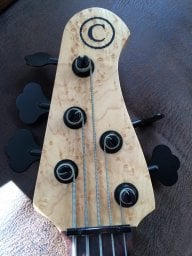
Yeah you can. I have his HPF, and I leave it on always. I have an older version with no numbers on the knob. If the pot sweep is the same as this, I probably have mine set about 50 Hz. His "always-on" no button version wasn't available back then, but I'd be fine with that one.

I use a Tech 21 VT Bass DI with speaker simulation that acts as the LPF. That tames the harshness of distortion/fuzz pedals. Even if you got Broughtons HPF & LPF, I'm sure you could find a set-and-forget position.
 
I know this is sort of off topic, but it should be mentioned that some bass amps, like the Genz Benz Shuttle Series, already have a built in HPF, typically set in the 30-35hz region. Adding an outboard HPF to an existing one is not as linear as it may seem depending on the specs of the onboard one. It may be helpful if a list of these amps was added to the mega HPF thread, but the Genz Benz amps are the only ones I know of. Agedhorse has said that there are other bass amps out there who have them.
Agedhorse's Mesa Subway 800+ has an adjustable HPF. It was my first exposure to this extremely useful tool, particularly since I play 5-string.
 
Easy.....
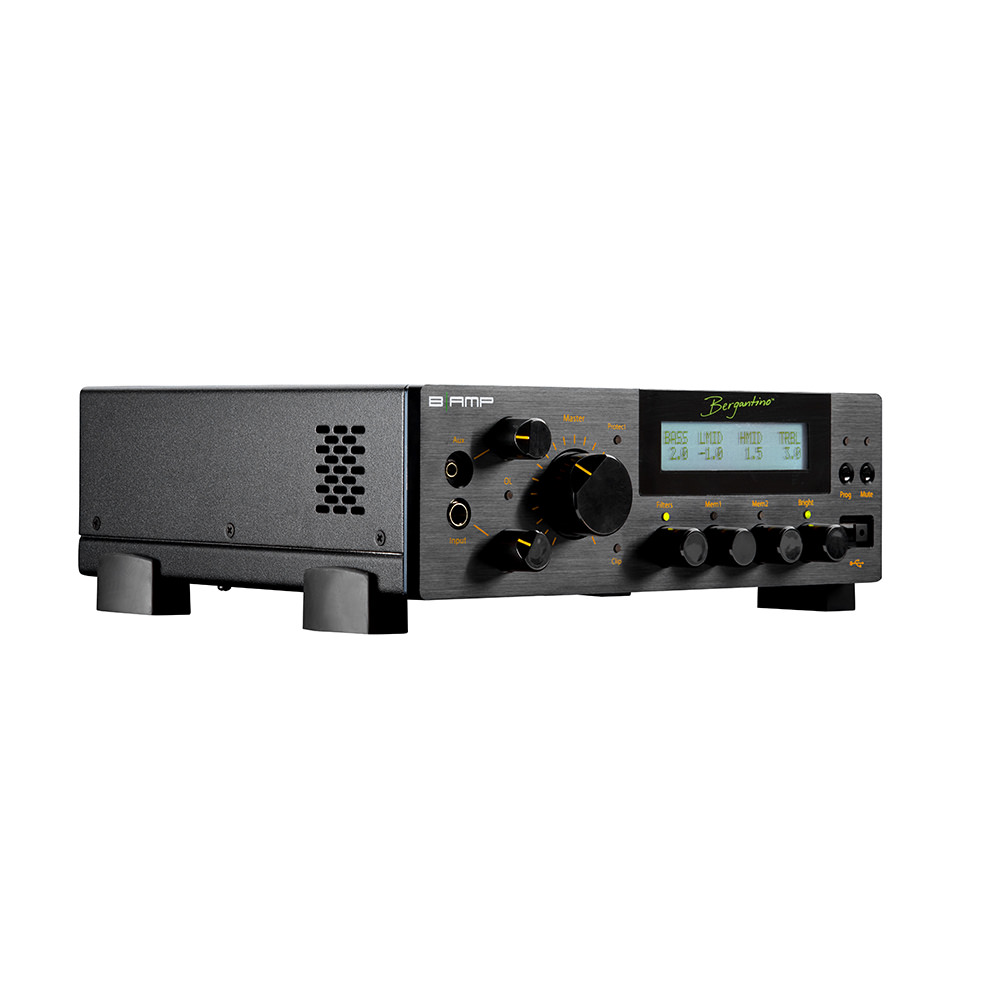
Berg B|Amp
bergantino-b_amp-lhp-white-web.jpg
 
Agedhorse's Mesa Subway 800+ has an adjustable HPF. It was my first exposure to this extremely useful tool, particularly since I play 5-string.
Yes, I'm pretty sure anything Agedhorse has designed has an HPF already on board, and as stated previously, the Genzler amps also.
 
  • Like
Reactions: Zbysek